

As more services move online, a study based on interviews with over-65s reveals growing barriers to staying connected, informed and independent.
Articles on Digital divide
Displaying 1 - 20 of 112 articles

Access to the internet in South Africa’s economic powerhouse, Gauteng, is marked by inequalities.

In-person visits to important places, such as banks and health centres, can become very limited, even impossible.

Lengthy processes and onerous documentation requirements are obstacles to exercising rights.
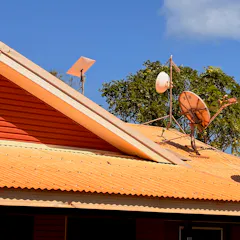
Cheaper, more reliable satellite internet is transforming internet access in remote communities – for those who can afford it.
Disparities in learning and work, as well as increased exposure to scams, are just some of the risks of a growing ‘AI divide’.

When a language isn’t in the data, its speakers aren’t in the product – and AI cannot be safe, useful, or fair for them.

Early digital literacy prepares children for future learning and careers.
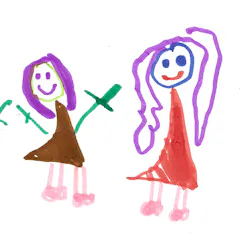
A new report follows the lives of around 1,700 Aboriginal and Torres Strait Islander children in the largest study of its kind.

Policy-makers must grapple with an uncomfortable truth: without deliberate action, AI will magnify global divides.

As South Africa moves towards a national AI strategy, the focus must be on people and not just technology.

Not everyone wants their healthcare to happen on a screen.

The ‘grey digital divide’ is artificial – created because designers of tech products are overwhelmingly young.

Jobs, the digital economy, heritage restitution and the climate crisis are highlighted by an Africa-led G20.
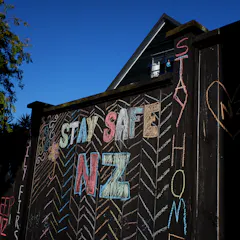
The pandemic – and the emergency responses to it – laid bare fissures in New Zealand society, while permanently shifting the way many live, work and shop.
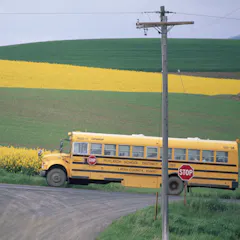
Floods, hurricanes, fires and pandemics are hard for any school district to deal with. But in rural districts the struggle to recover is even harder.

New research on New South Wales students shows many do not have access to computers and the support they need to use them. This means they risk falling behind.

It’s not all about broadband access. Key adult education programs help Canadians acquire needed digital literacy skills for further education, apprenticeship training, certification and employment.

When it comes to equitable and sustainable infrastructure, we can learn a lot from beaver dams — according to both traditional Indigenous oral history as well as NASA researchers.

Network equipment riding on balloons, airships, gliders and planes could boost internet access, including in disaster zones, and improve scientific monitoring.
Top contributors
-

Distinguished Professor of Media and Communications; Director, ARC Centre of Excellence for Automated Decision-Making and Society, RMIT University
-
Associate Professor of Public Affairs and Administration, Rutgers University - Newark
-
Assistant Professor, University of Kinshasa
-
Associate professor, University of the Western Cape
-
Professor, University of Fort Hare
-
Research professor, University of Cambridge; University of Cape Town
-
Research Fellow, ARC Centre of Excellence for Automated Decision-Making & Society, RMIT University
-
Adjunct Professor, Nelson Mandela School of Public Governance, University of Cape Town
-
Research Fellow, Centre for Social Impact, Swinburne University of Technology
-
Postdoctoral research fellow, RMIT University
-
Associate Professor of Communication, USC Annenberg School for Communication and Journalism
-
Professor of Information Systems, Michigan State University
-
Research Fellow, dot.rural, The Open University
-
Pro-VC, Sharda University
-
Professor in Communications Engineering, University of Aberdeen