

Cities are stepping up to provide free Wi-Fi for families in need in order to close the digital divide in education. But will those efforts make a difference where it counts?
Articles on Digital divide
Displaying 61 - 80 of 112 articles

Teachers still hold the key to children’s learning and no keyboard or screen can replace their role.
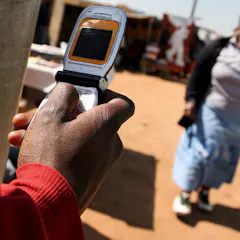
The full benefits of digital democracy are being thwarted by digital exclusion that is driven by the high cost of data.

Americans depend more than ever on high-speed internet to connect to jobs, get health care and socialize. What policies really work to close the rural-urban digital divide?

The high cost of data and inadequate digital skills prevent young people from accessing job opportunities.

For starters, why not have Hollywood team up with teachers to make education more entertaining?

Vice-chancellors from three South African universities unpack how the COVID-19 pandemic could alter the country’s higher education sector.

Kenya’s new internet balloons could help to get more Kenyans online and drive new industry.

This real-time snapshot of the digital divide illustrates why education experts are concerned that school closures could increase achievement gaps.
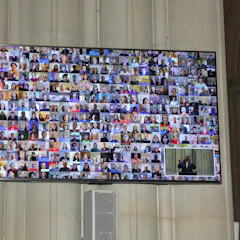
Most Christian churches were relying heavily on ‘collection plates’ to pay their bills before the pandemic struck. And less than half were doing any online fundraising as of 2018.

Galleries and musuems are rapidly moving online in response to social distancing measures, but the digital divide means regional and remote organisations could be left behind.

Steps higher education institutions can take to ensure that teaching and learning continues during the COVID-19 pandemic.

The COVID-19 pandemic is forcing people to study and work online. It’s also sparked a need for news and information. That’s a challenge for the 24 million Americans who lack broadband internet access.

Encouraging kids to complete their work can be tough for families managing full-time work and family obligations on a tight budget. And that’s true even when schools are operating normally.
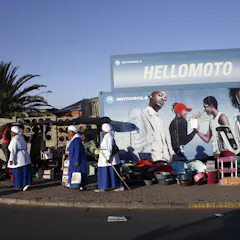
Policies need to address human develop challenges, if people are to be equitably brought on line.

As technology moves faster and our population gets older, here are some things we can all do to help seniors keep up.

Regulators should stimulate demand for broadband services through increased access to computers.
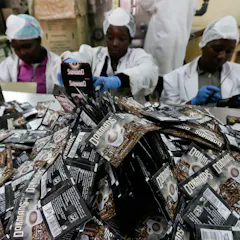
With an outdated story that gives up on manufacturing, Africa will fail to close the huge digital gap it still faces.

Technology experts have long worried about a ‘digital divide’ between those who could use computers and those who could not. Artificial intelligence algorithms are widening the gulf.

Older generations are increasingly more connected, but those living in aged care continue to experience a digital divide.
Top contributors
-

Distinguished Professor of Media and Communications; Director, ARC Centre of Excellence for Automated Decision-Making and Society, RMIT University
-
Associate Professor of Public Affairs and Administration, Rutgers University - Newark
-
Assistant Professor, University of Kinshasa
-
Associate professor, University of the Western Cape
-
Professor, University of Fort Hare
-
Research professor, University of Cambridge; University of Cape Town
-
Research Fellow, ARC Centre of Excellence for Automated Decision-Making & Society, RMIT University
-
Adjunct Professor, Nelson Mandela School of Public Governance, University of Cape Town
-
Research Fellow, Centre for Social Impact, Swinburne University of Technology
-
Postdoctoral research fellow, RMIT University
-
Associate Professor of Communication, USC Annenberg School for Communication and Journalism
-
Professor of Information Systems, Michigan State University
-
Research Fellow, dot.rural, The Open University
-
Pro-VC, Sharda University
-
Professor in Communications Engineering, University of Aberdeen