

Most people are left refreshing the page and coming up empty-handed.
Articles on Digital divide
Displaying 21 - 40 of 112 articles

Affordable access to high-speed internet brings educational opportunities, economic development and better access to health professionals.
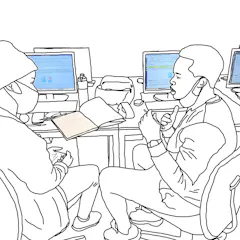
E-textbooks have potential to enhance inclusivity and engagement in engineering education.

The benefits of AI are transforming modern life — but disparities in digital confidence are leaving some behind.

Fibre optic cables now literally encircle Africa, though some parts of the continent are far better connected than others.

In sub-Saharan Africa, most governments welcome China’s investment in digital infrastructure.
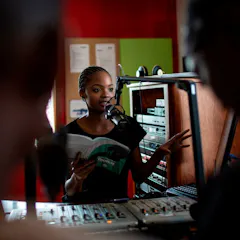
With a dramatic political history, radio is today the number one source of news in Africa.

New research reveals the digital divide that was exposed by the COVID pandemic.

Most Australians pay tax agents because they see it as easier and a way to maximise tax refunds. Yet our survey found most people who have used the myTax site found it easy, and plan to use it again.

The slow disappearance of cash has advantages, but it can also exclude the most vulnerable from socio-economic activity. It’s also a privatisation that deteriorates the symbolic dimensions of money.

The pandemic put a spotlight on inequalities among college students. But students’ resources were unequal all along.
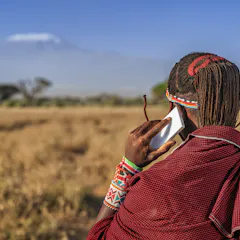
The huge gathering of policymakers focused on culture’s crucial role in sustainable development.

There’s a new wave of indigenous language podcasts that could attract big new audiences.

New survey shows poor earnings from music streaming made worse by the digital divide and a lack of policy.

The Agricultural Internet of Things is making farming more efficient. An information technology expert describes some of the challenges of working with sensors and antennas underground.

Research shows a significant number of people still struggle with the digital transformation of government and business. But throwing more technology at the problem is not necessarily the answer.
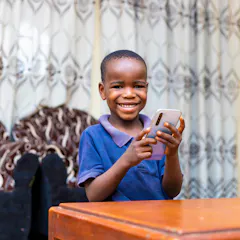
Instruction through mobile phones can provide an effective, scalable method to provide education instruction when schooling is disrupted.
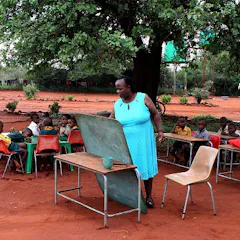
South Africa has no comprehensive national media literacy programme. Often it comes down to individual teachers and schools to make learners more media literate.
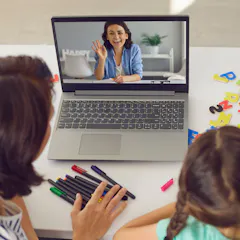
Teachers went to great effort to help parents support their children’s learning.
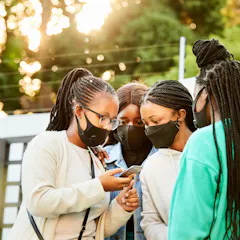
Many young women faced challenges with online learning and studying at home during COVID, but some showed resilience and a determination to achieve their educational goals.
Top contributors
-

Distinguished Professor of Media and Communications; Director, ARC Centre of Excellence for Automated Decision-Making and Society, RMIT University
-
Associate Professor of Public Affairs and Administration, Rutgers University - Newark
-
Assistant Professor, University of Kinshasa
-
Associate professor, University of the Western Cape
-
Professor, University of Fort Hare
-
Research professor, University of Cambridge; University of Cape Town
-
Research Fellow, ARC Centre of Excellence for Automated Decision-Making & Society, RMIT University
-
Adjunct Professor, Nelson Mandela School of Public Governance, University of Cape Town
-
Research Fellow, Centre for Social Impact, Swinburne University of Technology
-
Postdoctoral research fellow, RMIT University
-
Associate Professor of Communication, USC Annenberg School for Communication and Journalism
-
Professor of Information Systems, Michigan State University
-
Research Fellow, dot.rural, The Open University
-
Pro-VC, Sharda University
-
Professor in Communications Engineering, University of Aberdeen