
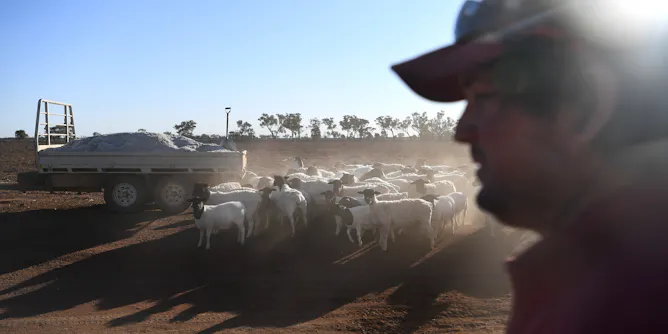
Rural and regional Australia is a big and diverse place, but some broad common issues do emerge as policy priorities.
Articles on Digital divide
Displaying 81 - 100 of 112 articles
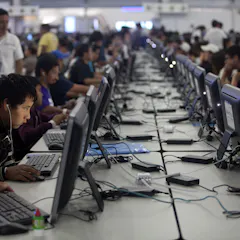
Mexico made internet connectivity a constitutional right in 2013, but most poor people still aren’t online. Research shows that internet access would give these residents more economic mobility.
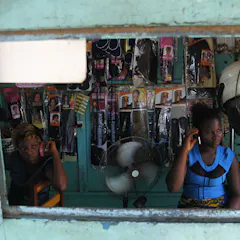
We don’t have the data in developing countries, and in global statistics to know if the digital divide is being closed.

Teens – especially wealthier ones – are walking away from Facebook, towards picture-centric social media.

The crucial question is not whether gig workers are employees or independent contractors, but what rights they ought to have as contractors.

It’s the people most dependent on social services, who are least able to easily transition into the digital age.

Tasmania’s digital inclusion increased dramatically and more than the national average from 2017 to 2018. This change is underpinned by a doubling of access to NBN in Tasmania in that period.

Important programs helping older adults learn how to use the internet are effective but limited.

Tech companies such as SpaceX, Facebook, Google and Microsoft are competing to bring internet to areas without access in the developing world. And that’s a problem.
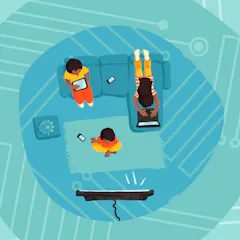
The people who have the most to gain from the extraordinary resources of the internet are missing out, including those not employed, older Australians and migrants from non-English speaking countries.
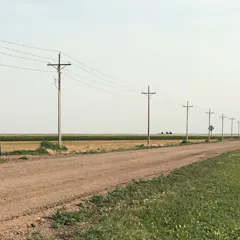
Many people in rural America don’t have access to fast, affordable internet access. How might those communities connect to the global exchange of goods, services and ideas?

Many users of digital platforms resign themselves to being monitored. That’s surveillance apathy - and it’s worse in society’s most marginalised groups.
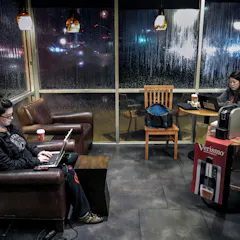
The 2017 Australian Digital Inclusion Index shows that internet access and digital ability have improved since 2014, but the affordability of online services has declined.

Digital devices can make a real difference in treating chronic diseases. But many who have these conditions are poor, and they often cannot afford the devices.

Technology had enabled humans to explore the deep sea, the Earth’s poles, and outer space. But we shouldn’t forget historical lessons about frontiers in the process of traversing them.

A new player is shaking up the Indian mobile market. But will it be enough?

Patient portals are fast becoming a way of health care life in the U.S., but they are leaving an important group behind. Latinos are much less likely to use portals than non-Latinos.
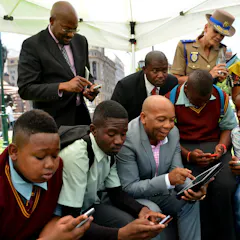
That South Africa has voted against rights enshrined in its globally celebrated, progressive constitution suggests a troubling indifference to its human rights commitments.

Now the ALP has released its much-anticipated National Broadband Network policy, it gives voters a chance to see how the Coalition and the Opposition’s plans compare.
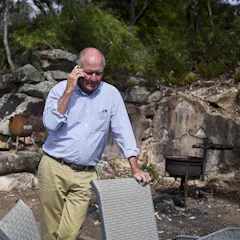
The critical question is how far we are willing to allow rural Australia to fall behind when it comes to telecommunications infrastructure.
Top contributors
-

Distinguished Professor of Media and Communications; Director, ARC Centre of Excellence for Automated Decision-Making and Society, RMIT University
-
Associate Professor of Public Affairs and Administration, Rutgers University - Newark
-
Assistant Professor, University of Kinshasa
-
Associate professor, University of the Western Cape
-
Professor, University of Fort Hare
-
Research professor, University of Cambridge; University of Cape Town
-
Research Fellow, ARC Centre of Excellence for Automated Decision-Making & Society, RMIT University
-
Adjunct Professor, Nelson Mandela School of Public Governance, University of Cape Town
-
Research Fellow, Centre for Social Impact, Swinburne University of Technology
-
Postdoctoral research fellow, RMIT University
-
Associate Professor of Communication, USC Annenberg School for Communication and Journalism
-
Professor of Information Systems, Michigan State University
-
Research Fellow, dot.rural, The Open University
-
Pro-VC, Sharda University
-
Professor in Communications Engineering, University of Aberdeen