

Most African climate-related financial policies remain voluntary, leaving climate risk as something to consider rather than a firm requirement.
Articles on Development finance
Displaying 21 - 40 of 41 articles
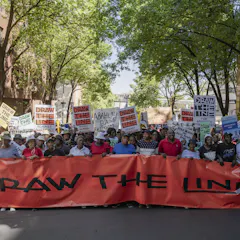
For the first time, countries now have a shared way to understand whether the world is actually improving at adapting to climate impacts.
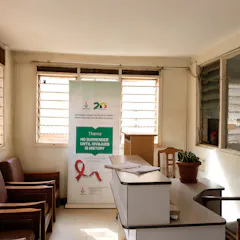
A mix of domestic revenue generation, efficiency gains and strategic partnerships is essential to sustain and expand HIV programmes despite declining external aid.
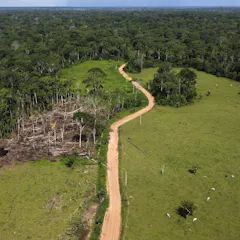
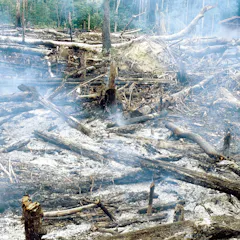
The Tropical Forest Forever Facility is designed to reward countries for preventing deforestation. Charts show the magnitude of the problem.

Cultural and creative industries account for 3.39% of global GDP and 3.55% of jobs.

South Africa’s G20 presidency is a chance to lobby for investment in drought-tolerant crops, better irrigation, and early warning systems.

Africa’s second climate summit agreed that climate finance to Africa must be a legal obligation and that every country on the continent should have a climate law.
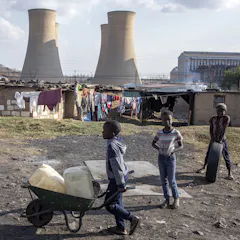
The G20 must establish a fair mineral trade for Africa, fund Africa’s climate needs, and make sure the move to clean energy benefits everyone.

Treating Afreximbank and the Trade and Development Bank as commercial creditors would reduce their capacity to finance sustainable development in Africa.
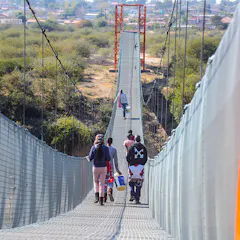
Development finance addresses the failures or limitations of financial institutions such as commercial and investment banks.
A single International Finance Corporation project, on average, causes 7.6 additional armed conflict events in the year after it is introduced.

The Land Bank played a crucial role in the growth and development of South African agriculture. It can do the same for upcoming black farmers, but its business and funding model must be changed.

This week’s summit for a “New Global Financing Pact” will look to secure some much-needed climate cash for developing countries, while ensuring their debt remains manageable.

It’s a crucial time for the World Bank, with growing calls for reform and sky-high expectations of what one leader needs to do. A former World Bank official explains the challenges ahead.
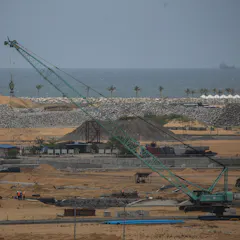
China’s international lending projects have big potential impacts on oceans and coasts. By cooperating more closely with host countries, Beijing can make those projects more sustainable.
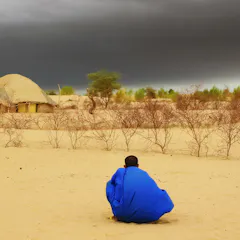
Without financial support that helps communities adapt to climate impacts, climate change is projected to push tens of millions more Africans into extreme poverty by 2030.

Through its Belt and Road Initiative, China has become the world’s largest country-to-country lender. A new study shows that more than half of its loans threaten sensitive lands or Indigenous people.

There is concern over the growing influence of non-regional players in decision making at the regional bank.
Big new investors such as the Asian Infrastructure Development Bank are key players in a worldwide infrastructure, and that could be bad news for the environment.
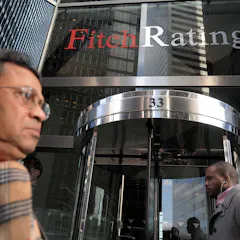
Credit rating agencies have come in for a lot of flack. But the bottom line is that to attract investors with deep pockets countries can’t avoid having a credit rating. And a good one at that.
Top contributors
-

Director, Columbia Center on Sustainable Investment, Columbia University
-
Instructor, Harvard Extension School, Harvard University
-
Senior Academic Researcher in Global Development Policy, Boston University
-
Post Doctoral Researcher, Graduate School of Business (GSB), University of Cape Town
-
Professor of Economics, University of the Western Cape
-
Coordinatrice du projet de recherche sur la finance et le climat, Agence Française de Développement (AFD)
-
Senior Research Fellow in Climate Change Risks, University of Cape Town
-
Assistant Professor of International Economics, Government, and Business, Copenhagen Business School
-
Professor of Global Development Policy and Director, Global Development Policy Center, Boston University
-
Senior Fellow, Department of Agricultural Economics, Stellenbosch University
-
Professor of Development Finance & Insurance, University of Cape Town
-
Professor of Finance & Deputy Head of School, Wits Business School, University of the Witwatersrand
-
Lecturer, University of Southampton
-
Director of the Bureau for Economic Research, Stellenbosch University
-
Vice Dean and Faculty Director, ESG Inititative; Deloitte & Touche Professor of Management, University of Pennsylvania