
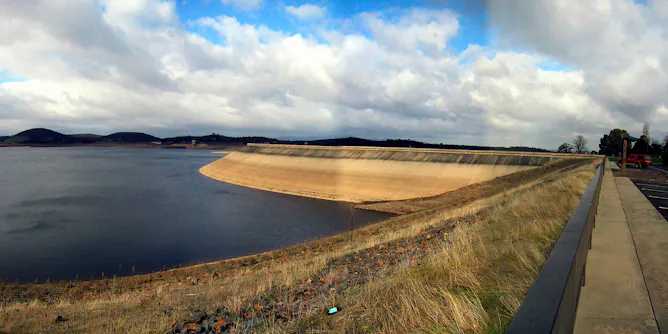
Water in Sydney is far cheaper than in Melbourne, and residents take full advantage of it.
Articles on Desalination
Displaying 21 - 40 of 46 articles

Cities relied entirely on conserving and recycling water to get through the last big drought. We now have desalination plants, but getting the most out of our water reserves still makes sense.
Sydney and Melbourne are bringing desalination plants back on stream and Adelaide plans to increase its plant’s output. Perth depends on desalination. But is it the best way to achieve water security?
Pumping very salty water into the ocean has surprisingly little impact on marine life.
Farmers are calling for South Australia to ramp up its desalination plant to free up more water from the Murray Darling.
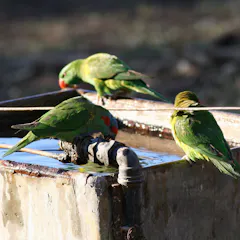
Every year councils around Australia compete to prove they have the best-tasting tap water in the country.
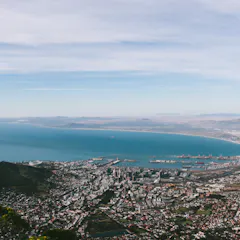
Global examples show South Africa that desalination could increase water output.
The experiences of other countries can provide valuable lessons for Cape Town on how to better cope with its water crisis.

Water is increasingly becoming scarce as the climate changes. There are four changes that cities can make to adapt to water scarcity.
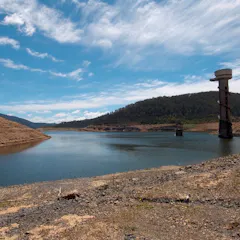
Australian cities have turned to some very costly solutions when water is scarce. But as the world’s second-highest users of water per person, more efficient use and recycling are key.
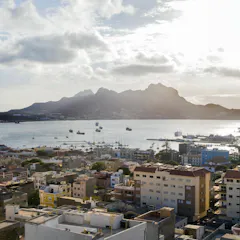
With cutting-edge technologies and innovative business practices, Cape Verde can achieve its goal in a way that is cost-effective and equitable
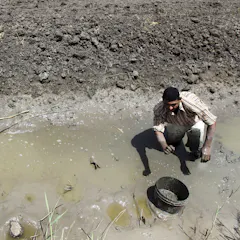
At present, the Middle East and North African region contains 7% of the world’s population but only has access to 1.5% of its renewable freshwater supply through rainfall.
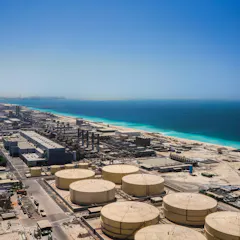
Desalination has been proposed as one of many strategies to deal with the water shortages. But the process is known to be expensive and harmful to the environment.
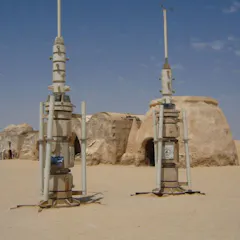
Scientists have found a way to pull water from the air using only energy from the sun.
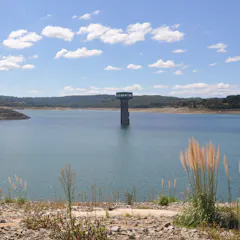
Despite its long idle, Melbourne’s desalination plant plays a vital role in providing water in a drying climate.
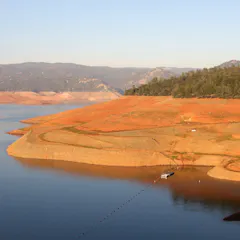
California’s drought is dragging on into its fifth year. What can the state learn from Australia’s 15-year millennium drought?
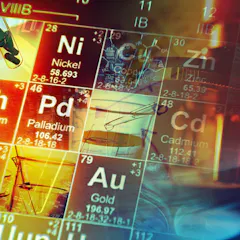
Our civilisation is built on chemistry, and the science has a bright future, with the launch of a new Decadal Plan that will steer the science into the future.
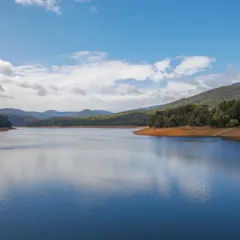
The Millennium Drought ended more than five years ago, but several years of below-average rainfall and El Niño have brought drought back to many parts of Australia. Our latest report on water in Australia shows rainfall is continuing to decline in eastern Australia and increase in the north.

Would you drink recycled water? New surveys suggest Australians concerned about water shortages are ready for alternative sources.

There is a huge global demand for clean water, with poor sanitation and water scarcity causing around 768 million people to go without. In an effort to solve the crisis, an international team of scientists…
Top contributors
-

Associate Professor in Environmental Science, Western Sydney University
-
Professor and Head of School of Civil Engineering, University of Sydney
-
Visiting professor, University of Saskatchewan
-
Associate Professor of History, Australian National University
-
Senior Lecturer, Western Sydney University
-
Australian Bureau of Meteorology
-
Professor of Analytical Chemistry, University of Marburg
-
Senior research scientist, Stellenbosch University
-
Research Director, Institute for Sustainable Futures, University of Technology Sydney
-
Professor of Intelligent Engineering Systems, Nottingham Trent University
-
Research Officer, Institute for Sustainability and Innovation, Victoria University
-
Director of the Institute for Sustainability and Innovation, Victoria University
-
Associate Professor at the ARUA Water Centre of Excellence Academic Manager, Institute for Water Research, Rhodes University
-
Matthew Flinders Professor in Water Economics, Flinders University
-
Research Director, Institute for Sustainable Futures, University of Technology Sydney