
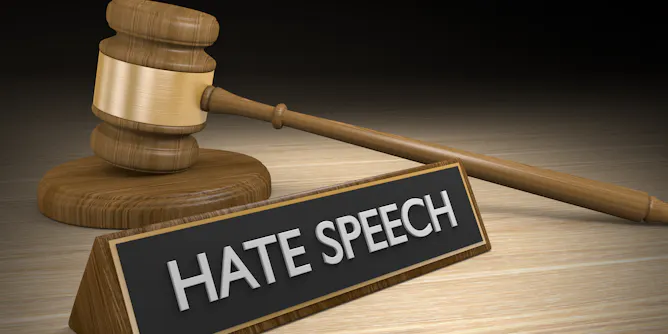
In a country where judicial review is not constitutionally guaranteed, hate speech legislation could shackle freedom of expression and limit citizens’ rights to express themselves.
Articles on Democracy in Africa
Displaying 61 - 80 of 258 articles

Ethiopia’s party system is extremely volatile due to the prevalence of weakly institutionalised and fragmented political parties.

For those keen to advance democracy and freedom in Uganda, the starting point is to take in the lessons of history.
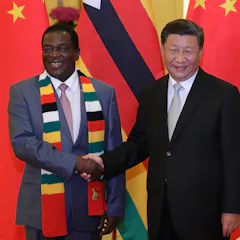
The more President Mnangagwa’s government fails to engage democratically with its own citizens, the more it will negate any prospect of re-engagement with the West.
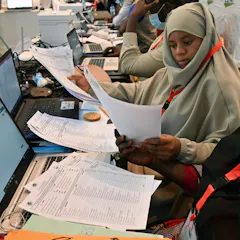
Although Niger’s quest for entrenching democracy is a good development, poverty and insecurity are obstacles.
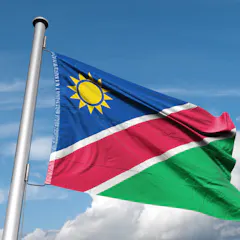
The November 2020 local and regional elections have indeed put Namibia’s political culture at a crossroads.
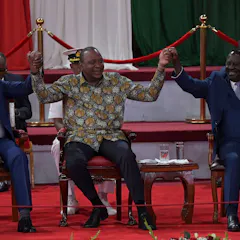
The changes proposed by the initiative are were well-addressed in the country’s 2010 Constitution.
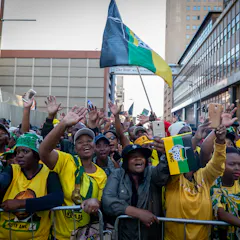
The trouble is that the ANC’s branch structure, designed initially as a means of grassroots democracy at work, is in a mess.
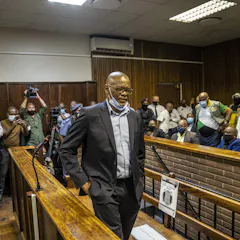
For every office holder who may lose a seat because they are prosecuted, another job opens up.
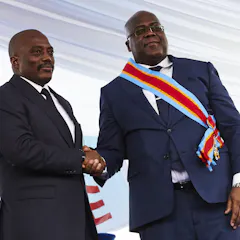
After endless, futile negotiations with the Kabila camp, Tshisekedi appears to have finally recognised the limits of the coalition government and has lost patience.
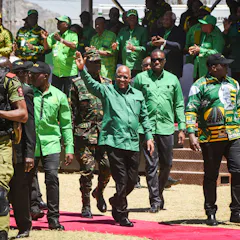
President John Magufuli won a second term by a contested landslide and looks set to take even greater control of Tanzania’s democratic space.
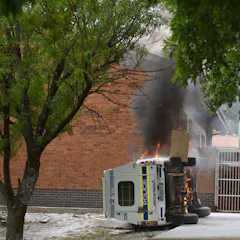
There are individual activists and political groupings who believe violent action is legitimate and use the circumstances to actively drive such behaviour.
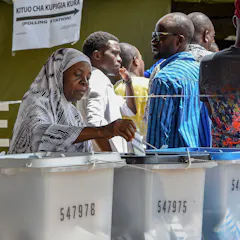
Tanzania’s October poll shows that elections are purely performative for governments which do not adhere to the basic tenets of democracy.
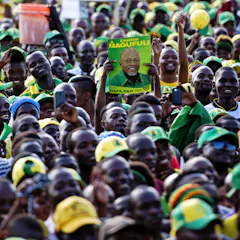
Magufuli took a populist approach in trying to woo voters away from an invigorated opposition, and when that didn’t work he reported to oppressive tactics.
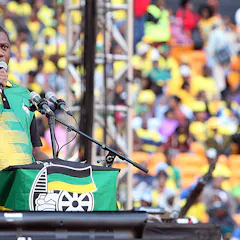
Since parties always need money, forcing them to depend on private funders means throwing them into the hands of donors who will demand favours for their cash.
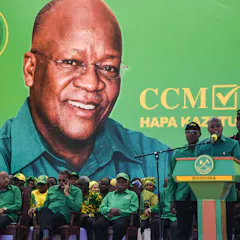
As key opposition members lose seats in their strongholds, it is clear that Tanzania’s ruling party is set to establish a super-majority that will institute a deeper authoritarian agenda.

The country has built a fairly good reputation for well-functioning, democratic governance.
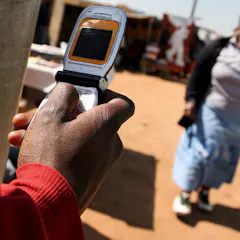
The full benefits of digital democracy are being thwarted by digital exclusion that is driven by the high cost of data.
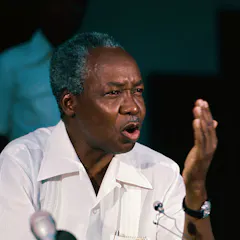
For all of the shortcomings of Nyerere’s regime, his ideas continue to inspire Tanzanians fighting for a more equal and democratic future, over 20 years after his death.
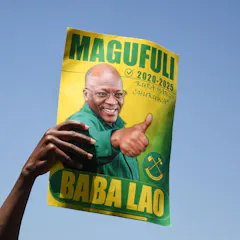
International observation will not insulate controversial polls – such as Tanzania’s in October – from malpractices, but will make them less likely and allow them to be exposed.
Top contributors
-

Professor of Democracy, University of Birmingham
-
Extraordinary Professor, Department of Political Sciences, University of Pretoria
-
Professor of Sociology, University of the Witwatersrand
-
Associate Professor of International Studies, University of Nottingham
-
Lecturer in African History, Queen Mary University of London
-
Professor of Political Studies, University of Johannesburg
-
Extraordinary Lecturer, University of Pretoria
-
Research Associate, Dept of Anthropology & Development Studies and Fellow, Clare Hall, University of Cambridge, University of Johannesburg
-
Professor in Political Science, University of South Africa
-
Professor, Department of Political Sciences, University of South Africa
-
Head of Department, Public and Environmental Law Department, University of Limpopo
-
Senior Lecturer of Political Science, Georgia Gwinnett College
-
Emeritus Professor, University of Cape Town
-
Director of the Leaders of Africa Institute and Research Affiliate with Davidson College, Davidson College
-
Honorary Professor of International Relations, University of the Witwatersrand