
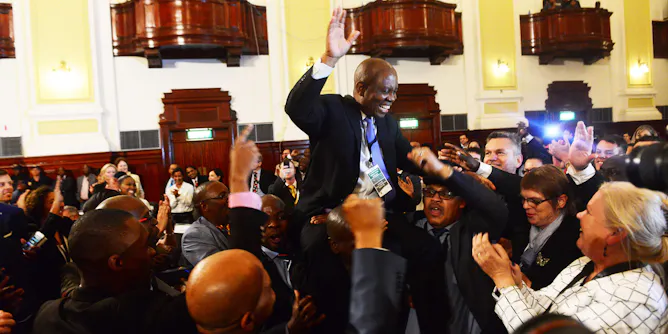
South Africa’s watershed local elections have resulted in upsets for the ANC in key metropoles. But will the new, minority coalition regimes live up to their mandate of providing basic services?
Articles on Democracy in Africa
Displaying 241 - 258 of 258 articles
The African Union has identified youth as critical for development. But, a new survey reveals a wide gap between these aspirations and the reality of youth public engagement on the continent.
Various commentators have wrongly over the last 22 years said that black people voted blindly for ANC governments. There’s no better example why the academy needs a dramatic post-colonial overhaul.
For more than 20 years the ANC’s electoral support has appeared unyielding to the obvious weaknesses of its performance in government. To fall below 60% is psychologically significant for the party.

Science communication has grown in leaps and bounds over the past 60 years. It plays a crucial role in democratising science and making it less mysterious.
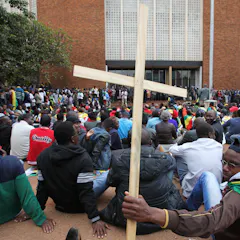
The new forms of protest in Zimbabwe raise the possibility that the country’s long-simmering crisis may have reached boiling point. The time could indeed be ripe for a unique form of politics.
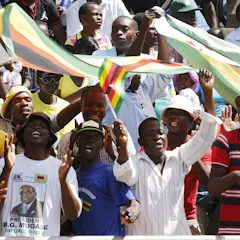
Namibia’s new elite has used “affirmative action” for self-enrichment, while the majority of the population remains excluded from its the wealth. Meanwhile, Zimbabwe’s socio-economic woes continue.
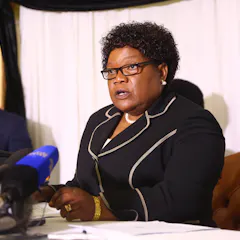
Opposition parties have emerged at different stages of Zimbabwe’s post-independence history but none have seriously threatened ZANU-PF dominance.
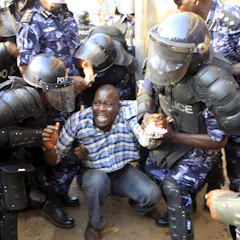
The heavy-handed tactics used by Uganda’s authorities during the 2016 elections have raised questions about a return to an oppressive past.
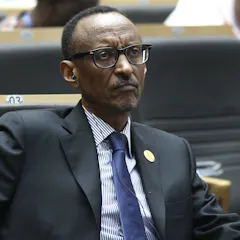
The reality of Rwanda is that there is no viable alternative to President Paul Kagame, within or outside his ruling RPF. Political rivals have died, are jailed, or have fled the country.

Unlike the third-term fever afflicting the Great Lakes region, Rwanda is not mired in corruption and stagnation. Rwandans were fearful and anxious about what might happen after 2017 without Kagame.
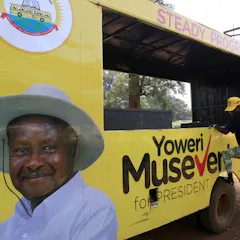
Regular changes of government through free and fair elections that reflect the wishes of the majority of citizens are a critical component of democratisation. But how significant are polls in Africa?
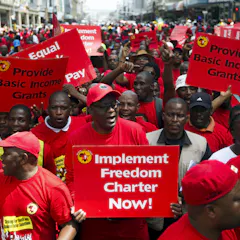
With the local government elections set to take place within the next seven months, it is worth considering what impact the recent upsurge in protests will have on the country’s political future.

Voting for national leaders has become the global norm in a remarkably short time – in Africa in 1988, only 25% of countries had multiparty elections, but 94% do today. Yet all is not well.
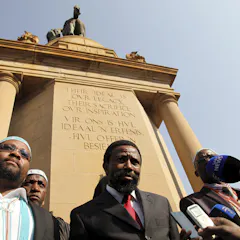
By challenging the courts, King Dalindyebo is testing the degree of impunity with which traditional leaders can get away.
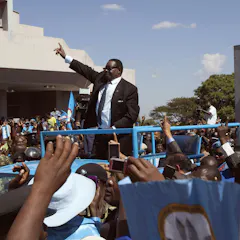
Malawi appears to have learnt nothing from the biggest state corruption scandal that rocked the country two years ago, leading to donors withdrawing their support. The same conditions still remain.
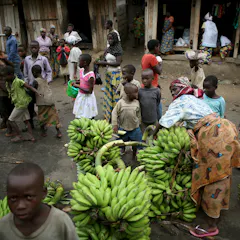
Whenever the crisis in Burundi is discussed, the economy is often overlooked, even though it is central to understanding the backdrop to the most severe crisis since the end of the civil war.
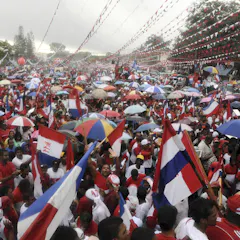
History tells us that while elements of competition and inclusion strengthen multiparty systems, too much of either can be fatal to the process of democratisation.
Top contributors
-

Professor of Democracy, University of Birmingham
-
Extraordinary Professor, Department of Political Sciences, University of Pretoria
-
Professor of Sociology, University of the Witwatersrand
-
Associate Professor of International Studies, University of Nottingham
-
Lecturer in African History, Queen Mary University of London
-
Professor of Political Studies, University of Johannesburg
-
Extraordinary Lecturer, University of Pretoria
-
Research Associate, Dept of Anthropology & Development Studies and Fellow, Clare Hall, University of Cambridge, University of Johannesburg
-
Professor in Political Science, University of South Africa
-
Professor, Department of Political Sciences, University of South Africa
-
Head of Department, Public and Environmental Law Department, University of Limpopo
-
Senior Lecturer of Political Science, Georgia Gwinnett College
-
Emeritus Professor, University of Cape Town
-
Director of the Leaders of Africa Institute and Research Affiliate with Davidson College, Davidson College
-
Honorary Professor of International Relations, University of the Witwatersrand