
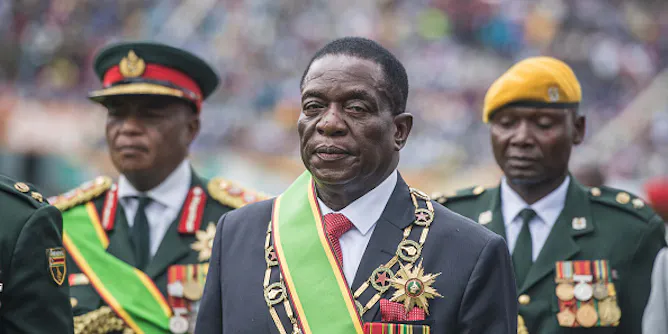
The extent of democracy capture varies markedly between countries. It’s much higher in states such as Zimbabwe, where the government has never changed hands.
Articles on Democracy in Africa
Displaying 41 - 60 of 258 articles

A monarch with absolute powers is just as dangerous as self-serving politicians in a democracy.

Whatever its flaws, it doesn’t mean the government action plan should be ignored or opposed. Rather, more needs to be done to achieve its goals.
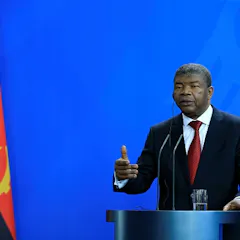
The Angolan political elite lost an extraordinary opportunity to improve significantly the country’s constitution.
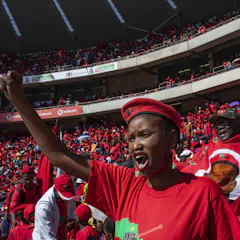
It’s not convincing to argue that the political parties would not be able to campaign as they have done in the past.

Whoever wins the elections will face two key challenges: reviving the country’s democratic credentials and stimulating the economy.

There is more support for democracy among African people than is often recognised. Yet this can be undermined by election rigging and is lower in countries like Lesotho, Mozambique and South Africa.

Ethiopian history shows that the demands of its young people can’t go unaddressed for long.
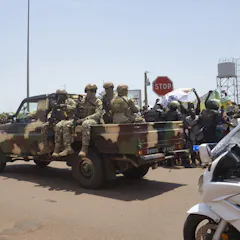
Mali’s state decay must be halted before it collapses: here are five areas that need attention.

The recent spate of military takeovers, most recently in Chad, highlights a developing trend by armed forces in Africa which overtly subvert constitutional governance.
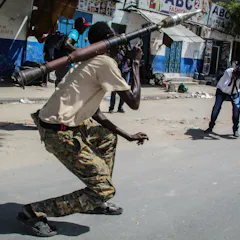
The international community is opposed to Farmaajo’s term extension because of fears that it’s a power grab consistent with political trends elsewhere in the region.
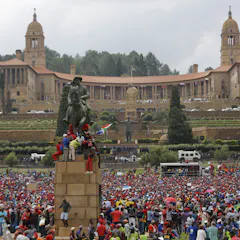
To build a political culture that supports democracy in South Africa, civic education needs to move beyond voter education.
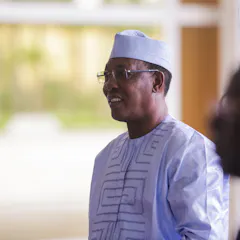
When he grabbed power in 1990, Déby promised to create a democratic society, but he turned out to be a ruthless authoritarian whose main agenda was to remain in office.

Although polarising, parliament’s move to extend Farmaajo’s term has presented a practical road-map to hold direct elections for the first time since 1969.
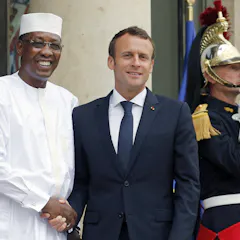
The resistance during this election cycle is even more passionate than in recent years.
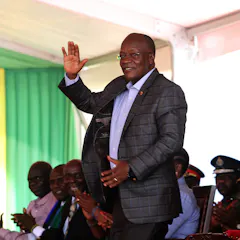
The president leaves behind a legacy of extremes, on the one hand, a leader who wanted to create a better country for his people, and on the other, a ruthless authoritarian.

The legitimacy of SWAPO, the former liberation movement that has governed since 1990, has been eroded amid growing corruption and a deepening economic crisis.
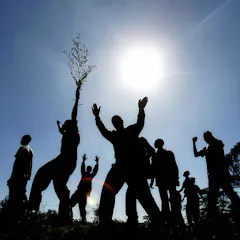
It is often assumed that patrimonial beliefs fuel electoral malpractice whereas civic ones challenge it, but this is an oversimplification.
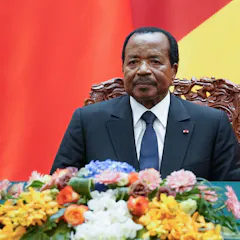
Biya’s long rule has robbed Cameroon of its credibility as a stable and peaceful country.
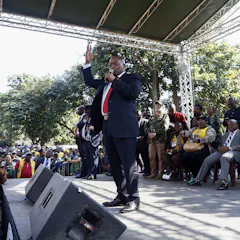
The former president is in a corner and largely isolated. His only option is to stir the pot so much that it gives him some kind of bargaining power.
Top contributors
-

Professor of Democracy, University of Birmingham
-
Extraordinary Professor, Department of Political Sciences, University of Pretoria
-
Professor of Sociology, University of the Witwatersrand
-
Associate Professor of International Studies, University of Nottingham
-
Lecturer in African History, Queen Mary University of London
-
Professor of Political Studies, University of Johannesburg
-
Extraordinary Lecturer, University of Pretoria
-
Research Associate, Dept of Anthropology & Development Studies and Fellow, Clare Hall, University of Cambridge, University of Johannesburg
-
Professor in Political Science, University of South Africa
-
Professor, Department of Political Sciences, University of South Africa
-
Head of Department, Public and Environmental Law Department, University of Limpopo
-
Senior Lecturer of Political Science, Georgia Gwinnett College
-
Emeritus Professor, University of Cape Town
-
Director of the Leaders of Africa Institute and Research Affiliate with Davidson College, Davidson College
-
Honorary Professor of International Relations, University of the Witwatersrand