

The use of deepfake videos seems to undermine people’s trust in all types of media.
Articles on Deepfakes
Displaying 81 - 100 of 123 articles
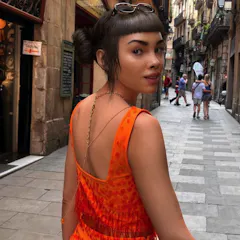
Virtual influencers have relationships, explore the world and take risks. The web is their playground – but they don’t exist.

AI can manipulate a real event or invent one from thin air to create a ‘situation deepfake.’ These deepfakes threaten to influence upcoming elections, but you can still protect your vote.

AI can generate a synthetic voice that sounds just like a loved one.

After years of campaigning, the nonconsensual sharing of images is being made a sexual offence.

Artificial intelligence could be used to generate content intended to manipulate people. Addressing this problem means understanding how communication works to influence people.
User-generated data can be used to build AI clones who can sound and behave like the source individual.

If it looks like a duck, walks like a duck and quacks like a duck, people now need to pause and wonder whether it actually hatched from an egg.
Generative AI can seem like magic, which makes it both enticing and frightening. Scholars are helping society come to grips with the potential benefits and harms.

The use of deepfakes and AI by groups with various interests, including governments and media, is the latest and most sophisticated tool in information and disinformation campaigns.

One of the biggest headlines in the gaming community last week involved a deepfake porn scandal. Such material is one example of how generative AI can cause immense harm.

Deepfakes have found their perfect vehicle in comedy – which allows them to be enjoyed without fear of deception.
Text-to-image generators like DALL-E and Stable Diffusion portend a future where anyone with a computer can fake a photograph of just about anything.
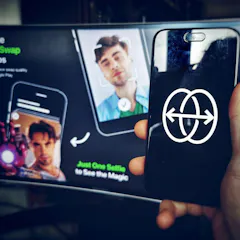
Despite their dangers, highly realistic deepfake images and videos are finding positive uses in the creative arts.

AI-generated voice-alikes can be indistinguishable from the real person’s speech to the human ear. A computer model that gives voice to the dinosaurs turns out to be a good way to tell the difference.
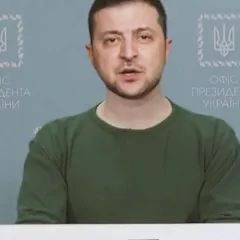
Earlier this year, a deepfake impersonating Ukrainian President Volodymyr Zelenskyy spread on social media – with Zelenskyy supposedly asking Ukrainians to surrender to Russia.
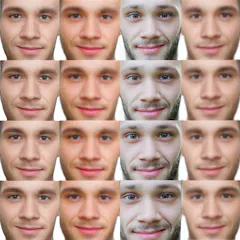
To combat the rise in deepfakes used in fraud, employees and investigators need to be aware of the threats involved.
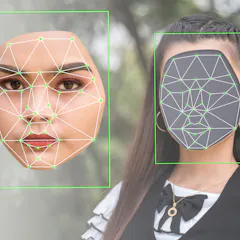
Deepfakes — manipulated images of people — can be difficult to distinguish from the real thing, and this has terrifying consequences for democracy.
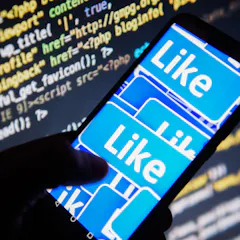
The system behind apps like Facebook, Twitter, YouTube and WhatsApp isn’t neutral. It encodes political communication, influencing what users see.

Deepfakes could strengthen our engagement with history. But there are dangers to the practice, some obvious, others more subtle.
Top contributors
-

Professor of Global & Language Studies, RMIT University
-
Director, Institute for AI and Data Science, Distinguished Professor, Computer Science and Engineering, University at Buffalo
-
Professor of Law, Durham University
-
Professor of Criminology, Monash University
-
Professor of Computer Science, University of California, Berkeley
-
Professor of Law, University of Melbourne; Chair of Private Law, Te Herenga Waka — Victoria University of Wellington
-
Professor of Family and Sexual Violence, RMIT University
-
Professor of Philosophy and Director of Applied Ethics Center, UMass Boston
-
Assistant Professor of Journalism and Emerging Media Studies, Boston University
-
Research Scientist in Cybersecurity, Rochester Institute of Technology
-
Professor and Chair of Cybersecurity, Rochester Institute of Technology
-
Associate Professor, Educational Technology, Université Laval
-
Adjunct Lecturer in Public Policy, Harvard Kennedy School; University of Toronto
-
Senior Lecturer in Artificial Intelligence, Te Herenga Waka — Victoria University of Wellington
-
Professor of Community Information, University of Michigan