

These images are being shared in an attempt to harass, demean or silence individuals.
Articles on Deepfakes
Displaying 21 - 40 of 123 articles

After a year of fast advances, deepfakes are entering a new era defined by real-time interaction with people.
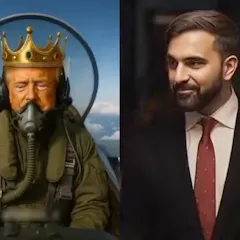
Don’t discount the threat of AI political videos fooling people, but for now, they’re mostly about bolstering group identity and cashing in on viral content.
Disparities in learning and work, as well as increased exposure to scams, are just some of the risks of a growing ‘AI divide’.

80 years after the bombings of Hiroshima and Nagasaki, many of Orwell’s predictions have come true.
South African law tackles deepfakes but enforcement remains a challenge.
Technology has supercharged fraud. The ruses are ancient, but the tools scammers use are cutting edge.

Banning ‘nudify’ apps is an important step, but alone it won’t stop the harm they cause.

Researchers have used quantum physics to reversibly scramble videos so that even future quantum computers won’t be able to hack them.

AI-generated deepfake abuse material is easy to create – but there’s plenty we can do to stop it spreading in our schools.
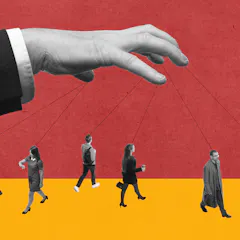
When a foreign power floods your media with false health alerts designed to create panic, isn’t that as threatening as a military blockade?
Music and technology have been evolving together since long before the advent of AI. But without better safeguards now, artists face an uncertain future.
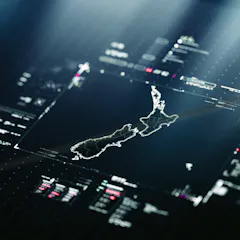
Most New Zealanders are worried about AI, but the government’s new strategy has little to reassure them. Emulating the EUs approach to managing risk might help.

AI avatars of dead people are teaching courses and testifying in court. Even with the best of intentions, the emerging practice of AI ‘reanimations’ is an ethical quagmire.

Existing efforts to regulate AI share a limitation: they’re built around intended use, not the messy, creative and often unintended ways it is actually being used.
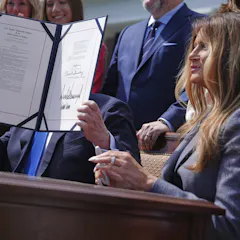
A law with broad bipartisan support aims to take on AI-generated sexual abuse, but enforcement issues and privacy blind spots could leave victims just as vulnerable.

The solution demands two simple and clear actions: declare that photo manipulation has taken place and disclose what manipulation was carried out.
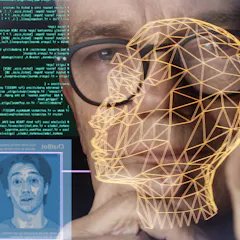
Some countries have already moved to regulate the use of artificial intelligence in political campaigning. New Zealand should follow suit.
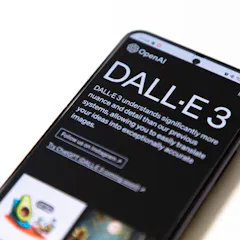
Generative AI tools are constantly improving — making it increasingly difficult for us to detect which images are AI-generated and which are real.

Strategies to combat misinformation often focus on written materials and fact-checking. Identifying deepfakes requires different skills.
Top contributors
-

Professor of Global & Language Studies, RMIT University
-
Director, Institute for AI and Data Science, Distinguished Professor, Computer Science and Engineering, University at Buffalo
-
Professor of Law, Durham University
-
Professor of Criminology, Monash University
-
Professor of Computer Science, University of California, Berkeley
-
Professor of Law, University of Melbourne; Chair of Private Law, Te Herenga Waka — Victoria University of Wellington
-
Professor of Family and Sexual Violence, RMIT University
-
Professor of Philosophy and Director of Applied Ethics Center, UMass Boston
-
Assistant Professor of Journalism and Emerging Media Studies, Boston University
-
Research Scientist in Cybersecurity, Rochester Institute of Technology
-
Professor and Chair of Cybersecurity, Rochester Institute of Technology
-
Associate Professor, Educational Technology, Université Laval
-
Adjunct Lecturer in Public Policy, Harvard Kennedy School; University of Toronto
-
Senior Lecturer in Artificial Intelligence, Te Herenga Waka — Victoria University of Wellington
-
Professor of Community Information, University of Michigan