
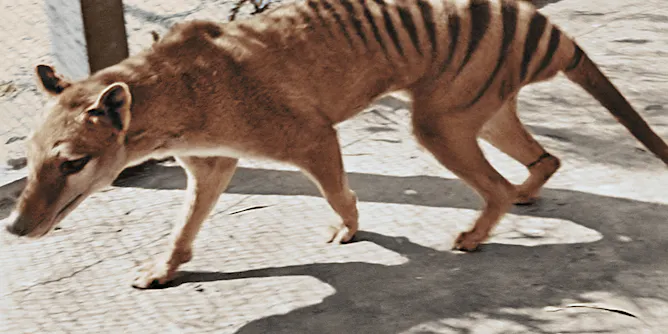
‘De-extinction’ seems like a way to save dying or dead species - but in reality it’s an expensive and impractical waste of time.
Articles on De-extinction
Displaying 21 - 35 of 35 articles
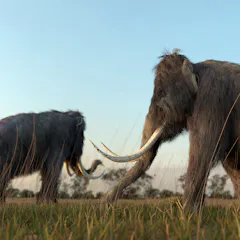
While the prospect of reviving extinct species has long been discussed, advances in genome editing have now brought such dreams close to reality.
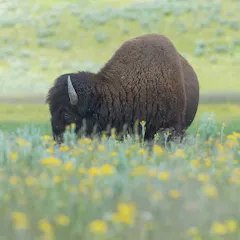
The historical record is full of surprises – and it could encourage conservationists to think more creatively.
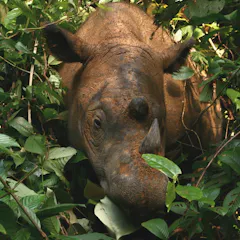
The world mourns the loss of Malaysia’s last male Sumatran rhino. Can anything stop the slide of the species towards extinction?
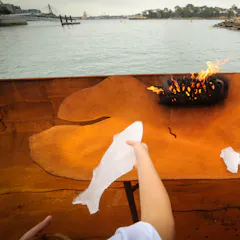
Ecosystems can collapse suddenly and totally. Frozen zoos are trying to create archives of genetic material to prevent total extinctions.
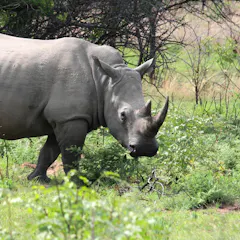
Scientists have created embryos from the eggs of southern white rhino and sperm from their northern counterparts.
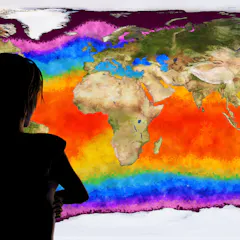
It’s time to admit the age of pristine nature is over. In its place is humanity and planet-shaping technologies, from gene editing to climate engineering. Earth Day in a Synthetic Age.
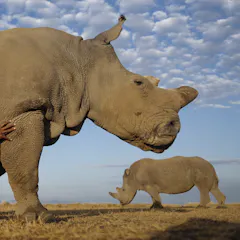
Rhino resurrection is tempting, but if humans cannot save a species in nature, what future for animals that we manufacture?
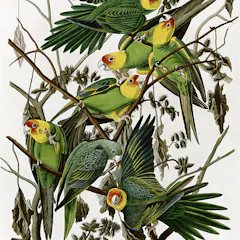
The last Carolina parakeet died in a zoo a century ago. A scientist tries to unravel some of this bird’s lasting mysteries.
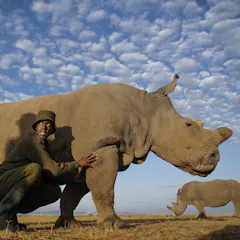
The death of the last male northern white rhino in the world raises an interesting question: when does a species pass the point of no return?
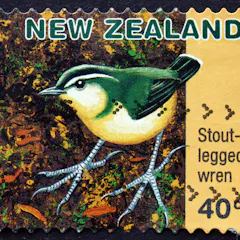
The “decision science” approach helps avoid unanticipated consequences of programs to bring species such as New Zealand’s little bush moa, Waitomo frog, or laughing owl back from extinction.
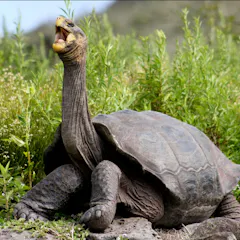
The Galapagos Islands’ giant tortoises are one of the world’s best examples of evolution. Scientists are pioneering new conservation strategies to save them from extinction and restore their habitat.
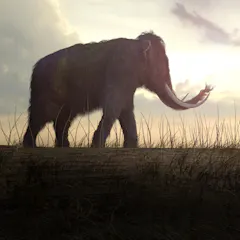
Is an extinct animal really gone forever?
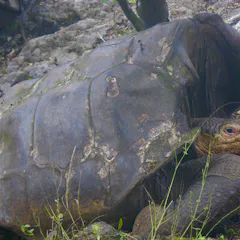
When 100-year-old giant tortoise Lonesome George died in 2012, the world thought his species was lost forever. We went to the Galápagos Islands looking for ‘extinct’ tortoises – and we found them.
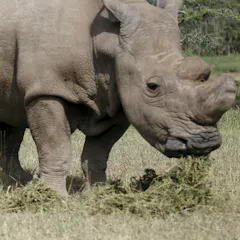
Their flimsy chances rely on the eggs and sperm from the remaining three elderly animals, combined with frozen DNA from dead rhino.
Top contributors
-

Lecturer in the School of Applied Sciences, Edinburgh Napier University
-
Matthew Flinders Professor of Global Ecology and Node Leader in the ARC Centre of Excellence for Indigenous and Environmental Histories and Futures, Flinders University
-
Lecturer, University of Cambridge; Anglia Ruskin University
-
Associate Professor in Ancient DNA, University of Otago
-
Lecturer in Bioethics, Monash University; The University of Melbourne
-
Senior Research Associate, University of Oxford
-
Senior Research Scientist and Lecturer, Department of Ecology & Evolutionary Biology, Yale University
-
Professor of Vertebrate Conservation Biology and Director of the Roosevelt Wild Life Station, State University of New York College of Environmental Science and Forestry
-
Postdoctoral Research Fellow, The University of Queensland
-
Course Director, MSc Biodiversity, Conservation and Management, University of Oxford
-
Associate Professor | Director, DNA Zoo Australia, The University of Western Australia
-
Associate Professor in Zoology, University of Tasmania
-
Senior Lecturer in Ecology, Teesside University
-
Ph.D. Student in Biology and Society, Arizona State University
-
Postdoctoral Fellow in Ecology and Evolutionary Biology, University of Connecticut