
The COAG agreement to share our biometric data - including some photo ID - is an erosion of our privacy and will give people a false sense of comfort.
Articles on Data privacy
Displaying 301 - 320 of 360 articles
The modern world depends on critical systems, networks and data repositories that are not as secure as they should be. Breaches will continue until society as a whole makes some big changes.
What governments and companies think they know about us – whether or not it’s accurate – has real power over our actual lives.
A freedom of information request reveals that Google wants its AI company DeepMind to get involved in the 100,000 Genomes Project.
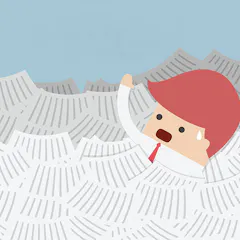
Nobody can understand the legal language in privacy policies. Can artificial intelligence digest the text and produce a human-readable explanation?

BCI devices that read minds and act on intentions can change lives for the better. But they could also be put to nefarious use in the not-too-distant future. Now’s the time to think about risks.
UK politicians are planning very different approaches to data privacy, security and surveillance.
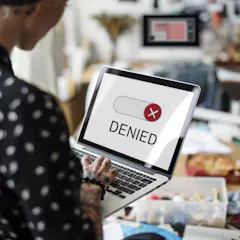
You need to start thinking about what will happen to your online data when you die.

When smartphone apps get permission to access your location or other activity, they often share that data with other companies that can compile digital profiles on users.

To ease the stress of commuting, don’t ditch the bus – just make it smarter.
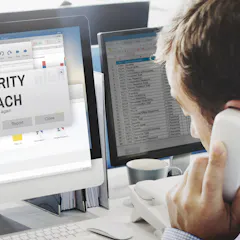
New legislation will soon require organisations to disclose any data breaches involving your private details. But the legislation still has some gaps in it.
Recent developments at the United Nations and the G-20 suggest that the well-known human rights to privacy and freedom of expression may soon be formally extended to online communications.

The Federal Court has narrowed the definition of what can be deemed “personal information” in any data stored about you.
Apps and wearable devices promise greater participation and empowerment in health care. But what are we risking when we take part in this new era of participatory health?

Huma Abedin’s emails belong to her; the search warrant should be served upon her. Once that happens, she can challenge the warrant’s legality.
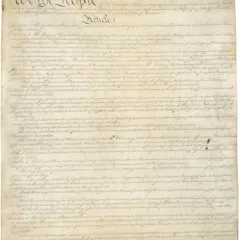
The FBI has a history of abusing search warrants to illegally read Americans’ emails. Did the agency just do it again, in the highest of all high-profile situations?
We don’t expect our own government to hack our email – but it’s happening, in secret, and if current court cases go badly, we may never know how often.

What if someone made your house a site for Pokémon battles?
A simple kite mark could let you know that you aren’t signing away your rights when you download a new app.

Data-privacy advocates may have won the care.data battle, but it looks like they’re about to lose the war.
Top contributors
-

Associate Professor, Faculty of Law & Justice; Lead, UNSW Public Interest Law & Tech Initiative, UNSW
-
Affiliated Faculty Member, Institute for Computational and Data Sciences, Penn State
-
Professor of Cybersecurity, Head of School of Computer Science and Informatics, De Montfort University
-
Associate Professor, School of Law, University of Canberra
-
Professor in Business Information Systems, University of Sydney
-
Professor of Cyber Security Practice, Edith Cowan University
-
Adjunct Senior Lecturer, Applied Ethics and CyberSecurity, Griffith University
-
Professor of Marketing, University of Sydney
-
Dean of Global Business, The Fletcher School, Tufts University
-
Associate Professor in Cyber Security, Adelaide University
-
Professor of Business Law and Ethics, Indiana University
-
Associate Professor of Political Science, Brock University
-
Professor of Information Systems, Michigan State University
-
Ph.D. Candidate in Geography and Assistant Director at the Center for Refugee Studies, Indiana University
-
Professor of Cyber Security and Policy, Tufts University