

Do we really want to protect our privacy when we expose it on social networks?
Articles on Data privacy
Displaying 281 - 300 of 360 articles
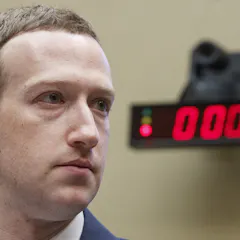
After facing the US Congress the Facebook chief will have learned the easy part is over. From now on things will be tougher.

Facebook says it’s going to continue to respond to widespread concerns about its practices and role in society. Researchers of privacy and online trust offer ideas for immediate action.
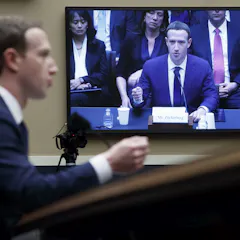
Not on Facebook? Well the social media giant could still have created a shadow profile for you, without your knowledge or permission.
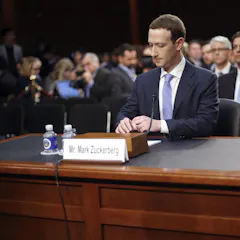
Facebook is realizing it has broad obligations to society. Here’s how it could start meeting them.
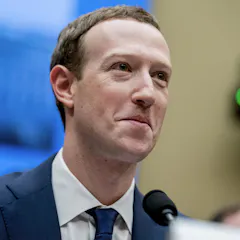
Experts reviewed more than five hours of testimony Facebook’s notoriously reserved CEO gave to Congress, searching for nonverbal clues to understand what he’s really thinking.

For years, watchdogs have warned of the potential problems of sharing data with online companies. The Facebook data crisis has made these concerns much more real. What should be done now?

The current reckoning with data has been a long time coming, a historian of privacy in the US writes.
US privacy laws focus on informing consumers what’s happening with their data; other countries specifically restrict data collection and analysis.
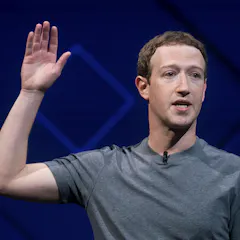
Scholars discuss the Facebook-Cambridge Analytica scandal: what happened, what’s at stake, how to fix it, and what could come next.

When building a smart city, it’s vital that governments and citizens know up-front who will control the collected data.

The silver lining to the Cambridge Analytica case is that more people are recognising that we pay for online services with not only our own privacy, but that of our friends, family and colleagues.
The Cambridge Analytica scandal wasn’t a data breach – it was a violation of academic ethics. Maybe it’s universities, not social networks, that need to update their privacy settings.
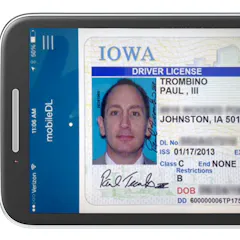
Smartphones are key elements of two-factor authentication processes. Weakening their security threatens people’s digital identities.

What happens to your Facebook account, your iTunes purchases and your email messages when you die?
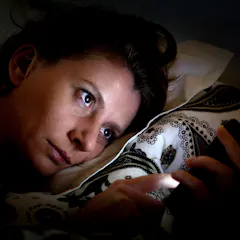
Companies are compiling your smartphone data into shockingly intimate profiles that can be used against you.

It’s not just fitness trackers – mobile phones can reveal users’ whereabouts too, even with location tracking turned off.

What scholars know, are learning and are predicting about the privacy of electronic data, online activity, smartphone use and electronic records.

Should police be able to use cellphone records to track suspects – and law-abiding citizens?

Consumers can’t read, understand or use information in companies’ privacy policies. So they end up less informed and less protected than they’d like to be. New research shows a better way.
Top contributors
-

Associate Professor, Faculty of Law & Justice; Lead, UNSW Public Interest Law & Tech Initiative, UNSW
-
Affiliated Faculty Member, Institute for Computational and Data Sciences, Penn State
-
Professor of Cybersecurity, Head of School of Computer Science and Informatics, De Montfort University
-
Associate Professor, School of Law, University of Canberra
-
Professor in Business Information Systems, University of Sydney
-
Professor of Cyber Security Practice, Edith Cowan University
-
Adjunct Senior Lecturer, Applied Ethics and CyberSecurity, Griffith University
-
Professor of Marketing, University of Sydney
-
Dean of Global Business, The Fletcher School, Tufts University
-
Associate Professor in Cyber Security, Adelaide University
-
Professor of Business Law and Ethics, Indiana University
-
Associate Professor of Political Science, Brock University
-
Professor of Information Systems, Michigan State University
-
Ph.D. Candidate in Geography and Assistant Director at the Center for Refugee Studies, Indiana University
-
Professor of Cyber Security and Policy, Tufts University