
There are advantages, too.
Articles on Data privacy
Displaying 321 - 340 of 360 articles
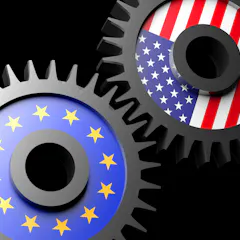
A new agreement between the European Union and the U.S. would provide more protection of Europeans’ data against American mass surveillance than was required before.
How should we address growing concerns about information security without denying society the benefits big data can bring?

Apple’s refusal to back down in its fight with the FBI is a sharp reversal from just a few years ago when it was the government urging tech companies to do more to protect consumer privacy.
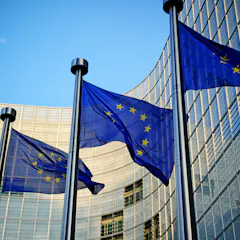
Why the rush to replace the Safe Harbour datasharing agreement with something just as leaky? It smacks of placing transatlantic trade over European privacy.
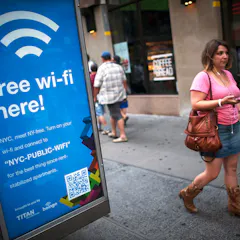
New York City is developing a ‘free’ public Wi-Fi network to be deployed throughout the city, but the poorly appreciated price is our privacy.
Schools are collecting more and more data on children. They must make sure they comply with the law.
Legislation proposed in both the US and the UK suggest an aggressive path toward entrenching surveillance powers at the cost of citizens’ privacy.

By simulating cities from the “bottom-up”, scientists can help us plan for the future.
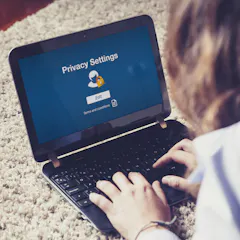
You often hear it said that ‘privacy is dead’. Our cybersecurity expert explains why that’s not true, yet.

If the Ashley Madison hack was an inside job, then it shows that even strong protection against outside attacks isn’t necessarily enough to prevent a leak of private data.

Firms want your data, but if they offer to pay it’s likely they stand to gain more than you do.
Analyzing big data sets holds the promise of big insights. But the axiom “garbage in, garbage out” is particularly apt, since conclusions can be only as good as the raw data itself.
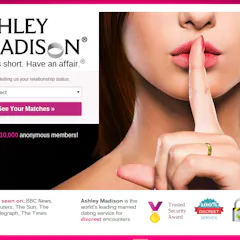
When hackers take down companies in response to their actions, security chiefs need to know what the CEO is saying in public.

Declared ‘unachievable’ by a treasury watchdog, the zombie care.data scheme is back and still full of holes.

David Anderson’s report on surveillance isn’t a charter for online privacy but it could create problems for a government set on capturing all our data.
An independent review recommends greater transparency but ultimately concludes surveillance can continue.
Many questions remain about the hack on government employee data but the US has to treat the data theft as a high-level diplomatic incident.
Public anxiety and legal protections currently pose a major challenge to anyone wanting to introduce eye-scanning security technologies.
Researchers are tapping into some of the massive amounts data collected these days, which could include information about you. But how do they protect your privacy?
Top contributors
-

Associate Professor, Faculty of Law & Justice; Lead, UNSW Public Interest Law & Tech Initiative, UNSW
-
Affiliated Faculty Member, Institute for Computational and Data Sciences, Penn State
-
Professor of Cybersecurity, Head of School of Computer Science and Informatics, De Montfort University
-
Associate Professor, School of Law, University of Canberra
-
Professor in Business Information Systems, University of Sydney
-
Professor of Cyber Security Practice, Edith Cowan University
-
Adjunct Senior Lecturer, Applied Ethics and CyberSecurity, Griffith University
-
Professor of Marketing, University of Sydney
-
Dean of Global Business, The Fletcher School, Tufts University
-
Associate Professor in Cyber Security, Adelaide University
-
Professor of Business Law and Ethics, Indiana University
-
Associate Professor of Political Science, Brock University
-
Professor of Information Systems, Michigan State University
-
Ph.D. Candidate in Geography and Assistant Director at the Center for Refugee Studies, Indiana University
-
Professor of Cyber Security and Policy, Tufts University