

There’s no way an independent assessor will be able to actually monitor how Facebook might violate or abuse users’ privacy in key ways.
Articles on Data privacy
Displaying 221 - 240 of 360 articles

People are more willing to participate in fitness tracker-based insurance policies when they are in control of their participation.

Social biases in digital tech create racist face recognition software and sexist hiring tools, but more data collection isn’t the answer.

Facebook is built on harvesting platform data about its users, crunching that to predict behaviours and allegiances and then selling this package to advertisers. That hasn’t changed yet.

In a recent Canadian court case, defence and prosecution argued over whether a suspect was required to provide his password to allow for a search warrant to be executed on his phone.
South African consumers aren’t confident that organisations always use their information lawfully and for agreed purposes.

States like California have been at the forefront of privacy innovation in recent decades. A possible federal law could bring their experimentation to a halt, harming consumers.

The history of how Alphabet Inc. and its subsidiaries manage children and data is a troubling one. How will Sidewalk Labs address concerns about minors and privacy in Toronto’s Quayside project?

Even governments in democracies with strong traditions of rule of law find themselves tempted to abuse these new abilities.

Consumers want better protection for their data, and businesses want clear national laws. Yet there is virtually no consensus about what a broad privacy law should entail.

Tiny electronic items can identify pets, clothes and even people. Evangelical Christians aren’t the only people worried about what this technology might mean.
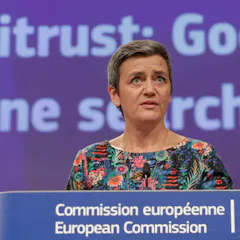
Feelgood, high-level data ethics principles are not fit for the purpose of regulating big tech. Applied ethics might be useful … but stronger regulation is the preferred end goal.

CEO Mark Zuckerberg’s claimed intent to focus on privacy will be hard to execute, will not happen soon and does not address major concerns about the company’s role in society.

The National Library of Australia’s web archive preserves online Australian content dating back to 1996. The next step is to archive platforms such as Facebook and Twitter - but it won’t be easy.

Facebook seems to be shifting its focus more towards privacy. But this might have some unexpected repercussions, as highlighted by recent research on the encrypted messaging service WhatsApp.

A new act requires that all nonsensitive government data be made available publicly by January 2020. But the plan could open up new privacy issues.

Australians aren’t confident that the government can be trusted with their data, or that is has the right safeguards in place to protect it.

Algorithmic guardians could be programmed to manage our digital interactions with social platforms and apps according to our personal preferences.
The end of the era of self-regulation for big tech companies is nigh.
Kenya needs to tread carefully. It must avoid placing the country’s security ahead of people’s privacy rights.
Top contributors
-

Associate Professor, Faculty of Law & Justice; Lead, UNSW Public Interest Law & Tech Initiative, UNSW
-
Affiliated Faculty Member, Institute for Computational and Data Sciences, Penn State
-
Professor of Cybersecurity, Head of School of Computer Science and Informatics, De Montfort University
-
Associate Professor, School of Law, University of Canberra
-
Professor in Business Information Systems, University of Sydney
-
Professor of Cyber Security Practice, Edith Cowan University
-
Adjunct Senior Lecturer, Applied Ethics and CyberSecurity, Griffith University
-
Professor of Marketing, University of Sydney
-
Dean of Global Business, The Fletcher School, Tufts University
-
Associate Professor in Cyber Security, Adelaide University
-
Professor of Business Law and Ethics, Indiana University
-
Associate Professor of Political Science, Brock University
-
Professor of Information Systems, Michigan State University
-
Ph.D. Candidate in Geography and Assistant Director at the Center for Refugee Studies, Indiana University
-
Professor of Cyber Security and Policy, Tufts University