

South Africa’s data collection is constantly improving. That’s especially true when it comes to metrics that weren’t collected or were distorted for political purposes during apartheid.
Articles on Data
Displaying 221 - 240 of 494 articles

Data analytics have played a role in elections for years. But today’s massive voter relationship management platforms use digital campaigning practices to take it to another level.
A recent public deliberation in British Columbia identified that access to government data should be managed carefully and efficiently.

A new project looks at the race of on-duty police officers and civilians involved in 917 fatal shootings in 2015.

A proposed bill would force tech companies to tell users how much their data is worth. But how can a single number capture data’s power to predict your actions or sway your decisions?

Flint’s highest recorded lead levels were typical for water systems that report problems. What’s more, a number of cities haven’t reported their lead issues.

Sharing data openly across regions and organisations can help to accelerate preparedness and responses to public health emergencies.

Organizations try to hide mistakes and evade responsibility, studies show. But two scholars analyzing militant and terrorist groups say they are willing to acknowledge their mistakes – sometimes.

US lawmakers and regulators are beginning to investigate big tech’s growing power, but they need to look beyond size and into their very natures.

In the US, poverty is measured by income level. But that measure misses many other aspects of poverty – like unemployment, poor health and a lack of health insurance.

A study of over 700,000 state and local drug arrests shows that two out of three cases involve a small amount of illegal drugs.
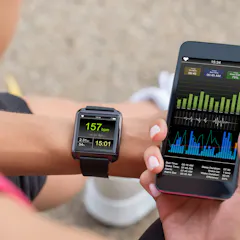
The people who get the most out of self-tracking tend to be ‘systematic thinkers’ who search for meaning in patterns.

History shows that when government elites believe that there is a risk that they may lose control of the capital, they escalate targeted violence against civilians.

The Fed said it’s ready to act to ‘sustain the expansion.’ The latest jobs report suggests it may have to act soon.

Social biases in digital tech create racist face recognition software and sexist hiring tools, but more data collection isn’t the answer.

In 2010, approximately 1 million children under the age of 5 were not counted in the census. That meant less state funding for critical services like Early Head Start and SNAP.

US schools now collect detailed data on their students. But teachers and parents need to think carefully about how that data is used – and what it shows, or doesn’t show, about a student.

New research reveals that many 19- to 24-year-olds are highly concerned about how organisations collect and use their data. This could be the beginning of a significant push back.

States like California have been at the forefront of privacy innovation in recent decades. A possible federal law could bring their experimentation to a halt, harming consumers.

The number of births in the US is down 2% – to what the CDC calls ‘the lowest number of births in 32 years.’ This drop brings the US more in line with its peers.
Top contributors
-

Co-Founder of The Data Tank and Co-Founder and Chief Research and Development Officer of the Governance Laboratory (GovLab), New York University
-
Associate Professor of Human Development and Family Studies, Demography and Public Policy, Penn State
-
Associate Professor of Political Science, University of Richmond
-
Associate professor, University of Sydney
-
Professor of the Practice of Data Science, Washington University in St. Louis
-
Professor of Health Services and Policy Research, University of British Columbia
-
Clinical Senior Research Associate, MRC Epidemiology Unit, University of Cambridge
-
Honorary Enterprise Professor, School of Population and Global Health, and Department of General Practice and Primary Care, The University of Melbourne
-
Director of the International Laboratory of Demography and Human Capital, Russian Presidential Academy of National Economy and Public Administration
-
Professor of Health Economics, University of Hong Kong
-
Professor of Economics, emeritus, Stony Brook University (The State University of New York)
-
Former postdoctoral researcher on machine learning applied to chemical engineering and currently science communicator for the National Museum of Emerging Science and Innovation (Miraikan), University of Tokyo
-
Lecturer in Data & Society, University of Edinburgh
-
Scientia Professor of Economics, UNSW
-
Associate Professor of Health Studies