
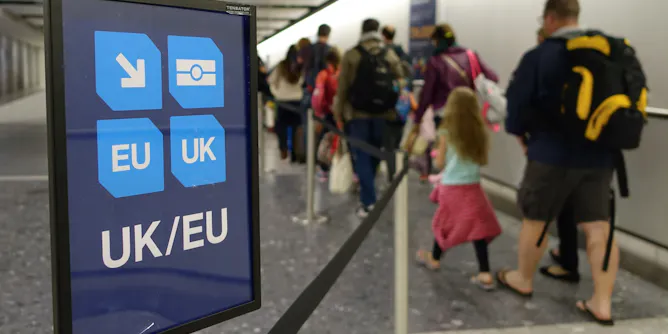
It’s not as simple as just hiring more immigration officers.
Articles on Data
Displaying 301 - 320 of 494 articles
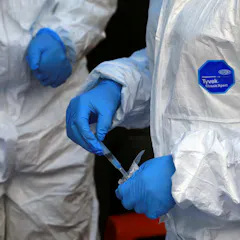
A study of recent epidemics like Zika and Ebola suggests that the media may fail to tell the public what to do during an outbreak.
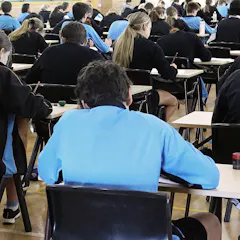
Much of the controversy over the delay in this year’s NAPLAN data comes down to its misuse and a misunderstanding of statistical comparability.
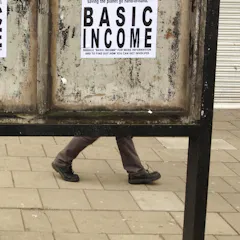
Ontario’s basic income project was deeply flawed and cursed by a lack of quality data. It needs a major overhaul.

Financial institutions and stores judge our credit-worthiness based on how we handle our money. But we should be cautious of letting others compile our health data into a “wellness report.”
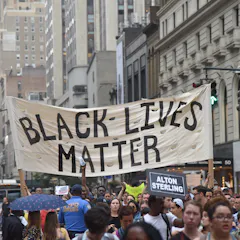
Official records on police homicides are full of holes. A new study tries to fill in the gaps – and finds new evidence of racial and regional inequality.

Data scientists mapped the online behavior of Facebook users in Brazil, the US and Argentina. The result is a startling visual portrayal of just how deeply polarized these nations have become.

Personal data is sold, bought and traded among companies all the time. But what if the companies profiting from your data had to pay you a share of that earning?

A new tool called Biometric Mirror exposes the need for public debate about the ethics of AI.

Robotic milkers, video cameras and even sensors hidden inside the body will help this dairy farm figure out how to get the most milk from their cows.

The Canadian government is right to hold public consultations on digital and data transformation given how profoundly it affects society at large. But the scope is far too narrow.

Online gambling collects a huge amount of data. But instead of personalising offers to keep you hooked, real-time data can be used to prevent problematic gambling behaviour.

In 38 US cities, hate crimes rose 12 percent in 2017. There were 1,038 hate crimes in the nation’s 10 largest cities – the most in more than a decade.
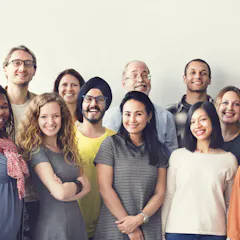
Biases are difficult to shed, which makes workplace diversity a powerful and necessary tool for catching unsuspected bias before it has a chance to cause damage.

People find data difficult to own – and things we don’t own, we tend not to protect.
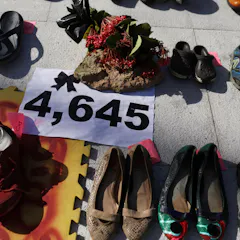
A survey shows that most Puerto Ricans didn’t highly rate the official information coming out of the island. With the Institute of Statistics in trouble, the situation is likely not to improve.

Today it’s estimated that we take in about five times as much information as we did 25 years ago, and that we process as much data in a day as our 15th century ancestors would have in their lifetime.
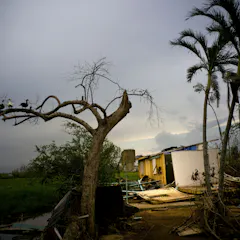
Official reports state that just 64 people died in Puerto Rico after Hurricane Maria. The latest estimates put the real number at 4,645. How did the count go so wrong?

The number of births in the US is down 2 percent. That pops the country’s ‘fertility bubble’ – and brings numbers closer in line with peer countries.
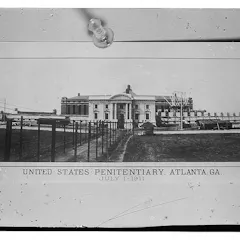
Digitized state records help to tell the stories of African-American prisoners in the 19th and 20th century.
Top contributors
-

Co-Founder of The Data Tank and Co-Founder and Chief Research and Development Officer of the Governance Laboratory (GovLab), New York University
-
Associate Professor of Human Development and Family Studies, Demography and Public Policy, Penn State
-
Associate Professor of Political Science, University of Richmond
-
Associate professor, University of Sydney
-
Professor of the Practice of Data Science, Washington University in St. Louis
-
Professor of Health Services and Policy Research, University of British Columbia
-
Clinical Senior Research Associate, MRC Epidemiology Unit, University of Cambridge
-
Honorary Enterprise Professor, School of Population and Global Health, and Department of General Practice and Primary Care, The University of Melbourne
-
Director of the International Laboratory of Demography and Human Capital, Russian Presidential Academy of National Economy and Public Administration
-
Professor of Health Economics, University of Hong Kong
-
Professor of Economics, emeritus, Stony Brook University (The State University of New York)
-
Former postdoctoral researcher on machine learning applied to chemical engineering and currently science communicator for the National Museum of Emerging Science and Innovation (Miraikan), University of Tokyo
-
Lecturer in Data & Society, University of Edinburgh
-
Scientia Professor of Economics, UNSW
-
Associate Professor of Health Studies