

Statistics Canada has been tone-deaf in its push for the financial data of Canadians from banks, but that data is essential to forming good public policy.
Articles on Data
Displaying 281 - 300 of 494 articles

In 18 states, parents can choose to exempt their children from vaccines for nonmedical ‘philosophical’ or ‘personal belief’ reasons.

The opt-out period for the controversial My Health Record scheme is
being extended again – this time to January 31.

The latest data offer a vital resource for understanding Gauteng’s multi-faceted challenges.

Most researchers use the UN’s Human Development Index to measure each country’s progress, but that system has flaws. A new, simplified index aims to do it better.

Communities that are majority black, Hispanic or Native American are over 50 percent more vulnerable to wildfire compared to other communities.

The Iffy Quotient measured misinformation on social media in the run-up to the recent elections. Facebook has gotten better at combating untrustworthy links, but Twitter still struggles.

The shooting at a Pittsburgh synagogue joins a list of more than 200 other ideologically motivated attacks by far-right extremists since 1990.

The USMCA, if ratified, will fundamentally alter North America’s political and economic structures, increasing American dominance over its neighbours.

Lotteries purportedly generate money to support public education. Jackpots are getting bigger and bigger – but states don’t seem to be spending any more on education.

What’s really the most dangerous American city? The way crimes are currently counted in the US can easily confuse and mislead.

A person in the US can expect to live an average of 78.8 years. But that number can change by decades depending on the community they come from.

New data underscore that adults with no high school diploma or GED are at the greatest risk for the leading causes of disease and death.

A tiny percentage of museums’ natural history holdings are on display. Very little of these vast archives is digitized and available online. But museums are working to change that.
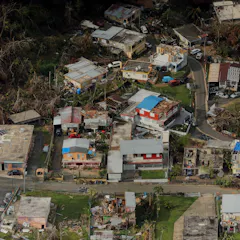
Thousands died after Hurricane Maria, but it did not have to be that way. Early evidence should have led the government to a much stronger response.

The Department of Education says there were 240 school shootings during a recent school year. Another database only counts 29. How could the numbers be so different – and who is right?

Technology is already changing how we live our lives and go about our days. Are we ready with collaborative planning processes so we are not taken by surprise by more profound change?

The current debate about comparability would be more concerning if 2018 results showed radically different trends compared to previous years, but they don’t.
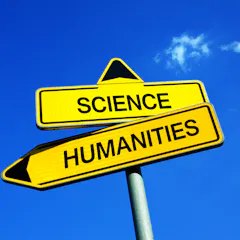
A handful of high-profile executives have humanities degrees. But those standouts make up a small proportion of the total pool of American executives.

It’s very difficult to measure whether a conception was intended. But those data are vital to understanding women’s choices.
Top contributors
-

Co-Founder of The Data Tank and Co-Founder and Chief Research and Development Officer of the Governance Laboratory (GovLab), New York University
-
Associate Professor of Human Development and Family Studies, Demography and Public Policy, Penn State
-
Associate Professor of Political Science, University of Richmond
-
Associate professor, University of Sydney
-
Professor of the Practice of Data Science, Washington University in St. Louis
-
Professor of Health Services and Policy Research, University of British Columbia
-
Clinical Senior Research Associate, MRC Epidemiology Unit, University of Cambridge
-
Honorary Enterprise Professor, School of Population and Global Health, and Department of General Practice and Primary Care, The University of Melbourne
-
Director of the International Laboratory of Demography and Human Capital, Russian Presidential Academy of National Economy and Public Administration
-
Professor of Health Economics, University of Hong Kong
-
Professor of Economics, emeritus, Stony Brook University (The State University of New York)
-
Former postdoctoral researcher on machine learning applied to chemical engineering and currently science communicator for the National Museum of Emerging Science and Innovation (Miraikan), University of Tokyo
-
Lecturer in Data & Society, University of Edinburgh
-
Scientia Professor of Economics, UNSW
-
Associate Professor of Health Studies