
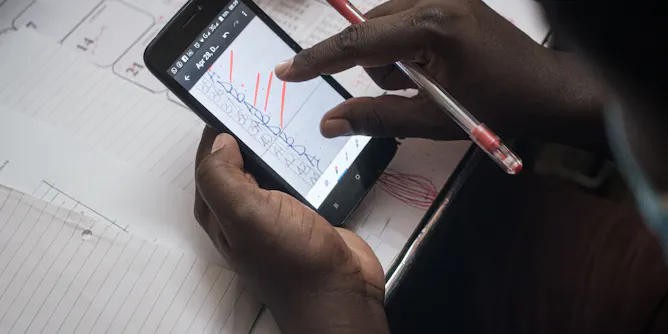
Parties who design the technologies and platforms on which mobile apps are built and marketed must be brought within the legal accountability framework to close the privacy loop.
Articles on Data
Displaying 141 - 160 of 494 articles

After months of government decision-making based on data, is the public really ready to go it alone?
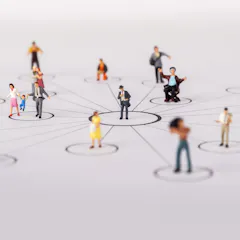
The WHO is creating a Global Pandemic Radar – an example of collective intelligence that must learn lessons from this pandemic.

You’re probably wrong about how much time you spend on your devices, and that has big implications for the link between device use and mental health.

Autonomous robots hold great promise for the agricultural sector, but it’s vital that the public gets a say in their creation.

The US is shifting to a new set of climate ‘normals’ – data sets averaged over the past 30 years. But normal is a relative concept in a time of climate change.

The growth in information production appears unstoppable.

As the conversation about race and diversity becomes more common, why haven’t we updated our census to reflect that?

Rather than distinctly male or female, the human brain is much more like the heart, kidneys and lungs – basically the same no matter the sex of the body it’s in.

A year of working from home has become normalised for many jobs. We’re now learning a great deal about its effects on the workforce and our lives.

Google’s shift to ‘profiling’ is being billed as a privacy boon – but it’s also a strategic pivot.
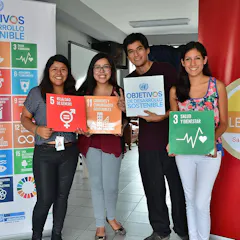
A new report from the GovLab and the French Development Agency (AFD) examines how development practitioners are experimenting with emerging forms of technology to advance development goals.

COVID-19 kept many scientists from doing field research in 2020, which means that important records will have data gaps. But volunteers are helping to plug some of those holes.
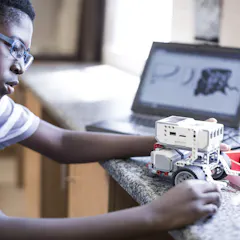
Data underlies the kinds of applications that are proposed for use in the country’s education system.

Airborne data like this is usually available only to industry and government agencies and researchers — rarely to the public.
The Internet of Things will transform industry, agriculture, and our cities. But we need to consider carefully the risks as well as the rewards.
Differential privacy lets people to share data anonymously, but people need to know more about it to make informed decisions.

A close look at how you decide what clothes to put on in the morning can help you understand how computers work.
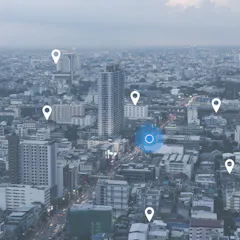
Address data are maintained in silos at different government entities. There is limited coordination and adherence to international standards; good practice is lacking around information management.
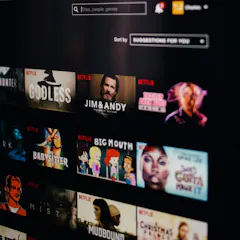
Have you ever watched something because YouTube recommended it to you? You’ve probably been influenced by an algorithm. But at the end of the day, underneath all the algorithms are people.
Top contributors
-

Co-Founder of The Data Tank and Co-Founder and Chief Research and Development Officer of the Governance Laboratory (GovLab), New York University
-
Associate Professor of Human Development and Family Studies, Demography and Public Policy, Penn State
-
Associate Professor of Political Science, University of Richmond
-
Associate professor, University of Sydney
-
Professor of the Practice of Data Science, Washington University in St. Louis
-
Professor of Health Services and Policy Research, University of British Columbia
-
Clinical Senior Research Associate, MRC Epidemiology Unit, University of Cambridge
-
Honorary Enterprise Professor, School of Population and Global Health, and Department of General Practice and Primary Care, The University of Melbourne
-
Director of the International Laboratory of Demography and Human Capital, Russian Presidential Academy of National Economy and Public Administration
-
Professor of Health Economics, University of Hong Kong
-
Professor of Economics, emeritus, Stony Brook University (The State University of New York)
-
Former postdoctoral researcher on machine learning applied to chemical engineering and currently science communicator for the National Museum of Emerging Science and Innovation (Miraikan), University of Tokyo
-
Lecturer in Data & Society, University of Edinburgh
-
Scientia Professor of Economics, UNSW
-
Associate Professor of Health Studies