

Preliminary results of new research show how using data from social networks such as Facebook may help us understand how the coronavirus spread on local and regional levels.
Articles on Data
Displaying 181 - 200 of 494 articles
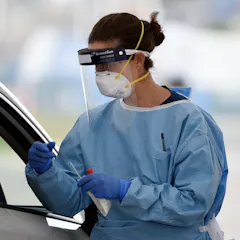
Don’t just tell us how many new cases of COVID-19 have been confirmed, tell us how many people you tested as well. That helps us to know if things are getting better or worse.
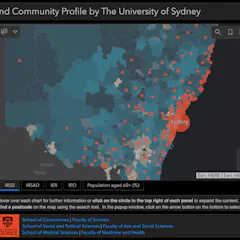
A new searchable database allows people, for the first time, to compare how many COVID-19 cases there are in every NSW postcode with each suburb’s socioeconomic status and age profile.

For most of the past five decades, income inequality has been higher in rural counties than in urban areas. Now, urban areas are catching up.
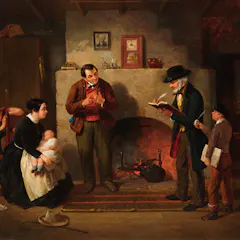
Countries have been trying to count their populations since the Han dynasty in China.
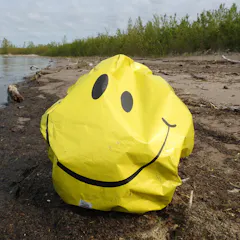
Releasing balloons at weddings and other celebrations is festive, until they break into pieces and become plastic pollution. A citizen science project is spotlighting the problem.
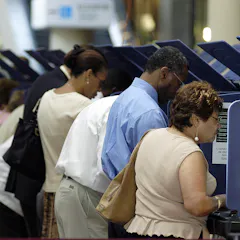
One way in which Latino voters vary is where they or their forebears came from. In states like Florida, that difference matters.
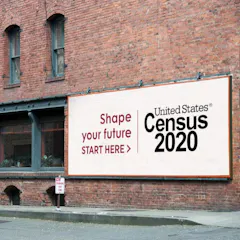
A quarter of Americans, many of them non-white, are worried about data privacy and confidentiality in the 2020 census.
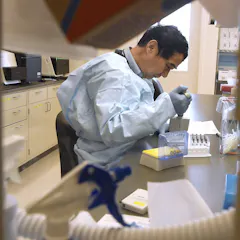
In a survey, a majority of liberals and conservatives reported that they trust doctors and the CDC to reduce US risk of a coronavirus epidemic.

Remember when websites didn’t rely on user data for profit margins, when values like anonymity and transparency were celebrated?
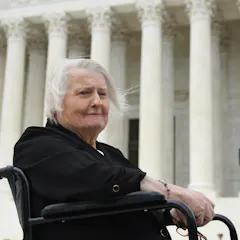
In a national survey, transgender individuals had worse employment outcomes, lower incomes and higher rates of poverty than cisgender people.

According to a new study, about four in 10 air pollution deaths in the US are due to emissions crossing state lines.

Between 1983 and 2013, the number of immigrants detained in rural county jails has increased.

In a handful of cases, defendants in murder cases have said that they were defending themselves from a same-sex pass or attempted sexual assault.

A scholar disproves the long-held assumption that black names are a recent phenomenon.

Amazon says it’s the “new neighbourhood watch” but Ring may just be another technology that gives police too much data and lets neighbourhoods double down on their biases.

Traditional companies need to embrace high-quality data gathering to avoid being left behind by the next industrial revolution.

Medical data will need to be treated as precious to our health as drinking water.

A new study analyzes the language in nearly 680,000 pet adoption ads.

A new analysis of over 400 actors shows that gender discrimination plays a major role in Hollywood salaries.
Top contributors
-

Co-Founder of The Data Tank and Co-Founder and Chief Research and Development Officer of the Governance Laboratory (GovLab), New York University
-
Associate Professor of Human Development and Family Studies, Demography and Public Policy, Penn State
-
Associate Professor of Political Science, University of Richmond
-
Associate professor, University of Sydney
-
Professor of the Practice of Data Science, Washington University in St. Louis
-
Professor of Health Services and Policy Research, University of British Columbia
-
Clinical Senior Research Associate, MRC Epidemiology Unit, University of Cambridge
-
Honorary Enterprise Professor, School of Population and Global Health, and Department of General Practice and Primary Care, The University of Melbourne
-
Director of the International Laboratory of Demography and Human Capital, Russian Presidential Academy of National Economy and Public Administration
-
Professor of Health Economics, University of Hong Kong
-
Professor of Economics, emeritus, Stony Brook University (The State University of New York)
-
Former postdoctoral researcher on machine learning applied to chemical engineering and currently science communicator for the National Museum of Emerging Science and Innovation (Miraikan), University of Tokyo
-
Lecturer in Data & Society, University of Edinburgh
-
Scientia Professor of Economics, UNSW
-
Associate Professor of Health Studies