

One of ten young Malian musicians chosen to study in Cuba, he would pioneer his own brand of African salsa.
Articles on Cuba
Displaying 21 - 40 of 204 articles

From the 1960s onward, dissident Cubans in exile have sought to undermine the government in Havana − often with US assistance.
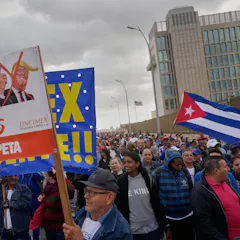
Canada’s longstanding approach to ties with Cuba is geared towards preserving diplomatic engagement while safeguarding economic and strategic interests.
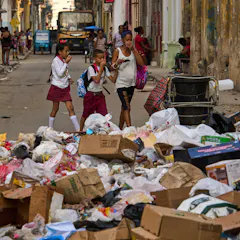
The Soviets came to Cuba’s aid in the 1960s. It remains to be seen whether Russia can do the same now.

The Trump administration’s message to Havana is blunt: negotiate a deal on US terms or face collapse.

Cuba is on the brink of one of the worst social and economic catastrophes since the 1959 revolution. If the international community ignores Cuba today, a humanitarian nightmare will unfold soon.

Diasporas are often treated by media and policymakers as monolithic blocs, but the reality is more complicated.
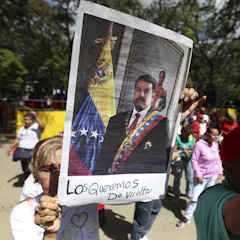
High school students in the US often learn about Latin America through the lens of the US, as a main character that exerts power.
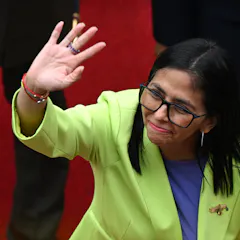
The ideology named after former Venezuelan leader Hugo Chávez became more authoritarian under Nicolás Maduro. Can the country’s new leader steer it back toward democracy?
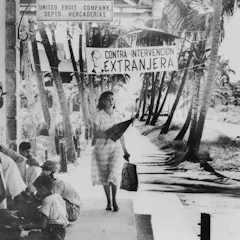
US lawmakers who opposed Guatemala’s democratically elected leaders alleged communist subterfuge. They didn’t mention the United Fruit Company’s complaints before the 1954 coup.
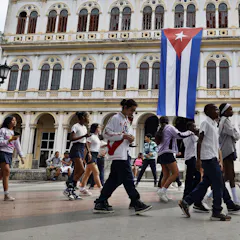
As the situation in Venezuela unfolds, Cubans will watch closely.
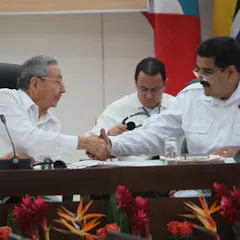
After decades of hostility, Venezuela’s support became crucial to Cuba’s survival.
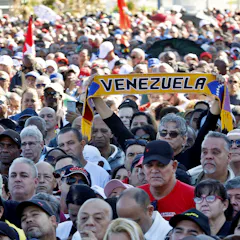
Several other Latin American countries now sit squarely in Washington’s crosshairs.

Conditions on the ground in Cuba are so grim that the Trump administration thinks Havana could fall without any US intervention.
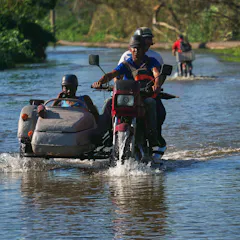
As the Caribbean recovers from the hurricane, Cuba’s response offers lessons for a region facing stronger storms.

A common US-centric narrative holds that the Cuban missile crisis ended when Washington stood firm against the Soviets. But that story ignores a whole continent.

Aside from the weight of US policy, the Cuban state has become increasingly sclerotic and unable to meet the growing demands of its population.

Marta Elena Feitó Cabrera said the island’s beggars were faking poverty to make ‘easy’ money, drawing public outrage.
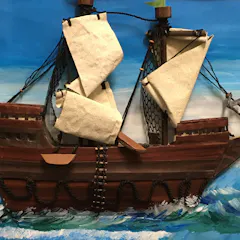
Using tea bags, mop strands and other camp detritus, detainees used art as a way of escape at the detention center.
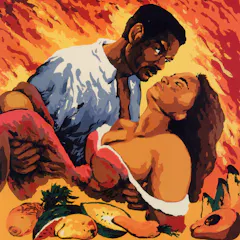
Black points of view and voices have often been marginalized or overlooked in Hollywood. However, Cuban filmmakers have told stories to revalorize Black history and culture.
Top contributors
-

Professor of Government, American University School of Public Affairs
-
Associate Professor of Global Studies, Appalachian State University
-
Research Associate, Institute of the Americas, UCL
-
Professor of Spanish, St. Joseph's College of New York
-
NRF Accredited & Senior Researcher; Lead Coordinator of the South-South Educational Collaboration & Knowlede Interchange Initiative, Cape Peninsula University of Technology
-
Professor, Languages, Literatures and Cultures, Queen's University, Ontario
-
Associate Professor in International Development Studies, Dalhousie University
-
Professor of Political Science, Georgia State University; Institute for Humane Studies
-
Professor of Management and Co-director of the Centre for Latin American & Caribbean Studies, University of Essex
-
Senior Lecturer in Hispanic Studies, University of Kent
-
Photographer and creative director
-
Master Lecturer and Interim Director of Latin American Studies, Boston University
-
Director, Latin American Business Environment program, University of Florida
-
Senior Lecturer in International Relations, University of Aberdeen
-
Herbert J. Ellison Professor of Russian and Eurasian Studies, University of Washington