
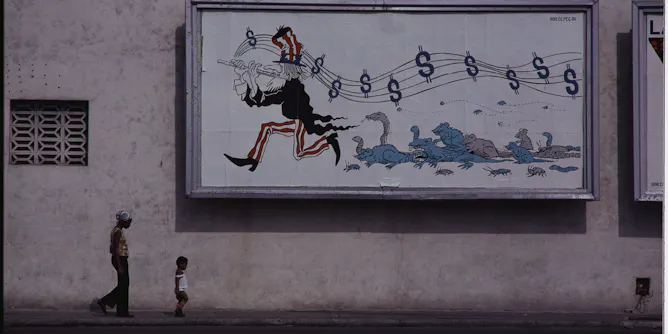
Economic globalization was supposed to encourage democracy around the world. But sometimes the opposite happens.
Articles on Cuban economy
Displaying all articles

Thirty years after first visiting Havana, an expert in US-Cuba relations reports on his latest visit.
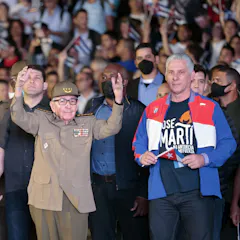
The US is pursuing a strategy of straining the Cuban regime internally, while constructing legal and political justifications for escalation.
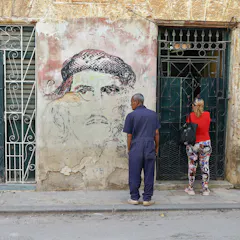
After decades of hostility, the Cuban government is allowing Cuban emigrants to return and invest in the private sector.

The Trump administration’s message to Havana is blunt: negotiate a deal on US terms or face collapse.

Conditions on the ground in Cuba are so grim that the Trump administration thinks Havana could fall without any US intervention.

Marta Elena Feitó Cabrera said the island’s beggars were faking poverty to make ‘easy’ money, drawing public outrage.

Blackouts on the Caribbean island are shining a light on a crumbling economy that the nation’s communist leaders may struggle to emerge from.
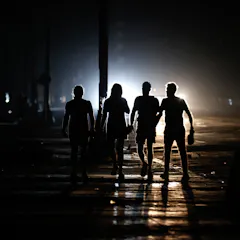
Cuba was plunged into darkness for four consecutive nights after the country’s power grid failed.
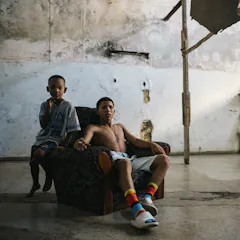
The island is facing the harshest economic conditions since the 1990s, prompting 224,000 people to leave in 12 months.

The dire conditions that brought waves of Cubans to the US in the 1980s and 1990s are again escalating on the communist island, provoked by Trump-era sanctions and the COVID-19 pandemic.

Some Cuban entrepreneurs are so openly anti-communist that they sound like, well, capitalists.
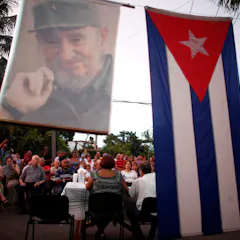
Cuba will not legalize same-sex marriage, as gay activists hoped. But its new constitution adds greater protections for LGBTQ people and for women, and gives Cubans the right to own private property.
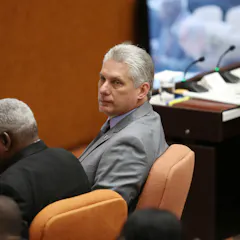
Cuba has a new president — and for the first time in six decades his last name is not Castro. Who is Miguel Díaz-Canel, the man who inherits a Cuba born of Fidel’s 1959 revolution?
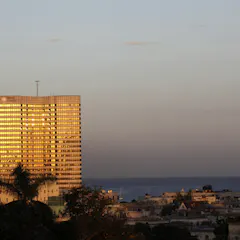
As president, Donald Trump has taken a harsh stance toward Cuba. But his real estate company has tried twice to open Trump properties on the Communist island, allegedly even skirting the law to do so.
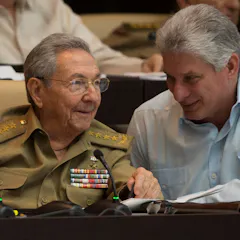
Miguel Díaz-Canel, a 57-year-old engineer and Communist Party loyalist, is expected to succeed Raúl Castro as president of Cuba. Will change bring prosperity or instability to the Cuban people?
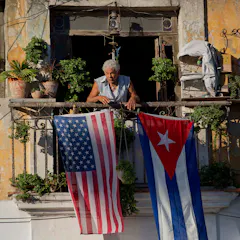
The president restored restrictions on Americans’ travel to Cuba and prohibited transactions with its military. Here’s why, and what’s to come.
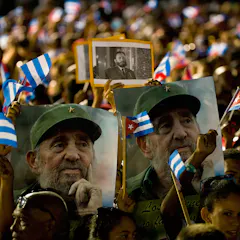
Fidel Castro was no fan of his brother’s plans to normalize relations with the US or open the economy. Does his death suggest those plans might accelerate?
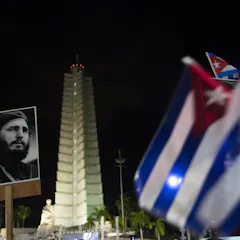
Critics point to low income and food shortages, but when judging the Cuban leader it’s important to look at the whole story.
Top contributors
-

Professor of Government, American University School of Public Affairs
-
Associate Professor of Global Studies, Appalachian State University
-
Professor of Management and Co-director of the Centre for Latin American & Caribbean Studies, University of Essex
-
Director, Latin American Business Environment program, University of Florida
-
Photographer and creative director
-
Research Associate, Institute of the Americas, UCL
-
Professor of International Politics, Lancaster University
-
Professor of Latin American Political Economy, University of Glasgow
-
Lecturer in Global Development and Latin American Studies, University of Leeds
-
Senior Lecturer in Spanish and Latin American Studies, University of Chester
-
Assistant Professor of Political Science, Arizona State University
-
Professor of Spanish, St. Joseph's College of New York