

The State Department views a 1960s-era internationalist movement based in Havana as a Cuban communist plot to destroy America. The truth was far more nuanced.
Articles on Fidel Castro
Displaying 1 - 20 of 71 articles
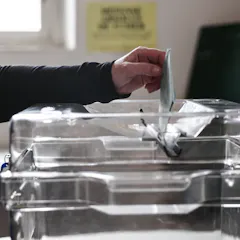
A study across 18 western countries has found that left-handed people sit on the left of the political spectrum and the data suggests it has more to do with identity than biology.
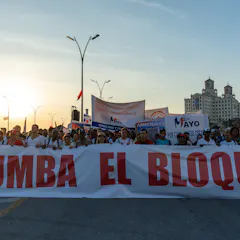
Cubans are living in a state of limbo, and it’s not clear that US military intervention would revitalize the Cuban economy.

Recent military and economic pressure on Cuba, including Trump’s threats of a ‘friendly takeover’ of the island, follow a long pattern of US hostility toward its southern neighbor.
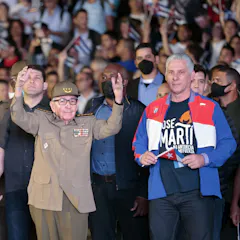
The US is pursuing a strategy of straining the Cuban regime internally, while constructing legal and political justifications for escalation.
Short-term humanitarian aid won’t go far in alleviating Cuba’s long-term energy crisis.
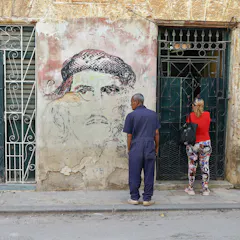
After decades of hostility, the Cuban government is allowing Cuban emigrants to return and invest in the private sector.

Collaborating on providing aid to Cuba in its time of need could serve as a strong foundation for improving Canadian-Mexican relations.
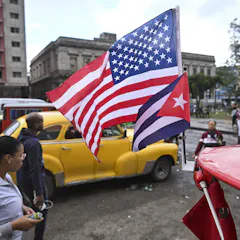
If President Trump gets his way, the future of the US and Cuba will look very much like a partnership of unequals.
From the 1960s onward, dissident Cubans in exile have sought to undermine the government in Havana − often with US assistance.
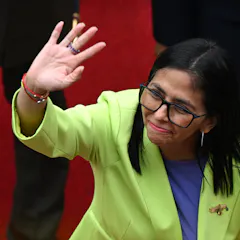
The ideology named after former Venezuelan leader Hugo Chávez became more authoritarian under Nicolás Maduro. Can the country’s new leader steer it back toward democracy?
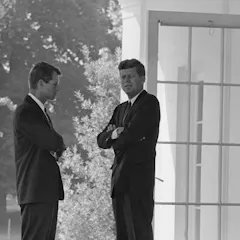
Robert F. Kennedy Jr.’s accounts of the notorious false flag operations proposed during the Kennedy years omit the most important part of the story. Hint: It’s a family affair.

Aside from the weight of US policy, the Cuban state has become increasingly sclerotic and unable to meet the growing demands of its population.

Trump reversed the Cuba ‘thaw’ initiated by President Barack Obama. But second-guessing the incoming president’s policy on the island isn’t straightforward.

Blackouts on the Caribbean island are shining a light on a crumbling economy that the nation’s communist leaders may struggle to emerge from.
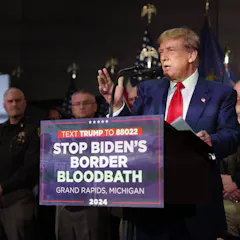
Trump’s use of violent words has increased over time. By 2024, his use of violent language had surpassed nearly all other democratic politicians whose speeches 2 political scientists analyzed.

During the Cuban missile crisis, World War III was likely averted by what one US official called ‘just plain dumb luck.’
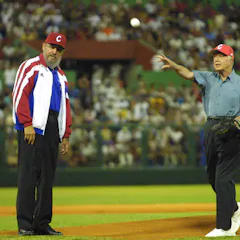
Beloved in his hometown of Plains, Georgia, Jimmy Carter became the 39th US president and used his office to make human rights a priority throughout the world.

The 26 of July Movement became a central part of the movement that emerged triumphant in early January 1959.
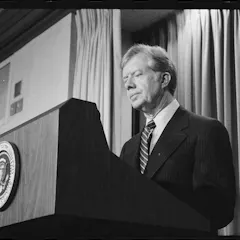
Carter’s work in Zimbabwe forms a significant and under appreciated part of his legacy
Top contributors
-

Associate Professor of Global Studies, Appalachian State University
-
Professor of Government, American University School of Public Affairs
-
Master Lecturer and Interim Director of Latin American Studies, Boston University
-
Director, Latin American Business Environment program, University of Florida
-
Photographer and creative director
-
Professor in Global Sustainable Development, University of Warwick
-
Professor, Global Development Studies and History, Queen's University, Ontario
-
Chair in Latin American Studies, Faculty of Arts, University of Nottingham
-
Senior Lecturer in Spanish and Latin American Studies, University of Chester
-
Professor and Head of Department of Political and Conflict Studies, Nelson Mandela University
-
Senior researcher, Centre for Social Change, University of Johannesburg
-
Professor of Modern History, University of Leeds
-
Professor of Latin American Political Economy, University of Glasgow
-
Senior Lecturer in Hispanic Studies, University of Kent
-
Adjunct Professor, Australia-China Relations Institute, University of Technology Sydney