
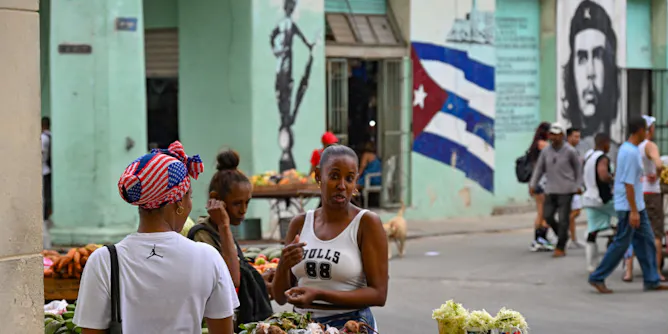
Incoming Trump administration is set to adopt a more hawkish stance on Cuba-US relations – but a more targeted sanctions approach may pressure Havana without hurting the island’s impoverished people.
Articles on Cuba
Displaying 41 - 60 of 204 articles

Whether it was spent feasting or plotting escapes, the week between Christmas and the new year offered a rare opportunity for enslaved men, women and children to reclaim their humanity.

Trump reversed the Cuba ‘thaw’ initiated by President Barack Obama. But second-guessing the incoming president’s policy on the island isn’t straightforward.

Blackouts on the Caribbean island are shining a light on a crumbling economy that the nation’s communist leaders may struggle to emerge from.
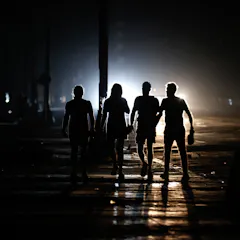
Cuba was plunged into darkness for four consecutive nights after the country’s power grid failed.
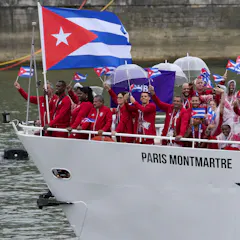
Cuba’s historic decline in Olympic athletes highlights the country’s deepening socioeconomic crisis and the deteriorating state of its sports programs.
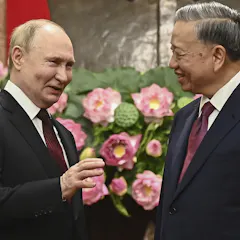
While most European nations are on board with western sanctions, countries in the Global South have maintained economic and political links with Russia.
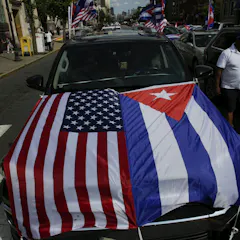
Cuban has yo-yoed on and off the US list of state sponsors of terrorism. Is the Biden administration changing that?
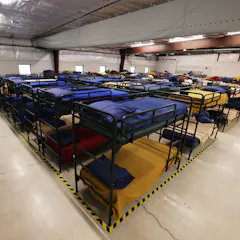
People who enter the US as refugees or with asylum generally adapt quickly and become productive members of society. But cities need help getting them settled and employed.

During the Cuban missile crisis, World War III was likely averted by what one US official called ‘just plain dumb luck.’
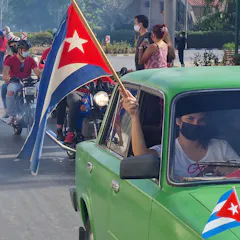
Cuba’s economy – saddled by US sanctions and ill-timed reforms – is in dire straits.
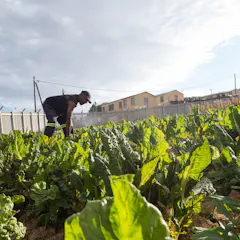
Community-centred approaches to urban agriculture have been successful in various parts of the world.
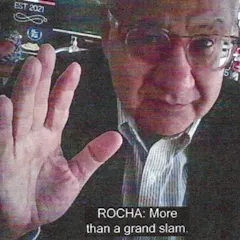
Cuba gets less attention as an espionage threat than Russia or China, but is a potent player in the spy world. Its intelligence service has already penetrated the US government at least once.
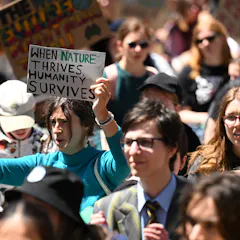
One set of ideas runs counter to the mainstream consensus that technology will save us from climate change. Can degrowth ever win enough converts to persuade humanity to change course?
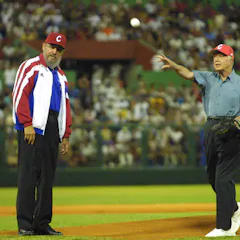
Beloved in his hometown of Plains, Georgia, Jimmy Carter became the 39th US president and used his office to make human rights a priority throughout the world.

It is not mere expansion, but the character of the expansion which will guide the five Brics countries on whether they admit new members.

The sites provide a rare tangible record of the international solidarity that existed during the Cold War.
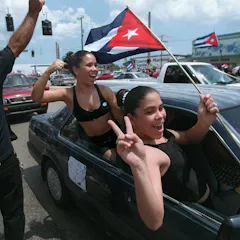
It came about through sustained contact with native Spanish speakers who directly translated phrases from Spanish into English, a form of linguistic borrowing called ‘calques.’
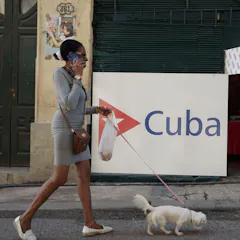
Cubans turned out in higher numbers than expected at the recent elections.
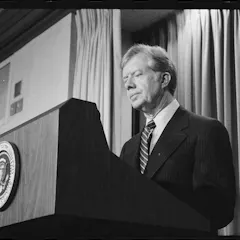
Carter’s work in Zimbabwe forms a significant and under appreciated part of his legacy
Top contributors
-

Professor of Government, American University School of Public Affairs
-
Associate Professor of Global Studies, Appalachian State University
-
Research Associate, Institute of the Americas, UCL
-
Professor of Spanish, St. Joseph's College of New York
-
NRF Accredited & Senior Researcher; Lead Coordinator of the South-South Educational Collaboration & Knowlede Interchange Initiative, Cape Peninsula University of Technology
-
Professor, Languages, Literatures and Cultures, Queen's University, Ontario
-
Associate Professor in International Development Studies, Dalhousie University
-
Professor of Political Science, Georgia State University; Institute for Humane Studies
-
Professor of Management and Co-director of the Centre for Latin American & Caribbean Studies, University of Essex
-
Senior Lecturer in Hispanic Studies, University of Kent
-
Photographer and creative director
-
Master Lecturer and Interim Director of Latin American Studies, Boston University
-
Director, Latin American Business Environment program, University of Florida
-
Senior Lecturer in International Relations, University of Aberdeen
-
Herbert J. Ellison Professor of Russian and Eurasian Studies, University of Washington