
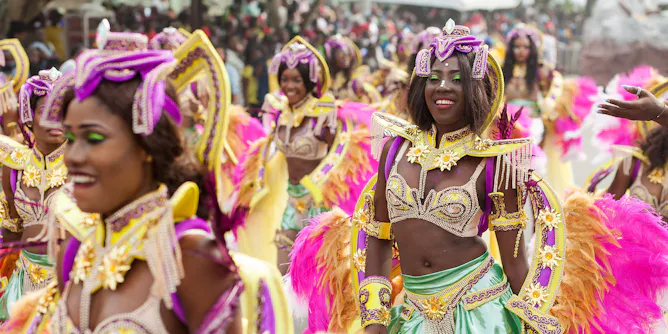
What was once just a cultural moment has become a powerful economic engine of cultural tourism.
Articles on creative economy
Displaying 1 - 20 of 27 articles

Chokepoint Capitalism is a dark portrait of a cultural system where monopolies and monopsonies predominate to the detriment of artists.

Meditations on improvisation in a year of both COVID-19 and what some called ‘the other pandemic’ of racism push us to go deeper to find ways to sustain healthy public common life.
The pandemic has battered the arts and culture sector in Indonesia. Many producers and organizers have been forced to cancel events, concerts and movie releases.
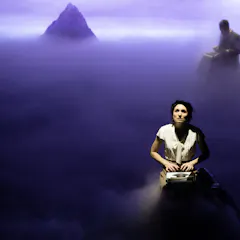
COVID-19 has exposed the insecurity of the cultural workforce. Making the performing arts freely available online may further diminish their value, right when the sector is arguing its worth.

The number of tourists visiting Banyuwangi have jumped five fold in the last couple of years, thanks to the innovative local government.

Trade in cultural goods and services offers emerging markets an opportunity to benefit from their cultural capital and globalisation.

What does society want and need from the arts and humanities?

A new project documents who uses urban industrial lands slated for redevelopment. It reveals a vibrant but largely hidden sector at the interface between creative industries and small manufacturing.

The notion of the creative sector driving fulfilling work as cities shed old industries has worn thin. But those creatives might be delivering value of a different kind, offering a more human future.

A comparison of 36 Australian cities finds that, unlike Europe, the data on their creativity and culture are not closely linked to their capacity to generate economic value and social well-being.

The digital pin-ups’ business models actually inhibit serendipity and, indeed, innovation by absorbing entire markets into the sealed-off space of their platforms.

The corporate world has taken the lead in promoting various creative/smart city visions, which struggle to be inclusive, let alone entrust citizens with control over their lives.
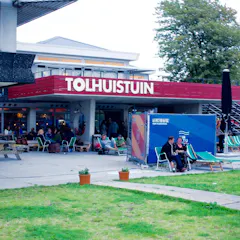
When municipal or state governments join forces with smaller creative communities to shape urban regeneration the results can be far-reaching.
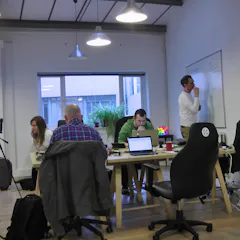
Cities seeking to attract creative industries have relied heavily on the cluster concept. New research suggests a technology-driven transformation of how the sector works calls for a new approach.
The relationship between the art world and the market economy has long been one of Sturm und Drang. Deep down, a battle of weltanschauung plays out between light and dark, sky and earth, imagination and…
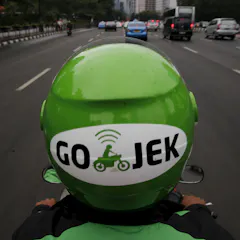
Creative industries have the potential to provide much needed jobs in Indonesia. But, without a law on creative economy, industries are being subjected to rigid sectoral regulations.

‘If these index findings are indeed true then our economic and cultural performance, our overall prosperity, should be better than it is.’

Artistic works in the public domain may be free, but they form the basis of derivative works worth millions to the economy.

Labour has made a move to put creativity back at the centre of the education agenda in the lead-up to the May general election. In a recent speech, Ed Miliband drew attention to the reduction in arts education…
Top contributors
-

Professor of Cultural Economy, Adelaide University
-
Professor of Economics, RMIT University
-
Chair of Discipline, Media and Communications, University of Sydney
-
Professor and Director of Urban Planning & Design, Monash University
-
Lord Kelvin Adam Smith Fellow in Social Sciences, University of Glasgow
-
Research Assistant, Australian Centre for Culture, Environment, Society and Space (ACCESS), University of Wollongong
-
Honorary Senior Fellow in Urban Geography and Planning, The University of Melbourne
-
Senior Lecturer in Planning, The University of Queensland
-
Professor of Media, School of Media, Film, and Journalism, Monash University
-
Senior Lecturer in Communications and Media, Monash University
-
Professor of Social History, University of Bristol
-
Dean of Education, School of Education and Institute for Education, Bath Spa University
-
Researcher, Indonesian Center for Law and Policy Studies (PSHK)
-
Executive Director, Compton School
-
Associate Professor, University of Canberra, Stockholm Environment Institute