

Once the pandemic is over, London’s gravitational pull is likely to come back into play.
Articles on Creative cities
Displaying all articles
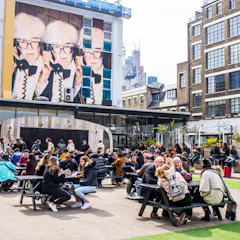
Half the world’s urban population live in cities with 500,000 inhabitants or fewer – it’s time to celebrate these ‘ordinary’ cities.

Ségou in Mali has successfully developed its urban cultural economy in ways that’s inclusive, sustainable and context-sensitive.

A new project documents who uses urban industrial lands slated for redevelopment. It reveals a vibrant but largely hidden sector at the interface between creative industries and small manufacturing.
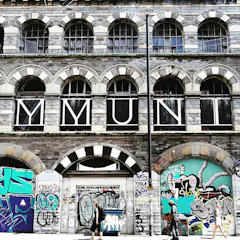
It’s time for governments to put a stop to the twisted logic of gentrification.

The notion of the creative sector driving fulfilling work as cities shed old industries has worn thin. But those creatives might be delivering value of a different kind, offering a more human future.

A comparison of 36 Australian cities finds that, unlike Europe, the data on their creativity and culture are not closely linked to their capacity to generate economic value and social well-being.

The digital pin-ups’ business models actually inhibit serendipity and, indeed, innovation by absorbing entire markets into the sealed-off space of their platforms.

The corporate world has taken the lead in promoting various creative/smart city visions, which struggle to be inclusive, let alone entrust citizens with control over their lives.
Cities seeking to attract creative industries have relied heavily on the cluster concept. New research suggests a technology-driven transformation of how the sector works calls for a new approach.

The “edgy authenticity” of street art makes it an ideal tool for urban planners seeking to attract the new “creative class”.
Top contributors
-

Professor of Cultural Economy, Adelaide University
-
Research Assistant, Australian Centre for Culture, Environment, Society and Space (ACCESS), University of Wollongong
-
Professor, Faculty of Design and Society, University of Technology Sydney
-
Lecturer in Culture and Creative Industries, City St George's, University of London
-
Associate Professor, University of Canberra, Stockholm Environment Institute
-
Professor and Director of Urban Planning & Design, Monash University
-
Australian Laureate Fellow, University of Sydney
-
Associate Professor in Organisation Studies, University of Leicester
-
Junior Director at the Digital Cultures Research Lab, Leuphana University
-
Professor of Autonomy in Art, Design and Technology, St Joost Art Academy, Avans University of Applied Sciences
-
PhD Researcher, Royal Holloway, University of London
-
British Academy Postdoctoral Fellow, UCL
-
Professor of Historical Geography, University of Portsmouth
-
Professor of Media, School of Media, Film, and Journalism, Monash University
-
Senior Lecturer in Communications and Media, Monash University