
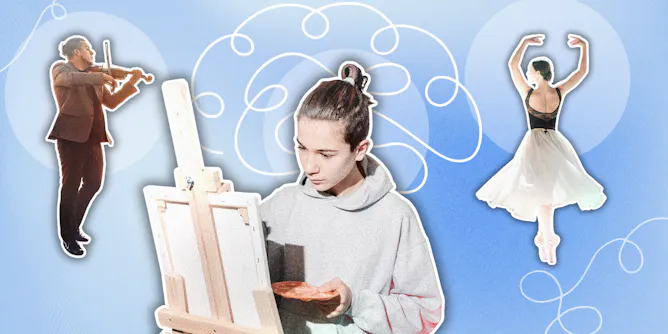
Here’s what more than 150 years of science really tells us about being left-brained vs right-brained.
Articles on Creativity
Displaying 1 - 20 of 228 articles
The team printed a honeycomb and a Canadian maple leaf, both roughly the size of a single grain of sand.
Educators can confront AI head on by distinguishing its pattern-recognition skills from its inability to daydream, embody other people and authentically express itself.

A little boredom can be good for you.
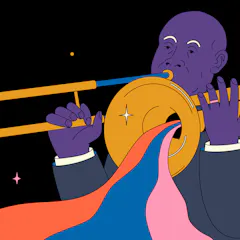
Playing improv music activates the reward system of the brain.
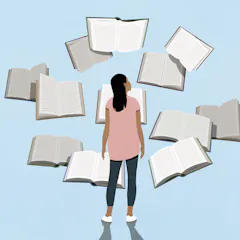
Some teachers increasingly are shifting their approach to reading, assigning fewer books than they once did.
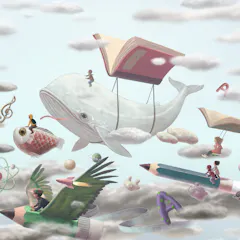
As schools focus more on evidence-based reading instruction, less time is available for children to practice reading for pleasure.

AI-powered translation tools are certainly impressive. But there is an important frontier for translation technology, one AI might never be able to breach: the poem.
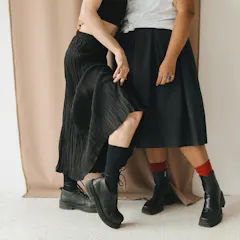
In the words of fashion designer Yohji Yamamoto: ‘Above all black says this: I don’t bother you – don’t bother me!’
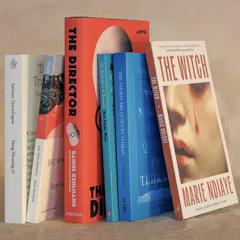
Novelists and translators from Bulgaria to Brazil make up this this year’s impressive shortlist.
AI’s apparent inability to generate interesting and unique images and videos is becoming harder to ignore.
One of the biggest myths of creativity is that constraints limit our imagination.

About 1-4% of people have synaesthesia, a trait that both fascinates and puzzles scientists.

Whether they’re famous composers or first-year art students, creators experience reputational costs when AI enters the mix.

New research shows that parents who read to their 6- to 8-year-olds nightly boost their children’s creativity and empathy.

AI is replacing tasks we have grown reluctant to do ourselves – thinking, writing, creating, analysing.

AI-mediated culture is already being filtered in ways that favor the familiar, the describable and the conventional.

The cost of college is on the rise – but college grads still earn more than those without a degree.
The plural of anecdote is not data, as they say.

Boredom is a healthy part of life. Experiencing it can help children learn to set goals and make plans.
Top contributors
-

Professor of Computer Science and Director of the Art & AI Lab, Rutgers University
-
Professor of Philosophy and Director of Applied Ethics Center, UMass Boston
-
Visual Artist and Lecturer in Teacher Education, University of Canberra
-
Associate Professor of Developmental Psychology & Psychopathology, University of Leeds
-
Professor Emerita of Linguistics, American University
-
Professor of Psychological and Brain Sciences, Drexel University
-
Professor of Experimental Psychology, University of Iowa
-
Professor of Engineering Innovation, Adelaide University
-
Professor of Personality Psychology, The University of Melbourne
-
Senior Lecturer in Psychology, Oxford Brookes University
-
PhD student, University of Warwick
-
Professor of Creative Arts, Griffith University
-
Professor, Innovation Design Engineering, Royal College of Art
-
Postdoctoral Fellow in Philosophy, UMass Boston
-
Professor of Educational Psychology, University of Connecticut