

Immunity fades rapidly for some infections (influenza) but lasts a lifetime with others (measles). Here’s what we know about COVID.
Articles on COVID-19 variants
Displaying 101 - 120 of 134 articles

With multiple variants of concern now present in the UK, attention is turning to when updated vaccines for them will be ready.
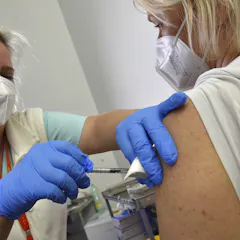
The FDA has indicated booster shots, to cover coronavirus variants, won’t need to go through lengthy phase 3 clinical trials. Instead, they can be tested in smaller trials, which will save time.
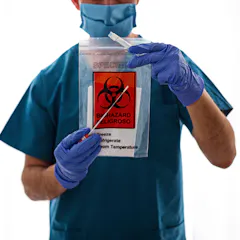
The real concern is if two variants infect the same cell and swap genetic material.

The P1 variant has arrived in the UK, with early analysis suggesting it may be more transmissible and able to partially escape existing immunity.

B1525 is a new coronavirus variant under investigation by Public Health England.

Moving Auckland to level 3 for a week gives health officials time to track down additional cases and shut off chains of transmission. But we should also be prepared for a wider outbreak.
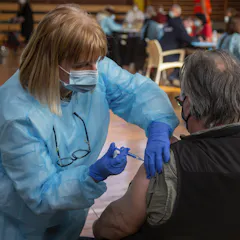
You’ve been vaccinated; can you now safely see your friends and family? New research hints that vaccinated people may be less likely to transmit the coronavirus, but they are not 100% in the clear.

The first year of dealing with the pandemic has taught New Zealand many lessons — including how we might tackle systemic social and environmental problems.
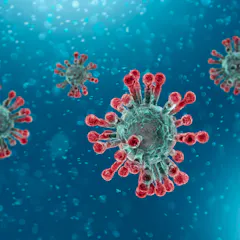
Occasionally, a mutation will give the virus a better chance of surviving and reproducing itself, and will result in a new population (known as a new lineage)
The rapid increase in the number of infections is the most obvious reason why new variants of the virus have been emerging recently. Case numbers doubled in just two months at the end of 2020.

The pandemic will not end for anyone, anywhere until it is controlled in every country. Tanzania’s approach will make it that much harder for normality to return.

The highly infectious nature of the COVID-19 variant, and the fact the infections have no clear link to the border, leaves the worrying possibility of a more widespread community outbreak.
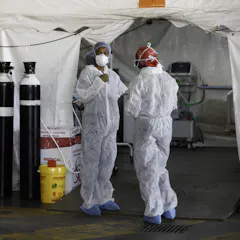
We can help vaccines keep up with the mutating coronavirus by doubling down on preventive measures.
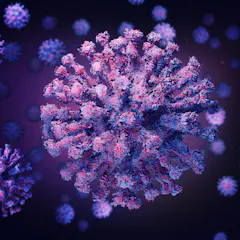
In the context of COVID-19, we’re hearing about new mutations, strains and variants all the time. It’s no wonder it can all get a bit confusing.

Are two face masks better than one? Adding layers of filtration by double masking is a way of using the masks that we already have, possibly to better effect.
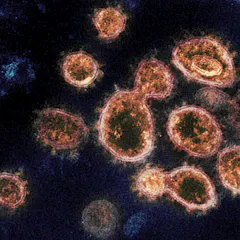
These variants are definitely cause for concern. But there’s every indication we can adapt our vaccine strategy to combat these and other variants going forward.
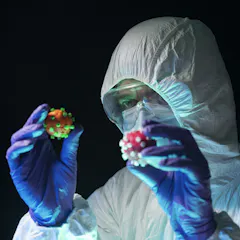
The virus is evolving and new strains are more transmissible. Will the vaccines work against these new variants? How can researchers stay ahead of the virus’s evolution?
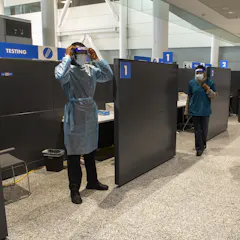
Recently announced travel restrictions are intended to curb the spread of COVID-19 variants. However, we need to do a better job of tracking arrivals into the country.

The results indicate that the vaccine efficacy in the UK was 89% for individuals who received at least two doses of vaccine. In South Africa, the vaccine efficacy was 60% in people without HIV.
Top contributors
-

Professor, Biochemistry, Trinity College Dublin
-
Professor in Applied Mathematics, University of Canterbury
-
Professor of Microbial Evolution at The Milner Centre for Evolution, University of Bath
-
Adjunct professor, Te Herenga Waka — Victoria University of Wellington
-
Professor of Public Health, University of Otago
-
Instructor of Human Immunology, Emory University
-
Director of the Centre for Epidemic Response and Innovation (CERI) at Stellenbosch University and the KwaZulu-Natal Research Innovation and Sequencing Plaform (KRISP)., Stellenbosch University
-
Senior Lecturer, University of Auckland, Waipapa Taumata Rau
-
Early Career Research Leader, Emerging Viruses, Inflammation and Therapeutics Group, Menzies Health Institute Queensland, Griffith University
-
Professor of Public Health, University of Otago
-
Professor of Pathology, Microbiology and Immunology, University of South Carolina
-
Principal Medical Scientist at National Institute for Communicable Diseases (NICD), National Institute for Communicable Diseases
-
Professor, Biology, York University, Canada
-
Senior Lecturer, The University of Queensland
-
Associate Professor and Research Leader in Virology and Infectious Disease, Griffith University