

Some deaths among the vaccinated are to be expected given how high the threat of COVID-19 is to older people.
Articles on COVID-19 variants
Displaying 61 - 80 of 134 articles
COVID-19 vaccination produces a more consistent immune response than a past infection. With the delta variant, the difference in protection may be even greater.

New Zealand will have to vaccinate 80-85% to reach population immunity. Until then, a blanket border re-opening, even if only for vaccinated people, would pose a high risk of new outbreaks.

New Zealand health authorities were quick to react to the threat of a COVID-19 outbreak and managed to avoid community transmission, but the unique nature of how the virus spreads also played a role.

Pressure is mounting to reopen the Canada-U.S. border, but there are risks. How well those risks are managed may be the difference between pandemic recovery or a fourth wave of COVID-19.
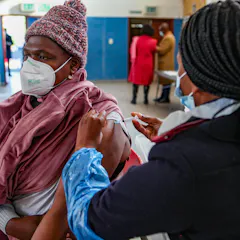
South Africa didn’t engage early enough with pharmaceutical companies in bilateral discussions to ensure it could get vaccines early.

New Zealand has avoided a COVID-19 outbreak, despite a visit by an Australian traveller with the delta variant. But now is clearly the time to introduce mandatory scanning and mask rules.

The Delta variant: What it is, where it came from, why it’s different and whether COVID-19 vaccines can prevent it.
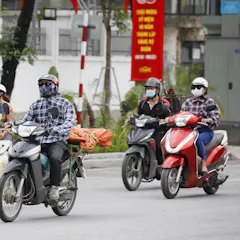
We recently heard reports of a new and dangerous ‘hybrid’ variant circulating in Vietnam. There is such as a thing as a hybrid viral variant — but this doesn’t appear to be it.

It is unlikely that we will reach full herd immunity for COVID-19. However, we are likely to reach a practical kind of herd immunity through vaccination.
Bat hosts, lab leaks – tracing SARS-CoV-2 to its origins involves more than just tracking down patient zero.
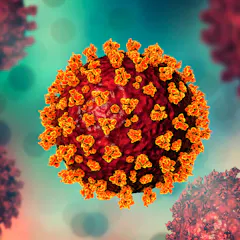
Both the AstraZeneca and Pfizer vaccines still work relatively well against it — though only after the second dose.
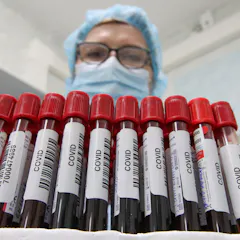
The World Health Organization has created more memorable and less stigmatising names for coronavirus variants.

The COVID-19 variant responsible for Victoria’s latest outbreak is one of three Indian variant sub-types, which spreads more easily than the original strain. Here’s what we know so far.

One of the main fears regarding new SARS-CoV-2 variants is that they might be resistant to immunity granted by vaccines, including RNA vaccines.
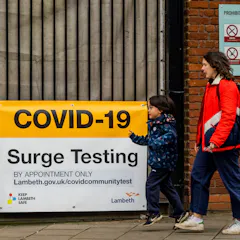
Variants of interest and variants of concern seem to be popping up at an alarming rate. But how many of them do we really need to worry about?

What does the Seychelles experience tell us about variants, vaccine efficacy and herd immunity?
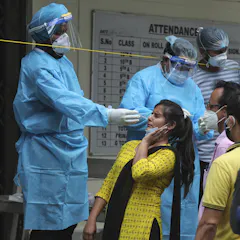
As the Indian variant becomes more prevalent within our borders, anti-South Asian sentiment is also growing, putting the community at a higher risk of hate crimes.
A viral immunologist answers key questions about the B16172 variant.

There’s still a lot we don’t know about the latest variant of concern: B16172.
Top contributors
-

Professor, Biochemistry, Trinity College Dublin
-
Professor in Applied Mathematics, University of Canterbury
-
Professor of Microbial Evolution at The Milner Centre for Evolution, University of Bath
-
Adjunct professor, Te Herenga Waka — Victoria University of Wellington
-
Professor of Public Health, University of Otago
-
Instructor of Human Immunology, Emory University
-
Director of the Centre for Epidemic Response and Innovation (CERI) at Stellenbosch University and the KwaZulu-Natal Research Innovation and Sequencing Plaform (KRISP)., Stellenbosch University
-
Senior Lecturer, University of Auckland, Waipapa Taumata Rau
-
Early Career Research Leader, Emerging Viruses, Inflammation and Therapeutics Group, Menzies Health Institute Queensland, Griffith University
-
Professor of Public Health, University of Otago
-
Professor of Pathology, Microbiology and Immunology, University of South Carolina
-
Principal Medical Scientist at National Institute for Communicable Diseases (NICD), National Institute for Communicable Diseases
-
Professor, Biology, York University, Canada
-
Senior Lecturer, The University of Queensland
-
Associate Professor and Research Leader in Virology and Infectious Disease, Griffith University