
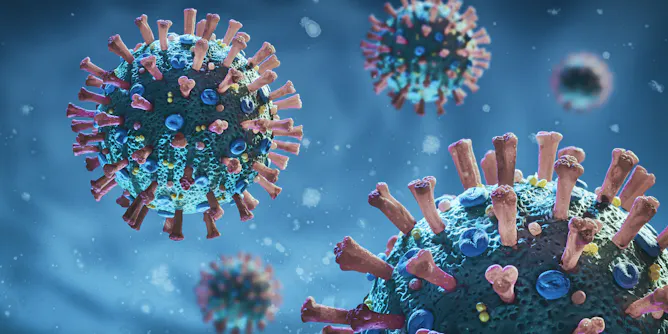
The current COVID-19 vaccine does not match the strain that’s now becoming dominant in the US, which could lead to a rise in COVID-19 cases.
Articles on Omicron variant
Displaying 1 - 20 of 155 articles

As we prepare for the festive season, it’s easy to let COVID boosters fall off our to-do lists. But COVID is still circulating and new shots are available.
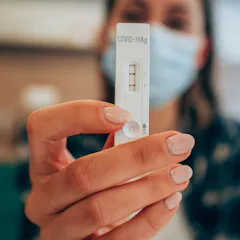
Early signs suggest NB.1.8.1 may be more transmissible than earlier variants, likely due to mutations in the spike protein. But there’s no evidence it’s more severe.
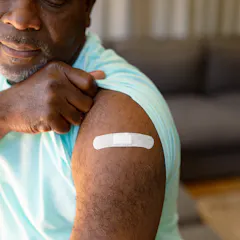
The TGA is considering an updated COVID vaccine, which would be better matched to current variants.

As the virus continues to mutate, COVID vaccines are updated. This brings us to the latest announcement about the new ‘monovalent’ vaccines.
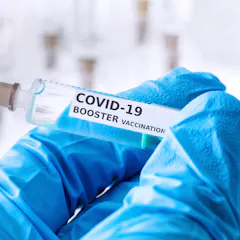
Only time and data will tell whether the CDC-recommended reformulated shots can stand their ground against the ever-changing SARS-CoV-2 variants.

Researchers still don’t know how well BA.2.86 will evade immunity or whether it will cause more severe disease than its predecessors.
We still have much to learn about many aspects of COVID-19 — including its lingering health effects and the mechanics of its endless mutations — but we do know one thing: we can’t let our guard down.

New analysis answers questions about the ongoing effectiveness of COVID vaccines: How well they protect against infection, hospitalization and death months after initial doses or after a booster shot.
With the emergency phase of the COVID-19 pandemic in the rearview mirror, at least for now, we look back on a handful of stories that provided sharp insights at key moments in the pandemic.
The new bivalent boosters against COVID-19 have failed to halt omicron infections. However, new technologies are being developed that pave a way forward.
The XBB.1.5 subvariant — nicknamed ‘Kraken’ — is arguably the most genetically rich and most transmissible SARS-CoV-2 Omicron subvariant yet.

Canada’s new COVID-19 testing requirement for travellers arriving from China is unlikely to prevent the spread of new subvariants.
XBB.1.5, or ‘kraken’, can evade our immune systems better than earlier variants, and appears to be more infectious. But it’s not cause for alarm.
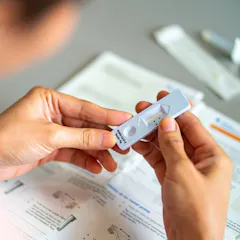
Some results of independent testing of rapid antigen tests available in Australia have been made public. Here’s what the data tell us.
There are so many forms of the virus, it’s hard to keep up. Here’s what to expect next as the virus mutates and recombines.
Two new omicron subvariants, BQ.1 and BQ.1.1 could lead to another COVID surge. Here’s what we know so far.

Rapid tests can be an incredibly useful tool for early detection of COVID-19. Unfortunately, they sometimes leave people with more questions than answers.

Adding COVID-19 to a list of ‘designated diseases’ will not make vaccination mandatory for school entry. But it may help increase COVID-19 vaccine uptake among children.
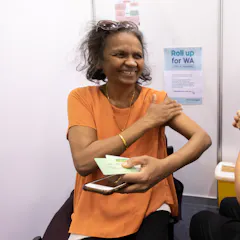
As the virus that causes COVID evolves, keeping up with it remains a challenge for variant-specific vaccines. The booster you can get now is the best one to get.
Top contributors
-

Professorial Fellow, University of Canberra
-
Professor, Infectious Diseases and Microbiology, The University of Queensland
-
Professor of Pathology, Microbiology and Immunology, University of South Carolina
-
Associate Professor of Molecular Medicine, UMass Chan Medical School
-
Professor of Pathology, Microbiology and Immunology, University of South Carolina
-
Dean Faculty of Health Sciences and Professor of Vaccinology at University of the Witwatersrand; and Director of the SAMRC Vaccines and Infectious Diseases Analytics Research Unit, University of the Witwatersrand
-
Professor, School of Biomedical Sciences and Pharmacy, University of Newcastle
-
Canada Research Chair in Aging & Immunity, McMaster University
-
Professor and Department Chair of Infectious Diseases and Microbiology, University of Pittsburgh
-
Adjunct Professor: Department Internal Medicine, University of Pretoria
-
Professor of Medicine, University of East Anglia
-
Professor, Biology, York University, Canada
-
Principal Medical Scientist at National Institute for Communicable Diseases (NICD), National Institute for Communicable Diseases
-
Senior Lecturer, Medical Microbiology, University of Westminster
-
Research scientist, Manaaki Whenua - Landcare Research