
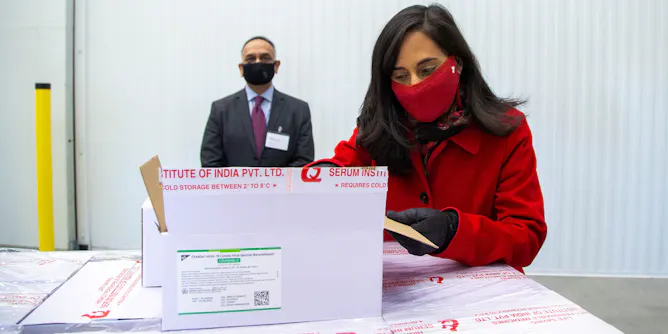
Despite some public virtue signalling, the Canadian government is not doing all it can to improve global access to COVID-19 vaccines. Canada has yet to announce its position on the WTO patent waiver.
Articles on COVID-19 variants
Displaying 81 - 100 of 134 articles
Vaccination is likely to substantially reduce virus transmission by reducing the pool of people who become infected, and reducing virus levels in people who do get infected.

It sounds too good to be true, a vaccine that can protect against future virus variants. But governments around the world are keen to learn more.
Coronavirus is 30,000 RNA ‘letters’ long, meaning there are over a quintillion possible genome permutations.
By merging genomics with classical epidemiology, researchers are able to predict new disease outbreaks based on which viral variants are on the rise.
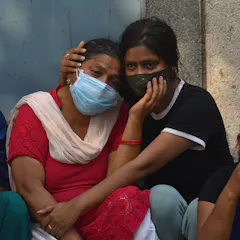
Pressure is mounting to get COVID vaccines to where they are most needed.
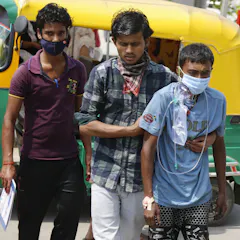
The emergence of an Indian “double mutant” strain of the coronavirus may explain the country’s tragically soaring infection rates. Genomic testing and monitoring will be crucial in the weeks ahead.
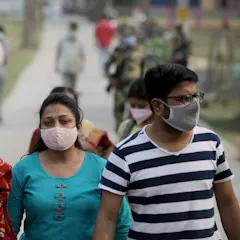
Britain moves to protect itself from the B1617 variant, which vaccines may be less effective against.

As the third wave ravages Ontario, there is public confusion and mistrust. Premier Ford’s flip-flops on restrictions indicate not just poor risk communications, but the lack of an informed plan.
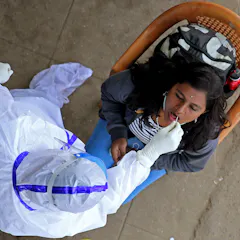
A coronavirus variant with a double mutation has been found in the UK, with cases currently doubling every week.
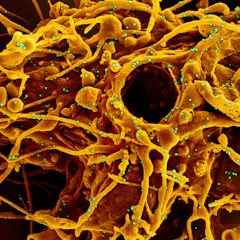
Variants of the original SARS-CoV-2 are now in wide circulation. That means the third wave of COVID-19 has come with new questions about the variants, their effects and what might come next.

Kids want to play sports again, and who can blame them? An exercise scientist and physiologist explains why adhering to safety protocols is imperative.

With changing recommendations about AstraZeneca’s COVID-19 vaccine making headlines, many people have questions about its use.

As the US vaccinates millions more people each day, the novel coronavirus works to survive. It does this by mutating. So far, several variants are worrisome. A virologist explains what they are.
COVID-19 variants of concern have changed the game. We need to recognise and act on this to avoid future waves of infections, yet more lockdowns and restrictions, and avoidable illness and death.
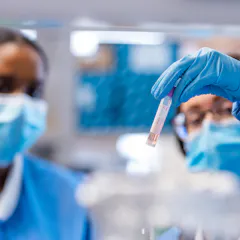
The US lags in testing coronavirus samples from COVID-19 patients, which can help track the spread of the virus and the emergence of new variants. But labs are ramping up this crucial surveillance.
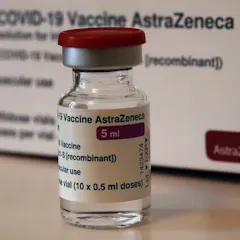
AstraZeneca just announced results from its US-based trial. It found the vaccine to be 79% effective and safe for use, despite recent concerns around reports of blood clots.
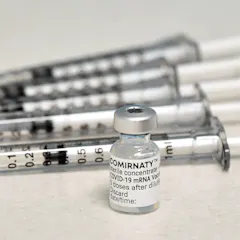
Giving smaller vaccine doses in multiple shots is often more effective than a larger single dose.
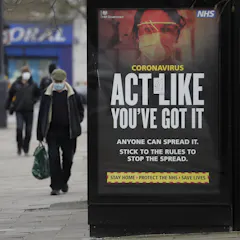
A virologist breaks down everything you need to know about the UK variant.
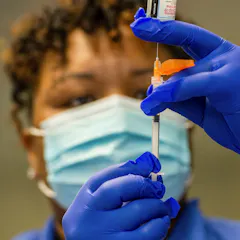
Researchers are closely watching the coronavirus mutants to make sure vaccines can be adjusted if necessary. But scientists don’t know whether vaccines will be effective in those already vaccinated.
Top contributors
-

Professor, Biochemistry, Trinity College Dublin
-
Professor in Applied Mathematics, University of Canterbury
-
Professor of Microbial Evolution at The Milner Centre for Evolution, University of Bath
-
Adjunct professor, Te Herenga Waka — Victoria University of Wellington
-
Professor of Public Health, University of Otago
-
Instructor of Human Immunology, Emory University
-
Director of the Centre for Epidemic Response and Innovation (CERI) at Stellenbosch University and the KwaZulu-Natal Research Innovation and Sequencing Plaform (KRISP)., Stellenbosch University
-
Senior Lecturer, University of Auckland, Waipapa Taumata Rau
-
Early Career Research Leader, Emerging Viruses, Inflammation and Therapeutics Group, Menzies Health Institute Queensland, Griffith University
-
Professor of Public Health, University of Otago
-
Professor of Pathology, Microbiology and Immunology, University of South Carolina
-
Principal Medical Scientist at National Institute for Communicable Diseases (NICD), National Institute for Communicable Diseases
-
Professor, Biology, York University, Canada
-
Senior Lecturer, The University of Queensland
-
Associate Professor and Research Leader in Virology and Infectious Disease, Griffith University