

The early universe was kind of like a big game of musical chairs – scientists are figuring out how many particles were able to find ‘seats’ to understand the cosmos.
Articles on Cosmic microwave background
Displaying 1 - 20 of 28 articles
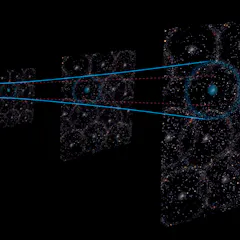
A local void could settle contradicting measurements about how fast the universe is expanding.
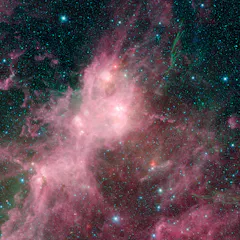
The universe is constantly expanding, but how do scientists think about what it’s expanding into?
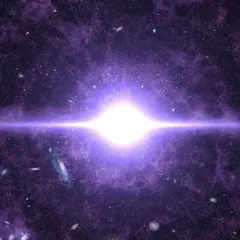
Can we really understand what happened at the beginning of the universe?
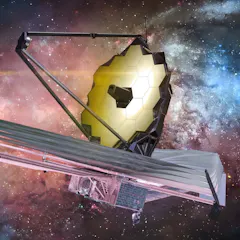
Some of the earliest galaxies found with JWST are also the brightest. That’s a problem for our ideas about the universe.

The Hubble tension has been described as a “crisis” for cosmology. Can it be resolved?
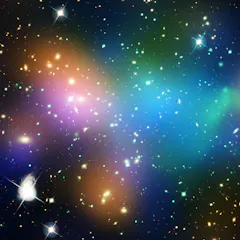
Cosmology does not need dark matter or dark energy in an expanding universe that allows the constants of nature to evolve, and light loses energy as it travels vast distances.
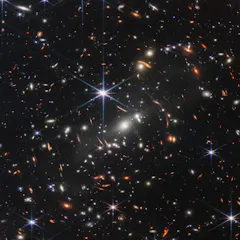
The universe is expanding faster than physicists would expect. To figure out what processes underlie this fast expansion rate, some researchers are first trying to rule out what processes can’t.
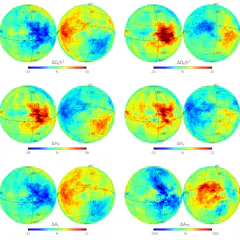
New deep-space discoveries suggest the Universe is lumpy and lopsided. But if matter is distributed unevenly, we’ll have to rethink the simple geometry used in cosmological models.
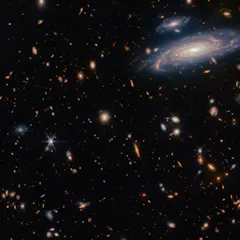
The darkness of the night sky seems so obvious as to need no explanation – yet it has intrigued and baffled scientists for centuries.
It’s the oldest light in the universe.
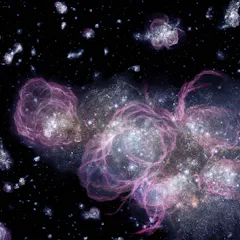
The term ‘Big Bang’ might make you think of a massive explosion. Put the thought out of your head. Rather than an explosion, it was the start of everything in the universe.

The 2019 Nobel Prize in Physics went to a cosmologist who helped unlock the secrets of the Big Bang’s aftermath, and two astronomers who found a “hot Jupiter” orbiting a nearby star.
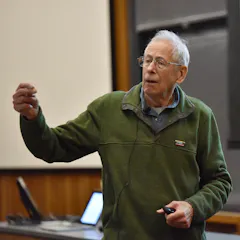
The Princeton cosmologist helped pioneer our current model of the universe and began a whole new branch of physics.
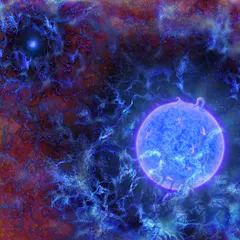
New radio technology has managed to detect the first light in the universe.
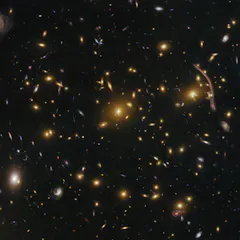
Galaxies evolve in mysterious way. But a new study offers a fresh approach to understand them.
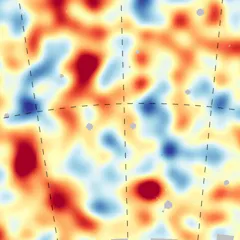
We still can’t see the dark matter thought to make up about a quarter of the universe, but at least now we have a map of its structure.
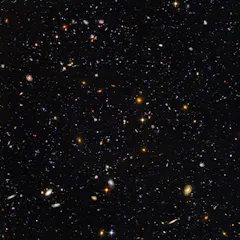
The idea that we live in a ‘multiverse’ made up of an infinite number of parallel universes has long been considered a possibility.
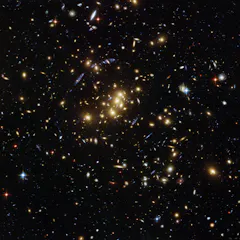
Einstein’s famous theory of general relativity theory lives on thanks to new research.
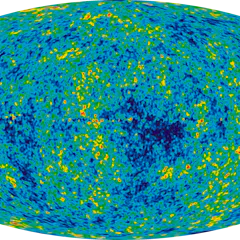
This month marks the 50th anniversary of the discovery of the Cosmic Microwave Background, which is the radiation left over from the birth of the universe.
Top contributors
-

Professor of Astrophysics and Royal Society University Research Fellow, University of Hertfordshire
-
Pro Vice-Chancellor Flagship Initiatives, Swinburne University of Technology
-
Cosmologist, University of Tasmania
-
Professor of Extragalactic Astronomy, Head of the Astrophysics Group, University of Bath
-
Honorary research fellow in Physics and Astronomy and author of "The Cosmic Microwave Background - how it changed our understanding of the Universe", Cardiff University
-
Research Fellow in Cosmology, University of Portsmouth
-
Adjunct professor, Physics, L’Université d’Ottawa/University of Ottawa
-
Professor of Astrophysics, University of Sydney
-
John Curtin Distinguished Professor (Radio Astronomy), Curtin University
-
Professor of Astrophysics, Liverpool John Moores University
-
Professor, The University of Queensland
-
Professor in Earth Sciences, Nanyang Technological University, Singapore, and Emeritus Professor of Mineral Physics, University of Cambridge
-
DECRA Fellow, Astrophysics, The University of Melbourne
-
Research Scientist in Cosmology, Bahamas Advanced Study Institute & Conferences
-
Professor of Cosmology, University of Portsmouth
