
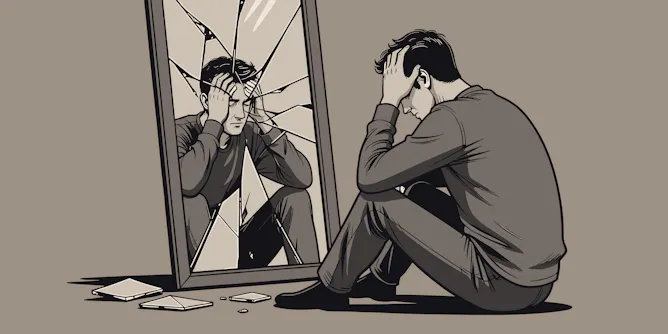
New research shows experiences of adversity are linked with stronger perceptions of injustice – and a greater tendency to believe in conspiracy theories.
Articles on Conspiracy thinking
Displaying all articles
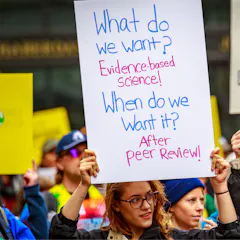
Trust in science seems compatible with believing almost anything, so long as it is expressed in plausibly scientific terms.
Surveys may overestimate belief in conspiracy theories because of trolls and jokers – but genuine believers can still cause real-world harm.
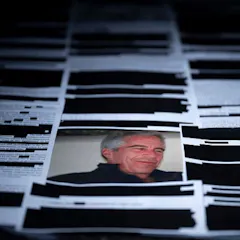
People have created their own online platforms to probe the millions of Epstein file documents, fostering new conspiracies that link to older ones like QAnon.

A communications researcher lays out the dynamics of conspiracy theory belief and why they gain traction in times of anxiety and uncertainty.
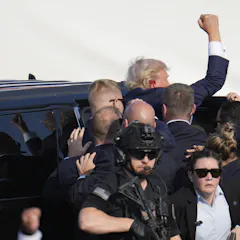
Politicians and other influential actors are amplifying conspiratorial content – potentially contributing to increased distrust in the US political system.
Conspiracy theories abound. What should you believe − and how can you tell?

A scholar of history of education and American politics explains what is behind his course on conspiracy theories and how students learn to debunk fake ideas.
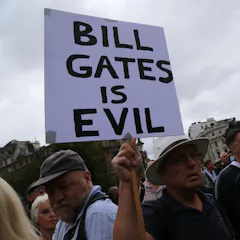
Being smart won’t protect you from falling down conspiracy rabbit holes.

The event shocked the world. But it also sparked the minds of filmmakers, authors, artists and conspiracy theorists.
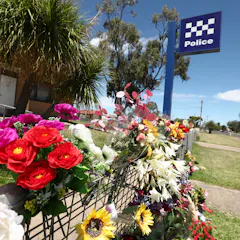
Conspiracy beliefs can be motivators for actual or attempted violence against specific people, places, and organisations. What should, and shouldn’t, police do to counter them?

Narcissism and belief in conspiracy theories may be among the factors that motivate people to buy cryptocurrencies.
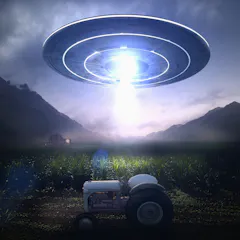
Americans who believe aliens have visited Earth are more likely than disbelievers to say that Joe Biden is not the legitimate winner of the 2020 presidential election.
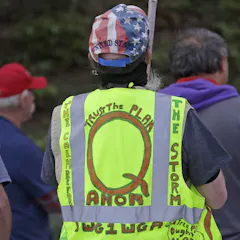
Computational methods could help identify conspiracy theories as they emerge.
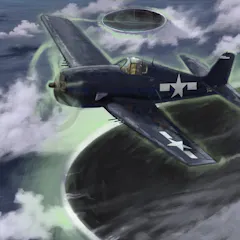
Before pilot Charles Taylor and company mysteriously vanished in the Bermuda Triangle in 1945, Taylor had to be rescued from the Pacific Ocean twice.
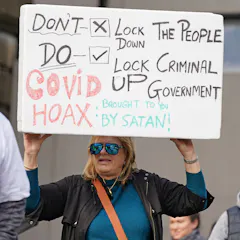
When it comes to COVID-19 misinformation, not all nations are the same. Some are peddling a larger variety of myths than others - and each seems to have its own personal favourite.
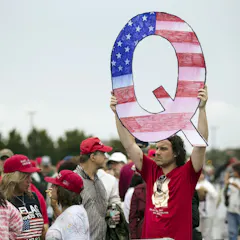
QAnon conspiracists think Trump’s ‘secret war’ against an elite celebrity ‘deep state’ network will eventually lead to a day of reckoning where his opponents will fall.

From political ideologies, conspiracy theories or “reopen” protests, when faced with uncertainty, we seek reassurance in the face of mortality through efforts at containment.
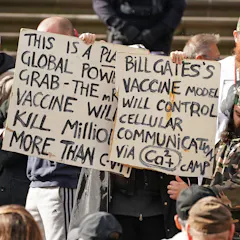
Do recent lockdown protests indicate that Australia is on the path to Trump’s America? While we can currently rest easy, the problem requires careful consideration.

Conspiracy theories about COVID-19, such as those advanced in the video ‘Plandemic,’ tend to pull from the same playbook. Recognizing that can help keep you from falling for this kind of thinking.
Top contributors
-

PhD Candidate, Digital Media Research Centre, Queensland University of Technology
-
Professor of Politics and International Affairs, Princeton University
-
Assistant Professor, Religious Studies, McMaster University
-
Research Associate in Political Science, University of New Orleans
-
Professor of Marketing, The University of Western Australia
-
Senior Research Fellow, Melbourne School of Psychological Sciences, The University of Melbourne
-
Postdoctoral Research Fellow, School of Politics, Security, and International Affairs, University of Central Florida
-
Associate Professor of American History and Politics, University of East Anglia
-
Senior Lecturer in Marketing, Macquarie University
-
Professor of Cognitive Psychology and Australian Research Council Future Fellow, The University of Western Australia
-
Professor of American Studies, University of Nottingham
-
Professor, School of Social Sciences, The University of Western Australia
-
WISERD Civil Society Post-Doctoral Fellow, Cardiff University
-
Professor of Marketing, Queensland University of Technology
-
Lecturer in Policing and Emergency Management, University of Tasmania