

The key to understanding online conspiracy theorists is to understand how the line between fantasy and reality can become blurred.
Articles on Conspiracists
Displaying all articles
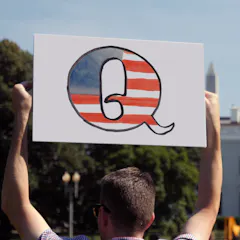
Many of those who believe conspiracy theories do not necessarily act on those beliefs. Nevertheless, conspiracy theories can still spread dangerous misinformation that can cause harm.

It’s no surprise the unexplained structures have the internet buzzing. But they haven’t entered the ranks of other great conspiracy material — and history helps explain why they probably won’t.

What was once the stuff of urban legends now spreads virally through social media claims the tunnels beneath our cities are used for child trafficking. The truth is both more mundane and important.

Before pilot Charles Taylor and company mysteriously vanished in the Bermuda Triangle in 1945, Taylor had to be rescued from the Pacific Ocean twice.

QAnon conspiracists think Trump’s ‘secret war’ against an elite celebrity ‘deep state’ network will eventually lead to a day of reckoning where his opponents will fall.

From political ideologies, conspiracy theories or “reopen” protests, when faced with uncertainty, we seek reassurance in the face of mortality through efforts at containment.
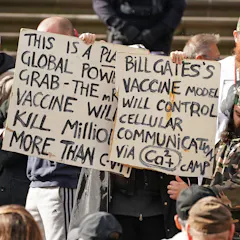
Do recent lockdown protests indicate that Australia is on the path to Trump’s America? While we can currently rest easy, the problem requires careful consideration.

Conspiracy theories about COVID-19, such as those advanced in the video ‘Plandemic,’ tend to pull from the same playbook. Recognizing that can help keep you from falling for this kind of thinking.

We analysed eight years of Reddit posts from conspiracy theorists. Our findings have helped debunk some common myths about this somewhat alienated group of people.

Some people are habitual conspiracy thinkers – there’s a plan behind everything, and it’s usually malevolent. One scientist set out to understand who is likely to ascribe to these theories.
Top contributors
-

Professor of Psychology, Union College
-
PhD Student, Philosophy, Dalhousie University
-
Senior Lecturer in Philosophy and Education; Curriculum Director, UQ Critical Thinking Project, The University of Queensland
-
Professor of Social Psychology in Society, University of Cambridge
-
Senior Research Fellow, Melbourne School of Psychological Sciences, The University of Melbourne
-
PhD candidate, School of Humanities, Languages and Social Science, Griffith University
-
PhD Candidate, Griffith University
-
Assistant Professor, Religious Studies, McMaster University
-
Graduate Student in Philosophy, Australian National University
-
Professor, School of Social Sciences, The University of Western Australia
-
Chair of Cognitive Psychology, University of Bristol
-
Postdoctoral Fellow, Philosophy, University of Toronto
-
Professor, School of Philosophy, Australian National University
-
Professor of Cognitive Psychology and Australian Research Council Future Fellow, The University of Western Australia
-
Research Assistant, Faculty of Architecture, Building and Planning, University of Melbourne, The University of Melbourne