

Have we become trapped in thinking that better politics is just a technical fix away?
Articles on Computer modelling
Displaying 1 - 20 of 52 articles
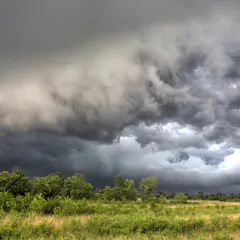
Don’t blame the weatherman. A meteorologist explains where your local weather forecasts really come from, and what storm scientists are doing to bring them closer to home.

Storm surge is the No. 1 cause of deaths and damage during a hurricane, yet detailed storm surge forecasts are difficult to create. AI could turn that around.

A study using more than 90,000 scientific observations shows Earth is getting too hot for many tropical birds.
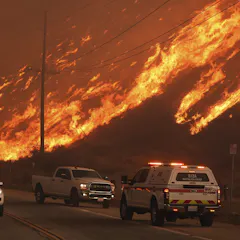
Fire spotters used to watch with binoculars from forest towers. Now, technology can help forecast fire behavior, but human experience is still essential.

Using cameras and trackers attached to Australian sea lions, we explored previously unmapped ocean habitats off the South Australian coast. The data also fed into predictive computer models.

New simulation tools open the door for objective nurse workload management — a missing key to a healthy health-care system.

Any plan to dam or extract water from some of Australia’s last wild rivers must carefully consider the consequences. Prawn, mud crab and barramundi fisheries could suffer in the Gulf of Carpentaria.

From more accurate climate modelling to the prospect of truly creative computers, the brain’s use of noise has a lot to teach us.

Our ability to use mathematical modelling is accelerating breakthrough discoveries in health care and biotechnology.

Faced unexpected rises in COVID-19 admissions, computer models can help senior managers plan the use of hospital beds.

New research models how the Homo floresiensis species could have evolved its small size remarkably quickly while living on an isolated island.

Computer modelling has confirmed that Scotland’s West coast could support and sustain a reintroduced lynx population.

Asthma affects around 339 million people worldwide. A new drug promises to lower risks of asthma attack and may eventually allow patients to reduce their dependence on steroids.
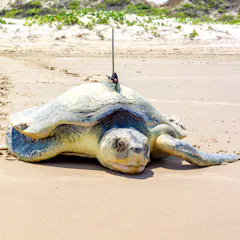
Mathematic models are becoming more sophisticated and now they could actually predict how likely a species is to die out.

Daily routine affects how much polluted air we breathe.
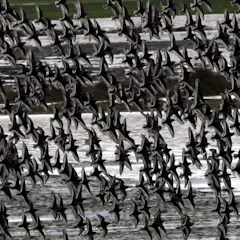
By identifying and applying the key rules governing the behaviour of each individual, agent-based modelling offers insights into complex phenomena like traffic jams and flocking.
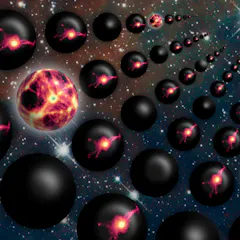
New research on parallel universes forces cosmologists to come to an uncomfortable conclusion.
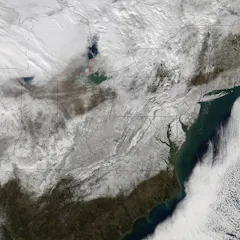
Why can’t meteorologists call the weather correctly every time? Blame the battle of the weather models.

There’s a surprising amount in common between ancient ways of thinking about the future and the techniques we use now.
Top contributors
-

Emeritus Professor, University of Nottingham, (currently Vice-Chancellor at MILA University, Malaysia), University of Nottingham
-
Professor of Psychology, University of Essex
-
Professor of Physics and Astronomy & Professor of Microbiology and Molecular Genetics, Michigan State University
-
Professor of Mathematics, University of Michigan
-
Research Fellow, Adelaide University
-
Professor of Data Science; Director, Adelaide Data Science Centre, Adelaide University
-
Associate Professor of Human Dimensions of Natural Resources, Colorado State University
-
Professor in Computing and Information Systems, Edge Hill University
-
PhD Student, University of Bath
-
Professor of Applied Mathematics, Adelaide University
-
BOM, Australian Bureau of Meteorology
-
Senior Lecturer in Climate Science, Imperial College London
-
Professor of Physical Oceanography, Bangor University
-
Research Principal, Institute for Sustainable Futures, University of Technology Sydney
-
Professor of Mathematical Biology and Public Engagement, University of Bath