

Scientists studied active matter systems by racing worms through tubes – to unexpected results.
Articles on Simulation
Displaying 1 - 20 of 34 articles

A housing simulator predicts that rezoning for ‘missing middle’ housing could increase Denver’s housing supply by 46%.

Within a fraction of a second of seeing another person being touched, our brains figure out who is involved and how it might feel.
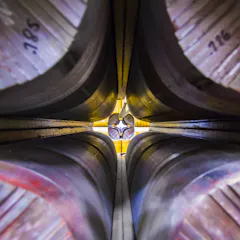
New results resolve the long-standing anomaly of the muon’s magnetic moment – and may offer hints about the nature of dark matter.
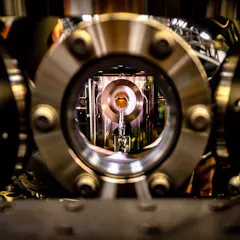
Quantum computers are getting closer and closer to being useful in the real world.

This hospitality course bridges the gap between theoretical knowledge and real-world skills.

Replacing players with virtual avatars was partly a necessity due to exclusive media rights deals. But beyond that, it presents some opportunities.
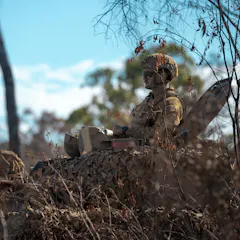
The Brereton Inquiry recommended reassessing the Australian Defence Force’s ethics training approach. Four years later it’s improved a bit, but could be much better.

After a successful trial, an on-demand public transport service in Auckland has been optimised to increase patronage – without the cost of buying new vehicles.

Organ models that more accurately capture finer details could reduce surgical error and lead to personalized implants.

The European Union’s 10-year Human Brain Project is coming to a close. Whether this controversial 1 billion-euro project achieved its aims is unclear, but its online forum did foster collaboration.

When it comes to physics experiments, quantum simulations aren’t quite the real thing – but in some cases they’re much closer than you’d expect.
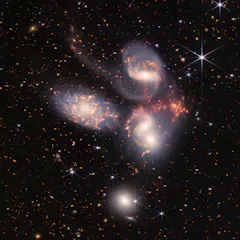
There may be ways to check if our universe is just simulated entertainment for an advanced, alien species.

Digital twins could be used in the future to predict and influence our behaviour, but this raises concerns about who owns our data and how we can access and control it.

The test facility in Miami helps building designers prevent future storm damage. With the warming climate intensifying hurricanes, engineers are planning a new one with 200 mph winds and storm surge.

Plus, a philosopher explains the history of the idea that we might all be living in a simulation. Listen to The Conversation Weekly podcast.
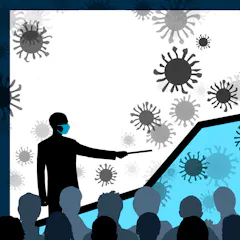
The model provides county-level analysis and simulates the benefits of mask-wearing in terms of illnesses and deaths.
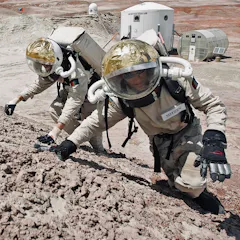
Even on ‘Mars’, humans waste food. And some types of food are more likely to end up in the bin than others.

Environmental change can be a slow creep towards disaster for species. We studied how prehistoric humans coped to help make sense of the future using video game technology.
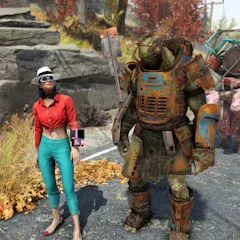
Video games were once thought to offer an escape from everyday life – but they often hold a mirror to what we do in reality.
Top contributors
-

Associate member of the Australian Centre for Astrobiology, UNSW
-
Professor in Earth Sciences, Nanyang Technological University, Singapore, and Emeritus Professor of Mineral Physics, University of Cambridge
-
Head of Atmospheric, Oceanic and Planetary Physics, University of Oxford
-
Chair in Interactive Multimedia Systems, University of Birmingham
-
Emeritus Professor of Complex Systems Science, Crawford School of Public Policy, Australian National University
-
Professor of Physical Oceanography, Bangor University
-
Faculty member & Research Group Leader, Max Planck Institute for Software Systems
-
Senior Lecturer in Climate Science, Imperial College London
-
Professor of Environmental Science, UMass Lowell
-
Professor of Social Psychology, University of Sussex
-
Space Plasma Physicist, Imperial College London
-
Professor of Complex Systems, University of Sydney
-
PhD candidate in psychology, University of Sussex
-
Associate Professor of Computing, Macquarie University
-
Researcher in Virtual Reality, Auckland University of Technology