
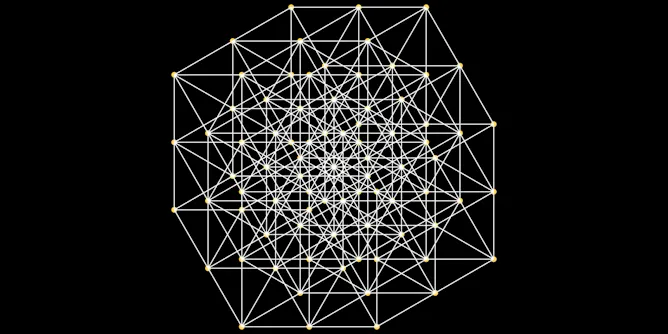
As AI climbs on the shoulders of many mathematicians before it, humans are also able to reach further due to advances by AI.
Articles on Supercomputers
Displaying 1 - 20 of 39 articles

Behind the long-term climate projections that affect our lives sits one of the most remarkable scientific achievements of the modern era.

When the Gadi supercomputer opened in 2020, it was ranked 24th in the world. It’s now dropped to 179th.
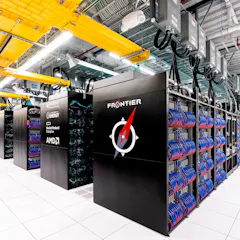
Today’s supercomputers are enormously powerful, but the work they do − running AI and tackling difficult science − is pushing them to their limits. Building bigger supercomputers won’t be easy.

Understanding the evolution of radio galaxies is crucial for unravelling the broader processes that shape the universe.
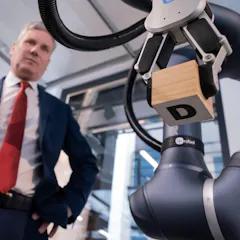
Labour’s decision to cancel the UK’s next-generation supercomputer is just the tip of the iceberg.
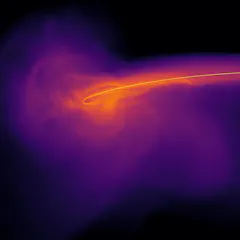
If a star gets too close to a black hole, it gets shredded and produces a complex ball of light. These videos are the first time this dramatic event has been simulated in detail.

The prevailing human reaction to the idea of artificial intelligence has always been fear, revealed in the way film has portrayed our increasingly important relationship with AI over the years.
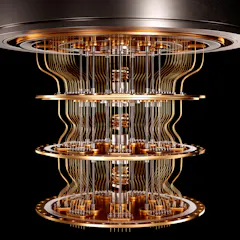
Quantum computing has huge promise from a technical perspective, but the practical benefits are less clear.
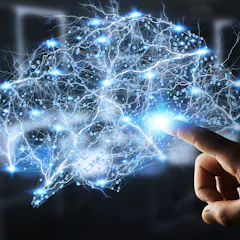
Neuromorphic computers aim to one day replicate the amazing efficiency of the brain.

The volcanic eruptions that bring diamonds to Earth’s surface are driven by ‘pillars of heat’ stretching deep inside the planet.

The European Union’s 10-year Human Brain Project is coming to a close. Whether this controversial 1 billion-euro project achieved its aims is unclear, but its online forum did foster collaboration.

Recent suggests quantum computers could solve problems with breathtaking speed by comparison to current supermodels.

From more accurate climate modelling to the prospect of truly creative computers, the brain’s use of noise has a lot to teach us.

Radio telescopes produce enormous amounts of data, and we need immense computing power to produce even a single image like this one.
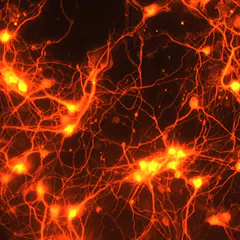
From robotic hands to brain-like computers, the Human Brain Project has produced some intriguing results.

Calculating pi with unprecedented accuracy has zero scientific usefulness. But as a show of computing muscle and a mathematical curiosity, it’s endlessly intriguing.

Diversifying leadership can change organizational cultures, which removes barriers to women in the tech industry and academia.
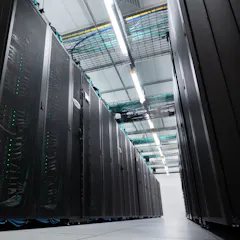
Supercomputers in Canberra and Perth power the analysis and modelling that decision-makers rely on in national crises.
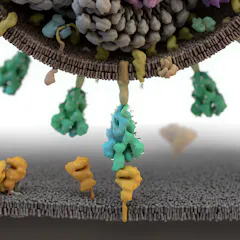
Scanning through billions of chemicals to find a few potential drugs for treating COVID-19 requires computers that harness together thousands of processors.
Top contributors
-

Honorary Senior Lecturer, Macquarie University
-
Project Manager, Edinburgh Parallel Computing Centre, University of Edinburgh
-
Professor of Quantum Physics and Quantum Technology, University of Sydney
-
Timothy Gould is a Friend of The Conversation.
Associate professor in Applied Mathematics, Griffith University
-
Atmospheric Modelling Team Leader, Australian Bureau of Meteorology
-
Chancellor's Fellow, Department of Physics, University of Strathclyde
-
Professor of Computer Science, Queen Mary University of London
-
BOM, Australian Bureau of Meteorology
-
Climate Scientist, Australian Bureau of Meteorology
-
ARC Laureate Fellow, Swinburne University of Technology
-
Professor in Physics, The University of Queensland
-
Technical Director, Edinburgh Parallel Computing Centre, University of Edinburgh
-
Senior Research Engineer, The University of Melbourne
-
Dr; Senior Researcher, CSIRO
-
Professor of Astrophysics, University of Sydney