
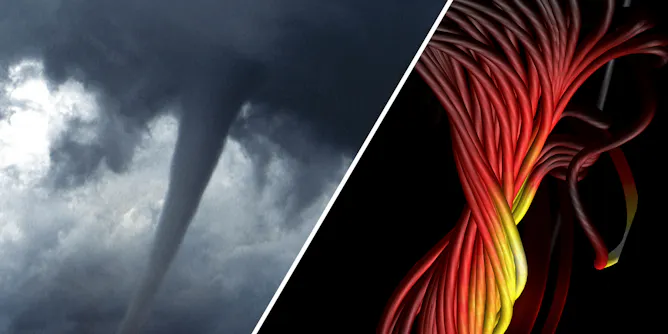
Unprecedented simulations show the formation of space tornadoes capable of causing strong geomagnetic storms around Earth, calling for earlier and more accurate warnings.
Articles on Computer simulations
Displaying 1 - 20 of 29 articles

People have long assumed that wheels evolved from simple wooden rollers. But how? And why? A new model focused on mechanical advantage and structural strength suggests some answers.
Suppose the law of gravity is simply a byproduct of the universe operating under a computer-like code.

Sports data analytics experts have tried to predict the upcoming AFL campaign by simulating the season in four different ways.

For decades, scientists have tried to uncover the cause of long-term changes in Earth’s biodiversity. New simulations point at geography playing a critical role.

If the average amount of information conveyed by an event is always decreasing, it could mean we live in a computer program.

Researchers simulated thousands of scenarios of an ancient pathogen being released into modern ecosystems. In the worst cases, up to one-third of host species were destroyed.

To us, Earth’s landscapes might change very little. But over millions of years, our planet’s surface has shifted in innumerable ways.

In silico clinicial trials have the potential to speed up trials and cut costs.

Like a coffee you can’t finish stirring, a ‘time crystal’ is a strange quantum state of matter than never settles down to equilibrium.

The placenta is one of the least studied organs, but it is the cause of problems in one in ten pregnancies. A virtual placenta is helping researchers to pick up at-risk pregnancies sooner.

Researchers are using mixed reality technologies to investigate how people behave in in emergency situations. The findings are helping shape disaster responses.

The model provides county-level analysis and simulates the benefits of mask-wearing in terms of illnesses and deaths.
The questions researchers around the world are working on day and night.

Imagining how to increase water managers’ empathy for others in a holistic way is critical for our human and planetary future.
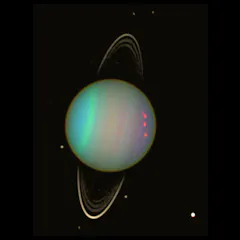
A body at least twice as massive as the Earth smashing into Uranus could have made it lopsided, shows research.
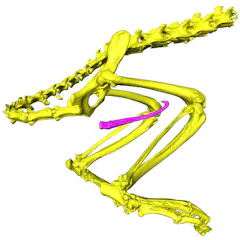
Our study used innovative 3D scanning and engineering-inspired computer simulations to understand the evolution of the penis bone in some mammals.

Can artificial intelligence accurately simulate people’s religious tendencies in the face of disaster and tragedy?

Thousands of animals are used for heart drug tests each year – but research shows that in silico developments are more accurate.

A basketball computer program simulates millions of trajectories in search of the ideal shot.
Top contributors
-

Associate Professor, School of Geosciences, University of Sydney
-
Associate Professor in Physics, University of Portsmouth
-
Senior Research Associate, University of Oxford
-
Emeritus Professor of Complex Systems Science, Crawford School of Public Policy, Australian National University
-
Associate Professor in Political and Social Theory, University of East Anglia
-
Georgia Institute of Technology
-
Assistant Professor of Geography and Director Atmospheric Sciences Program, The Ohio State University
-
Wellcome Trust Senior Research Fellow in Basic Biomedical Sciences, Professor of Computational Medicine, Principal investigator within the BHF CRE, University of Oxford
-
Project manager, University of Oxford
-
Professor and Director of Doherty Epidemiology, The University of Melbourne
-
Professor of Physics and Astronomy & Professor of Microbiology and Molecular Genetics, Michigan State University
-
Research Fellow, Mathematical Biology and Physiology, The University of Melbourne
-
Professor in Computing and Information Systems, Edge Hill University
-
Professor of Complex Systems, University of Sydney
-
Professor of Data Science; Director, Adelaide Data Science Centre, Adelaide University