
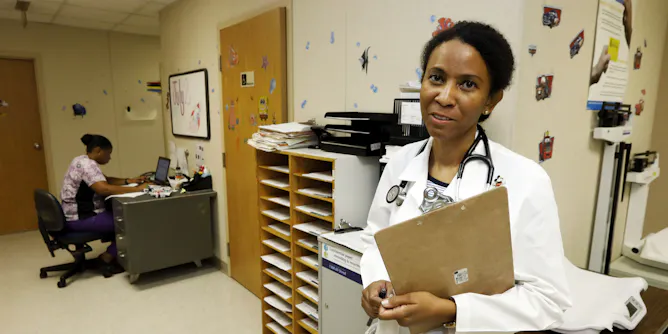
Southern governors are starting to reopen their economies at the same time COVID-19 cases are spreading through the rural South.
Articles on Commuting
Displaying 41 - 60 of 86 articles
More workplaces are allowing employees to telecommute, but there are still barriers to more flexible arrangements.

A breakdown in the road or rail systems often causes commuter chaos in Australia. Some overseas cities are more resilient because they have other options – and our bicycle network could give us that.

Net benefits depend on how workers use the long weekend.
Average commuting times for Australians have increased by 23% in 15 years. And those with long commutes are less satisfied with their work, working hours, work-life balance and even pay.
While governments focus on how to ease congestion and make affordable housing more accessible for workers in our biggest cities, fast rail could be a mixed blessing for regional cities.

Workers with long commutes are more likely to become sick. They also receive less net income (after deducting travel costs) and less leisure time.
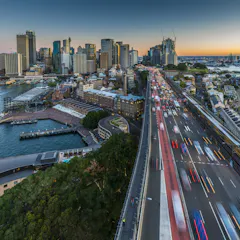
When a city gets to a certain size, it starts to make sense to have multiple centres of activity, and three are planned for Sydney. So what needs to be done to bring the city closer to this goal?
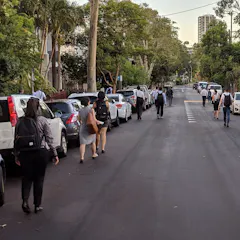
In Sydney, 44 of 178 train stations have a single side entrance. It adds up to 12 minutes of daily travel time for people walking the long way to their platform. It’s enough to make some drive instead.

The Commuter Car Park Fund announced in the budget sounds big, but is likely to create only around 30,000 extra spaces – a marginal benefit for Australia’s 1.2 million daily public transport users.
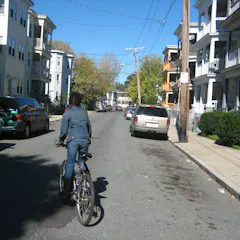
Minorities are driving the bicycling boom, but bike infrastructure investments often neglect their needs. A new study explores what riders in low-income and minority neighborhoods want.
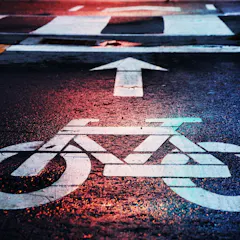
Build it and they will come: when cities plan for bike lanes, it results in more bicyclists and encourages a bicycle economy.

There is a wide problem with the way society talks about gender equality.
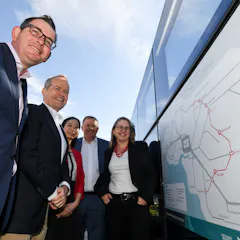
In the election bidding wars, parties commit billions to transport projects, often before all the work needed to justify these has been done. More cost-effective alternatives hardly get a look-in.
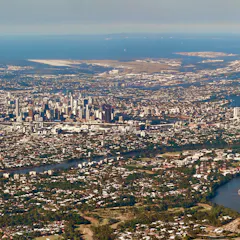
Urban growth has had much less impact on commuting distances and times than media reports would suggest. The explanations include jobs being widely dispersed and residents’ adaptable decision-making.
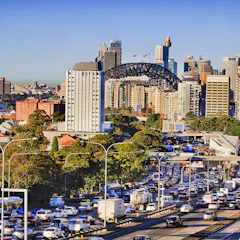
Busting congestion requires some creativity - and evidence-based methods. Here are four of these.
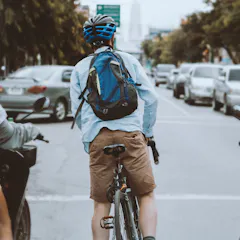
What’s your risk of dying if you cycle to work, versus the health benefits? What about walking, or driving, or catching a train? Here are the risks and benefits.
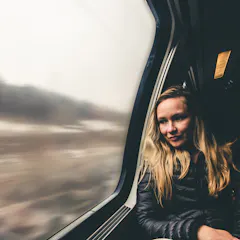
We see the daily commute as a waste of time. But there’s another way to see the experience: a whole life in the events and memories we form during these journeys, which change us as human beings.
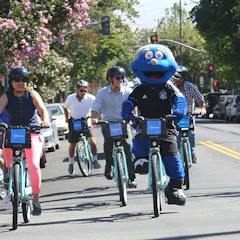
Urban planners often hope bike-share schemes might reduce reliance on cars and help with congestion. But very few of those who use share bikes have switched from driving.
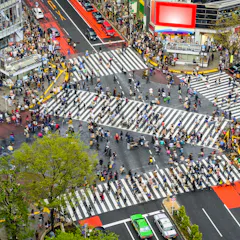
Daily routine affects how much polluted air we breathe.
Top contributors
-

Associate Professor in Urban Planning, The University of Queensland
-
Transport and Cities Program Director, Grattan Institute
-
Professor of Transport, University of Sydney
-
Professor of Urban Policy and Director, Urban Futures Enabling Impact Platform, RMIT University
-
Postdoctoral Research Associate, Faculty of Architecture, Building and Planning, University of Sydney
-
Vice-Chancellor's Postdoctoral Research Fellow, RMIT University
-
Senior Research Fellow, La Trobe University
-
Research Fellow, Melbourne School of Design, The University of Melbourne
-
Professor of Human Geography, The University of Queensland
-
Honorary Professor of Planning, The University of Queensland
-
Professor, Director Australian Urban Observatory, Centre for Urban Research, RMIT University
-
Associate professor, University of Sydney
-
Research fellow, UNSW
-
PhD Candidate, School of Civil Engineering, University of Sydney
-
Senior Lecturer in Spatial Science, RMIT University