
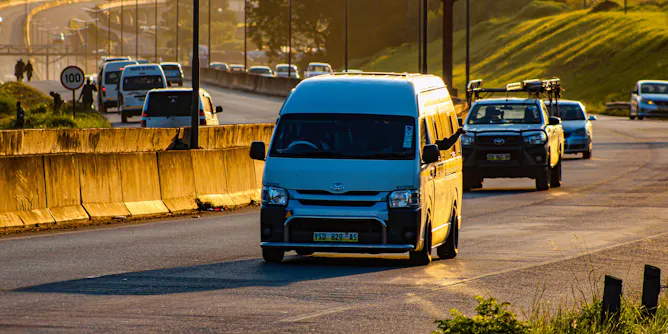
South Africa’s minibus taxi industry contains extensive knowledge, organisation and social practices developed by the people who work in and depend on it.
Articles on Commuters
Displaying 1 - 20 of 32 articles
The true effect of the pilot is unclear, but the Scottish government may have seen a greater shift on to the railways if it had kept it in place for longer.
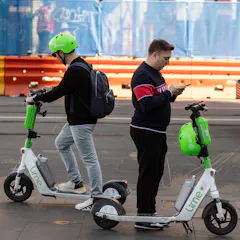
The parking of e-scooters is a source of fierce debate, but technology offers a solution to control the problem.
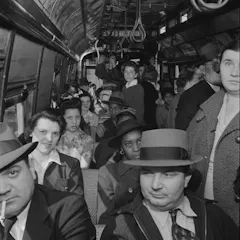
When US cities offered low-cost, high-quality public transit during World War II, buses and trains were full. Some cities are trying to revive that formula, after decades of disinvestment.
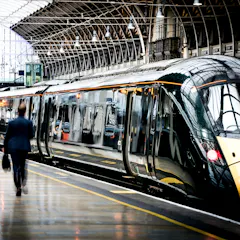
Britain’s railways are a vital pillar of the economy, so inefficiencies in the network hit the country in the pocket.
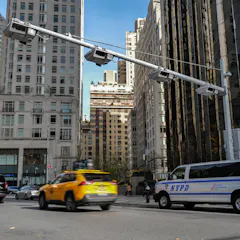
Gov. Kathy Hochul hit the brakes on congestion pricing in June but now is ready to roll, with a lower fee. Critics, including New Jersey officials and President-elect Donald Trump, remain opposed.
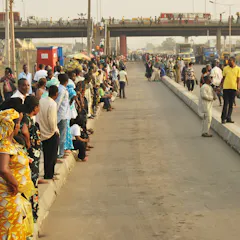
An improved public transport system and mapping of hotspots by law enforcement agencies would reduce susceptibility to crime in Lagos, Nigeria.
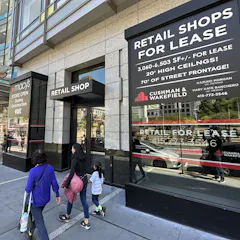
Developers have overbuilt office and commercial space in US cities for decades. Now, in the wake of pandemic shutdowns, many downtowns face hard choices about the future.
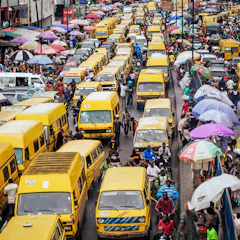
Danfo drivers are often intolerant, bringing down the image of Lagos as a destination.
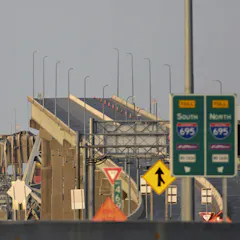
Transportation agencies plan for events like major bridge or highway collapses, but these events can disrupt traffic for months and affect residential neighborhoods as well as motorists.
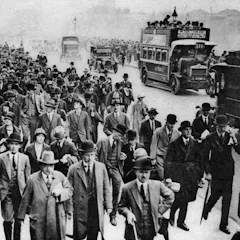
Transport route closures are usually justified to the public on grounds of profitability. But that ignores the immense value of public transport to the labour market.

Ghanaian authorities could elicit more cooperation from citizens in governing the cities by creating conditions that give the majority a chance at a decent life

A global study of 117 cities finds Australian capitals have fairly poor access by car. Public transport, cycling and walking access is better than in the US, but not as good as in Europe and China.
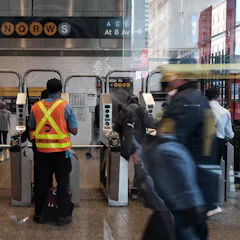
Transit agencies could use the money to buy new subway cars, buses and maintain rails. The funding is designed to build on last year’s emergency aid, which kept transit operating through the pandemic.

COVID led to commuting time savings worth over $2,000 a year for each driver and $5,000 per public transport user. But as workplaces reopen, we may need road user charges to keep traffic flowing.
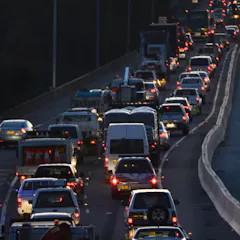
Education fuelled extraordinary growth in Western Sydney’s professional services workforce, but their jobs aren’t local. More than 300,000 commute to work outside the region.

A breakdown in the road or rail systems often causes commuter chaos in Australia. Some overseas cities are more resilient because they have other options – and our bicycle network could give us that.
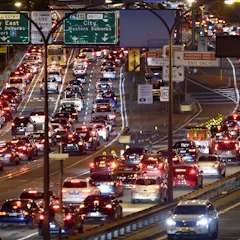
Average commuting times for Australians have increased by 23% in 15 years. And those with long commutes are less satisfied with their work, working hours, work-life balance and even pay.
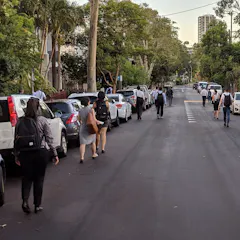
In Sydney, 44 of 178 train stations have a single side entrance. It adds up to 12 minutes of daily travel time for people walking the long way to their platform. It’s enough to make some drive instead.

The Commuter Car Park Fund announced in the budget sounds big, but is likely to create only around 30,000 extra spaces – a marginal benefit for Australia’s 1.2 million daily public transport users.
Top contributors
-
 John Rennie Short is a Friend of The Conversation.
Professor Emeritus of Public Policy, University of Maryland, Baltimore County
-
Professor of Transport, University of Sydney
-
Senior Researcher, Gauteng City-Region Observatory
-
Senior Lecturer in Aerospace Engineering, Coventry University
-
Emeritus Professor of Housing and Housing Studies, RMIT University
-
Transport and Cities Program Director, Grattan Institute
-
Senior Lecturer in Accounting, University of Essex
-
Professor of Data Science, Bournemouth University
-
John Curtin Distinguished Professor, Curtin University
-
PhD Candidate in Urban Planning, Design and Policy | Urban welfare researcher, York University, Canada
-
Researcher of urban & cultural studies, Gauteng City-Region Observatory
-
John Curtin Distinguished Professor, Curtin Business School, Curtin University
-
Acting Manager Policy and Research Whitlam Institute, Western Sydney University
-
Research Fellow, School of Accounting, Economics and Finance, Curtin University
-
Postdoctoral fellow in the history, politics and sociology of transport with a special focus on urban bicycling, University of the Witwatersrand