
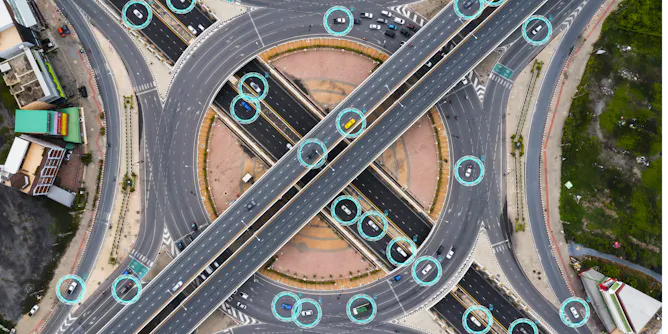
Studies show that when people can ride in a car without having to operate it, they increase their car use. That could increase traffic and pollution, unless government puts a price on car travel.
Articles on Commuting
Displaying 21 - 40 of 86 articles

The potential benefits of telecommuting could quickly be erased because of the behavioural changes it brings about in the medium and long term.
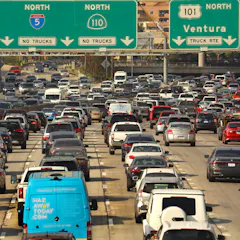
The pandemic offered a tantalizing look at city life with fewer cars in the picture. But with traffic rebounding, there’s limited time to lock in policies that make streets more people-friendly.

A global study of 117 cities finds Australian capitals have fairly poor access by car. Public transport, cycling and walking access is better than in the US, but not as good as in Europe and China.
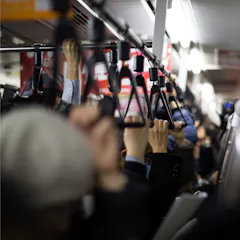
Most of us dislike commuting. But there are ways to make it a more positive experience.
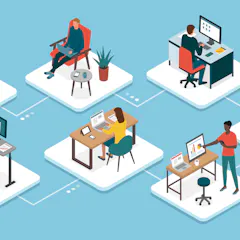
The sudden shift to remote work in 2020 has paved the way for a new type of workspace in the future.
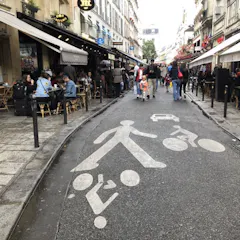
Instead of free parking, our post-COVID CBDs need a big vision to become attractive destinations that aren’t car-friendly at the expense of being people-friendly.
COVID led to commuting time savings worth over $2,000 a year for each driver and $5,000 per public transport user. But as workplaces reopen, we may need road user charges to keep traffic flowing.
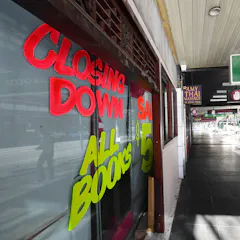
CBD retailers were already struggling before the pandemic. The contrast in fortunes with suburban retail activity is stark, and there are good reasons to think the shift could be permanent.
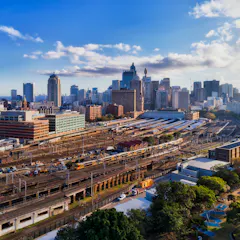
Coronavirus has changed population projections and behaviours across society. With fewer commuters we need to shift transport planning based on a hub-and-spoke network to focus on more local travel.

Fewer weekly commutes means many will be willing to commute further. The effects on urban growth of working from home pose serious challenges.
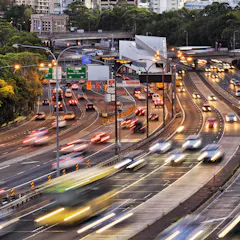
Car use and cycling have soared to above pre-pandemic levels in our biggest cities (Melbourne is an obvious exception). Walking is not far behind, but public transport is being shunned.
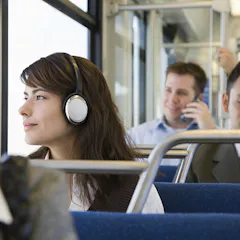
Research into working from home during the coronavirus pandemic shows how to get the benefits of commuting, while avoiding the downsides.
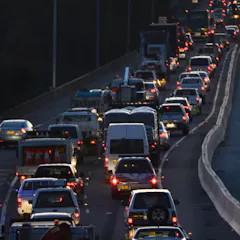
Education fuelled extraordinary growth in Western Sydney’s professional services workforce, but their jobs aren’t local. More than 300,000 commute to work outside the region.
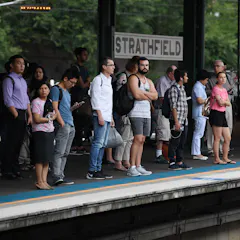
The change in our behaviour in response to COVID-19 has created an opportunity to build on this moment and transform our local neighbourhoods into vibrant mixed-use centres of activity.
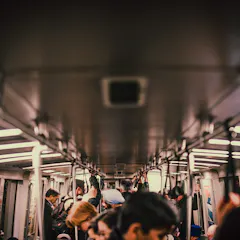
Between home and work is a window of time and space where we can choose our distractions. Staring out the train window, scrolling the news or perhaps listening to podcasts. We miss it.
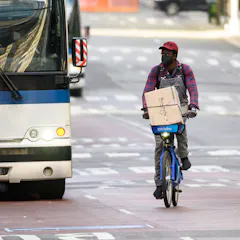
Low-income and minority groups are often reliant on cheaper modes of transport, but many find cycling to work problematic.
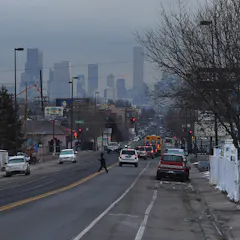
Neighborhood characteristics like pollution from busy roads, widespread public transit use and lack of community-based health care are putting certain communities at greater risk from COVID-19.
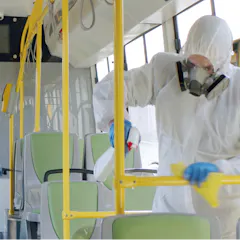
Some new habits we’ve seen emerging during the pandemic could help us solve tricky problems like traffic congestion, which have challenged our cities for a long time.

After the ‘world’s biggest work-from-home experiment’, many people (and their employers) might decide they needn’t commute every day. If even a fraction do that, infrastructure needs will change.
Top contributors
-

Associate Professor in Urban Planning, The University of Queensland
-
Transport and Cities Program Director, Grattan Institute
-
Professor of Transport, University of Sydney
-
Professor of Urban Policy and Director, Urban Futures Enabling Impact Platform, RMIT University
-
Postdoctoral Research Associate, Faculty of Architecture, Building and Planning, University of Sydney
-
Vice-Chancellor's Postdoctoral Research Fellow, RMIT University
-
Senior Research Fellow, La Trobe University
-
Research Fellow, Melbourne School of Design, The University of Melbourne
-
Professor of Human Geography, The University of Queensland
-
Honorary Professor of Planning, The University of Queensland
-
Professor, Director Australian Urban Observatory, Centre for Urban Research, RMIT University
-
Associate professor, University of Sydney
-
Research fellow, UNSW
-
PhD Candidate, School of Civil Engineering, University of Sydney
-
Senior Lecturer in Spatial Science, RMIT University