
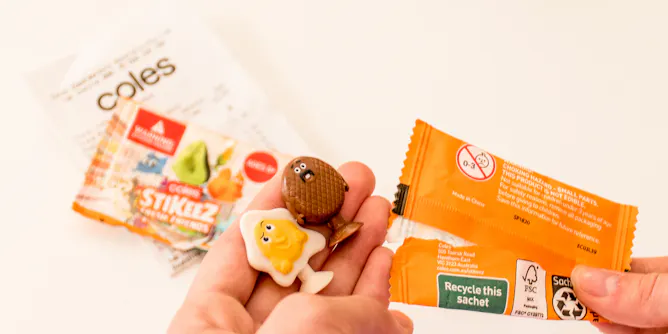
Stikeez, the latest collection of plastic collectables from Coles, flies in the face of the company’s plan to become Australia’s most sustainable supermarket.
Articles on Coles
Displaying 41 - 60 of 96 articles

If Australia follows international trends and allows supermarkets to open pharmacies, what are the effects on neighbouring pharmacies? And when does running a business mean health care suffers?
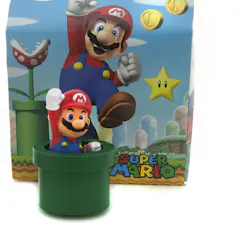
Retailers have cleverly tapped into the psychological need many of us have to collect, in some cases, mundane everyday items.
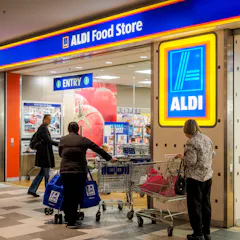
ALDI appeals to a particular market segment. It is unlikely to abandon it to go after Woolworths and Coles.
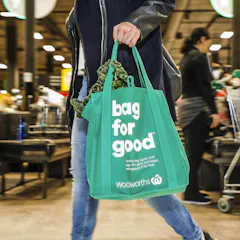
Plastic bags will soon be gone from major supermarkets and many other shops too. Campaigns to reduce plastic even more should focus on positive advice, rather than shaming shoppers for their plastic use.

Supermarkets and consumers might gain from more private label brands, but Australian suppliers are likely to lose out.
Spinning off Coles is a great example of how good Wesfarmers is at entering and exiting markets.
Coles plans to compete with competitors by moving away from low prices to a focus on other attributes, such as sustainability, local produce and community.
Banning single-use plastic bags makes sense, as long as it doesn’t usher in behaviours that are just as bad, or worse – like over-using heavier bags made of even more plastic.
The success of the plastic bag ban announced by Australia’s big two supermarkets will hinge on whether they can persuade customers to change an engrained behaviour - without annoying them.
Moves by major to supermarkets to only offer plastic bags for a charge could make these businesses more than a million dollars a year, but it may only have a small impact on the environment.

For consumers of Australia’s retail sector, choice and convenience will continue to emerge. For incumbents unable to deliver on these outcomes, the future is bleak.

The harm pokies cause is widespread and tends to affect those already under significant stress. $1 bets are a good first step toward reducing this harm.

More supermarkets are starting to stock “phantom brands”- private label products without any reference to the business’ brand or logo.
It’s a tough time to be a retailer in Australia, but there are some retailers that have found the formula for success.

The big supermarkets, Woolworths and Coles, will need to think of new strategies to compete with new chains such as Aldi which continue to steal market share.

Major food retailers say they are aiming for zero food waste - but are transferring the costs onto not-for-profit groups and suppliers.

It’s not good to make law changes as a knee-jerk reaction, but in the case of insolvency and gift cards, it’s time.

Convenience stores could be the next big focus for Australia’s grocery retailing giants.
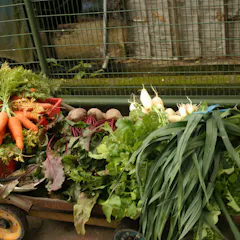
Coles and Woolworths’ representation of “fresh” and “local” food reflects heightened interest among consumers about these values. But they also contributes to concerns about the supply chain.
Top contributors
-

Professor of Marketing and Consumer Behaviour, Queensland University of Technology
-
Associate Dean, School of Business and Law, Edith Cowan University
-
Associate Professor of Marketing, Tasmanian School of Business and Economics, University of Tasmania
-
Competition Lawyer; Senior Fellow, The University of Melbourne
-
Professor of Law (consumer protections and credit law), The University of Melbourne
-
Professor, Queensland University of Technology
-
PhD Candidate, ARC Centre of Excellence for Automated Decision-Making and Society, RMIT University
-
Professor of Economics, Monash University
-
Professor, Melbourne Law School, The University of Melbourne
-
Senior Lecturer of Marketing, Swinburne University of Technology
-
Associate Professor, Faculty of Business and Law, QUT, Queensland University of Technology
-
Associate Professor in Operations and Supply Chain Management, UTS Business School, University of Technology Sydney
-
Lecturer, College of Business and Economics, Australian National University
-
Adjunct Professor, Swinburne University of Technology
-
Professor, College of Business, University of Sharjah