
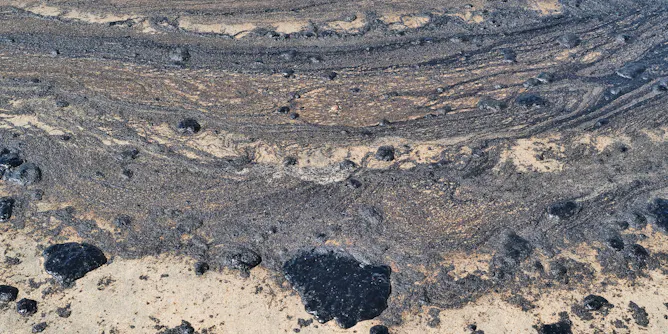
Offshore oil drilling has a long history in California, but is highly unpopular today. The latest major spill is likely to fuel efforts to wind down oil and gas production statewide.
Articles on Coasts
Displaying 21 - 40 of 62 articles
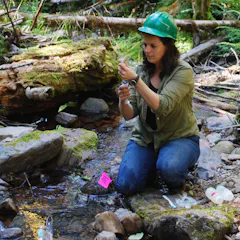
This kind of research, with consistent data collection at the same locations over time, helps support global understanding of climate change.

The Army Corps of Engineers is planning a sea wall 6 miles long and flood gates. The infrastructure might protect downtown from a hurricane storm surge, but most of the area will still be vulnerable.
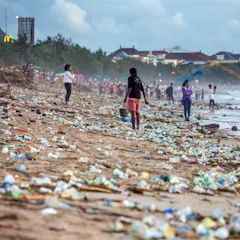
Polluted oceans don’t just harm wildlife, they are a source of ill health for humans too.
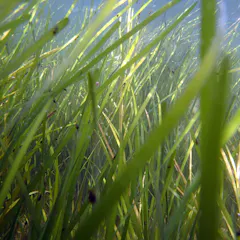
Healthy seagrasses form underwater meadows teeming with fish and shellfish. A successful large-scale restoration project in Virginia could become a model for reseeding damaged seagrass beds worldwide.

Sea levels could be two metres higher by 2100. How will our relationship to the drowned coast change?

Empatheatre’s latest production is more than a play about three characters who live near the sea. It’s a model for collective consultation on how to save the ocean.

A new study estimates that mangroves prevent over $65 billion in damage from coastal storms every year, and says mangrove protection should be funded in the same way as infrastructure like seawalls.
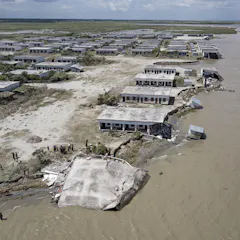
Bangladesh is on the front lines of climate change, but factors including money, gender and religion make some Bangladeshis much more vulnerable than others. Can it find inclusive ways to cope?
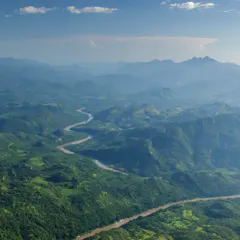
Thousands of hydropower dams are under construction around the world. New research shows that by cutting off sediment flow, these dams can have big ecological effects on far-off bays and deltas.
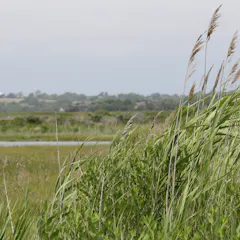
Phragmites australis, an invasive reed, has taken over wetlands across the US. But it also stabilizes shorelines and harbors many fish and birds. Is it time to compromise with this alien?
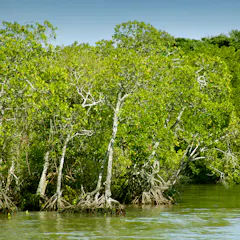
One surprising potential benefit of sea-level rise is it helps coastal wetlands store more carbon.
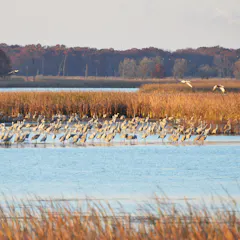
The Trump administration is sharply reducing environmental protection for wetlands and streams across the US. This roundup of stories spotlights the many benefits that such water bodies provide.
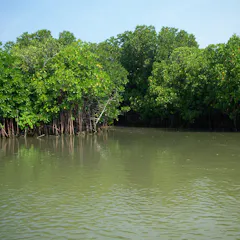
Mangrove forests along the world’s tropical and subtropical coasts store enormous quantities of ‘blue’ carbon – especially in river delta zones, where soil builds up quickly.

How far will we go to protect high-risk beachfront property? New research suggests local councils are too willing to spend public money to protect private landowners from coastal climate change.
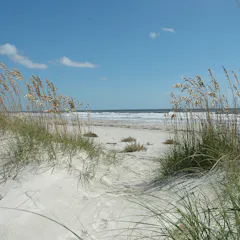
How do the narrow ribbons of sand that line the Atlantic and Gulf coasts withstand the force of hurricanes? The answer lies in their shape-shifting abilities.
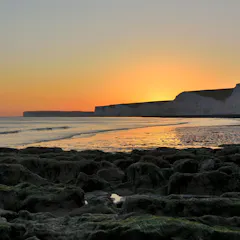
Waves lap against the shore on the south coast of England and the North coast of France – but the answer to this puzzle is in the wind and the land, not the waves themselves.
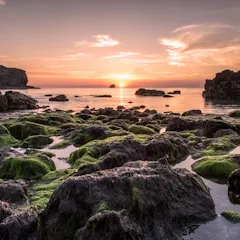
If we know what makes species tick, we can start truly understanding life on the UK’s coast.
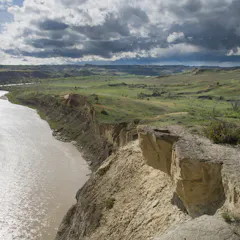
Recent research shows that US rivers are becoming saltier and more alkaline. Salt pollution threatens drinking water supplies and freshwater ecosystems, but there is no broad system for regulating it.
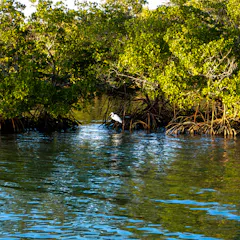
As Earth’s climate warms, mangroves are expanding north and south from tropical zones. Mangroves reinforce shorelines and store huge quantities of carbon, so protecting them is an effective climate strategy.
Top contributors
-

Professor, School of Natural Sciences, Macquarie University
-
Senior Lecturer in Coastal Dynamics, Bangor University
-
Professor in School of Earth, Atmospheric and Life Sciences; and Director of Environmental Futures Research Centre, University of Wollongong
-
Professor in Biodiversity and Conservation, The University of Queensland
-
Honorary Associate Professor, Australian National University
-
Director of the UWA Oceans Institute, The University of Western Australia
-
Associate Professor of Engineering, Auburn University
-
University of Sydney
-
Josephine A Lamprey Professor in Climate and Sustainability, University of New Hampshire
-
Associate Professor, Marine Ecology, School of Molecular and Life Sciences, Curtin University
-
Professor, TC Beirne School of Law, The University of Queensland
-
Postdoctoral Researcher, Ecosystem Sciences, CSIRO
-
Principal Research Scientist, CSIRO
-
ARC DECRA Research Fellow, Centre for Biodiversity & Conservation Science, The University of Queensland
-
Professor of Behavioural Genetics, University of Leicester