
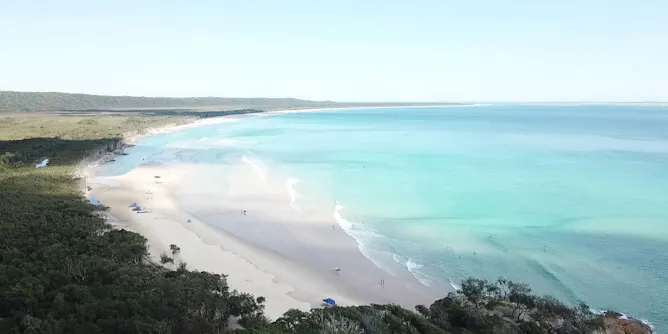
This goes against the general understanding of how climate change impacts the coast. So what’s going on?
Articles on Coastal erosion
Displaying 41 - 60 of 77 articles

We asked 680 Florida real estate agents what they’re seeing in the market. Here’s what they said.

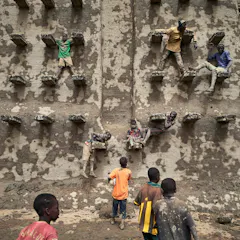
Hundreds of Africa’s heritage sites are exposed to sea-level rise and coastal erosion in the future.
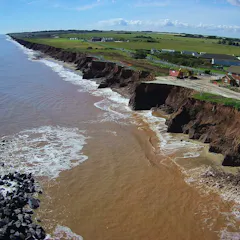
In a region threatened by coastal erosion, a group of school students learned how they could explore change using visual stories and poems.
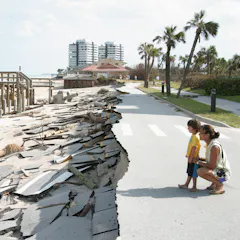
A bipartisan group of senators said it reached a deal on $550 billion in new spending on infrastructure.
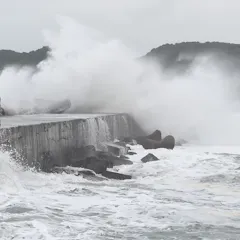
With climate change making more than 30,000 coastal properties potentially uninsurable within the next 25 years, government-led solutions should be fast-tracked.
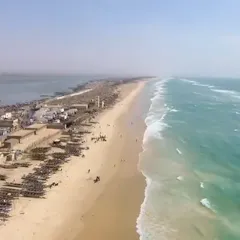
Around the world, fragile coastal ecosystems are under intense pressure, and understanding and managing their complex interactions requires an integrated and interdisciplinary approach.
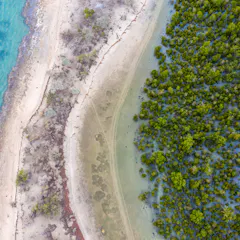
Despite their enormous value, mangroves are being removed at an alarming rate. A new tool aims to help communities reverse mangrove loss and tap into conservation programs and funding.
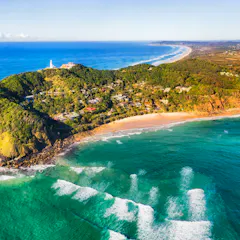
Over the past six months, tourists and locals have been shocked to see Byron’s famous Main Beach literally disappearing. Satellite imagery and local knowledge has revealed what’s going on.
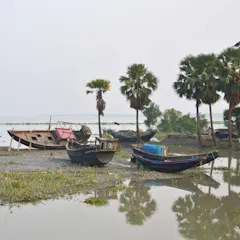
Rising sea levels are as likely to trap people as they are to force them to move.
The next ten years will be a critical period in which research agendas can be developed.
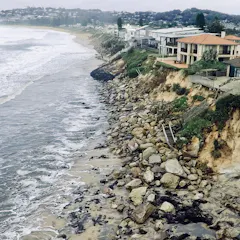
In Australia, coastal flooding is expected to be worse along the northern coast in Queensland, Western Australia and the Northern Territory.
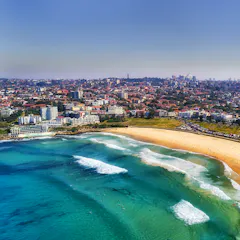
A new study has reported the world will lose almost half of its valuable sandy beaches by 2100 as sea levels rise. But cutting our emissions could keep some intact.
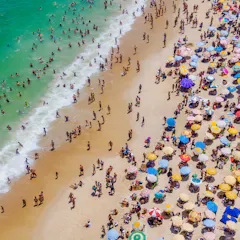
Sandy beaches are densely populated and occupy more than one third of the global coastline.
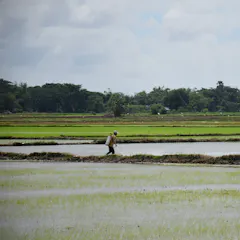
If nothing is done now, seas could rise a metre by 2100, and four metres by 2300.
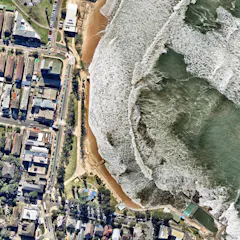
The IPCC report says extreme sea level events that used to hit once a century will occur once a year in many places by 2050. This situation is inevitable, even if emissions are dramatically curbed.
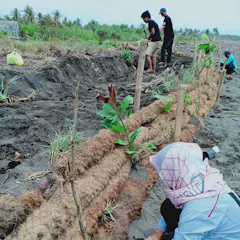
A biodegradable sea wall is cheaper than a concrete wall. In addition, it’s easy for local people to replicate.
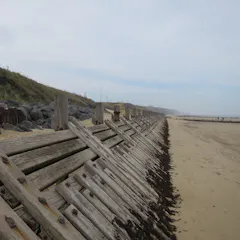
Dumping millions of cubic metres of sand on the beach stops people from dealing with the reality of coastal erosion.
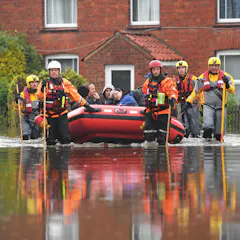
Planning for the growing risks of flooding that threatens the UK’s cities, towns and villages is underway, but progress is too slow.
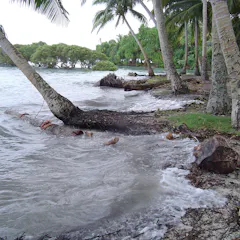
Rising sea levels and tectonic activity have eroded the coastlines of the low-lying Carteret Islands in the South Pacific.
Top contributors
-

Honorary Associate Professor, Australian National University
-
Scientia Senior Lecturer, UNSW
-
Senior lecturer, University of East Anglia
-
Professor of Biology, The University of Queensland
-
Transdisciplinary Researcher & Knowledge Broker, CSIRO
-
Associate Professor in Physical Geography, University of the Sunshine Coast
-
Lead - Pilot Deployments Program (AIMS); Professor (Queensland University of Technology; Adjunct), Queensland University of Technology
-
Professor in School of Earth, Atmospheric and Life Sciences; and Director of Environmental Futures Research Centre, University of Wollongong
-
Senior Lecturer, Lancaster Environment Centre, Lancaster University
-
Lecturer in Marine and Fisheries Sciences, University of Ghana
-
Professor, TC Beirne School of Law, The University of Queensland
-
Professor of Environment and Society, University of Essex
-
Reader in Physical Geography, University of Dundee
-
Emeritus Professor of Urban & Regional Planning, University of Canberra
-
Adjunct Senior Lecturer, University of Newcastle