
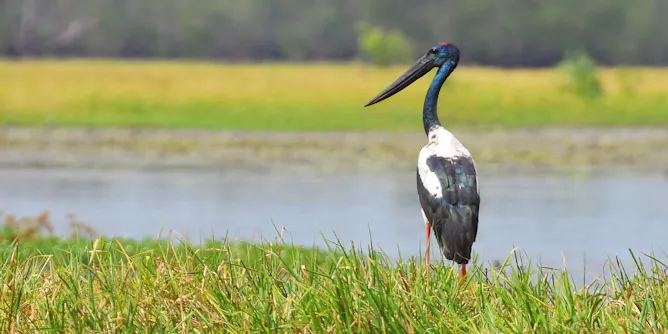
Researchers, managers and Traditional Owners are joining forces to understand and combat climate threats to Australia’s many unique World Heritage sites.
Articles on Coastal erosion
Displaying 21 - 40 of 77 articles
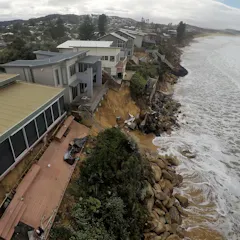
Even a small rise in sea level can have big impacts on coastal properties, so we must do all we can to limit the changes while taking them into account in coastal land-use planning.

With smartphones as commonplace as towels and sunscreen in the beach bag, why not add coastal data collection to your list of holiday activities this summer? Look for the CoastSnap camera cradles.
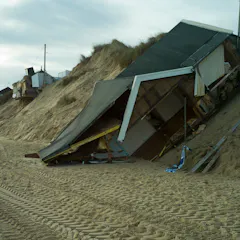
Can we avoid dangerous climate change by taking government to court?
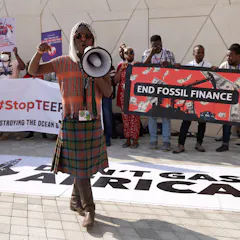
COP28 was Africa’s ‘most vocal COP ever’. African leaders’ assertiveness paid off with new climate finance deals being struck.
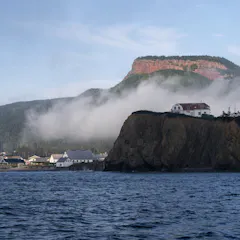
As seas rise, it is clear that traditional coastal defence approaches are unable to keep pace. Nature-based solutions offer considerable potential to protect coasts, people and biodiversity.

Sea-level rises and storm surges don’t discriminate, but societal structures do.

Storms are the greatest threat to beach erosion, not sea level rise, research reveals. This is the longest continuous beach monitoring survey in the Southern Hemisphere.
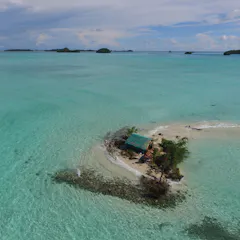
Rising seas are pushing coastal ecosystems to the limit of endurance. Now international research reveals a “tipping point” will be reached if we allow more than 2 degrees of global warming.
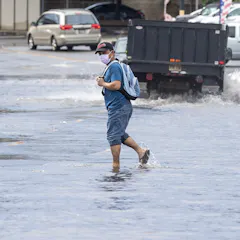
Honolulu, Baltimore, Charleston, S.C. and several other cities harmed by rising seas and extreme weather are suing the oil industry. At stake is who pays for the staggering costs of climate change.

Worrying environmental issues dominated the time of William Shakespeare as they do now, from depleted fish stocks and food shortages, to overpopulation and animal exploitation.
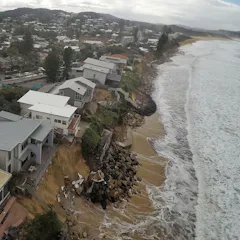
We can now monitor coastal changes across thousands of beaches over the last 40 years, from Australia, New Zealand and Japan, to Chile, Peru, Mexico and California. Here’s what our new tool uncovered.

Booming prices for coastal properties are a mark of our reluctance to reckon with the climate change that is already upon us. We must start to properly account for and act on climate risk.
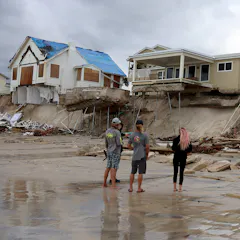
Dozens of homes near Daytona Beach collapsed or were left unstable when Hurricane Nicole struck. Here’s what can be done to reduce that kind of risk.

Moving entire communities threatened by rising seas isn’t as far-fetched as it sounds.
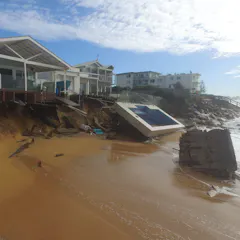
We must heed lessons from past storms and plan ahead, as climate change will only exacerbate future coastal disasters.
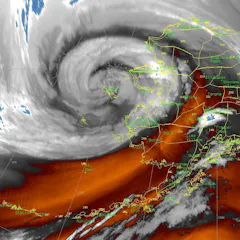
Most of the flooded communities are Indigenous and rely on subsistence hunting that residents would normally be doing right now. Recovering from the damage will make that harder.
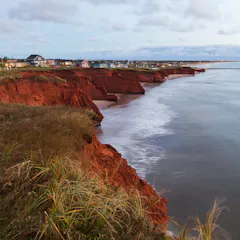
Coastal erosion along the St. Lawrence River has economic, social and cultural impacts.
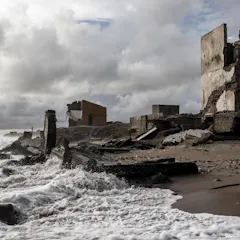
Coastal erosion in West Africa is a cause for global concern. The global community must rally to address climate change which is causing the retreat.
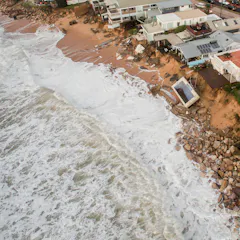
As sea levels rise, this natural form of beach replenishment might be an important factor in offsetting some of the damaging effects of climate change on beaches.
Top contributors
-

Honorary Associate Professor, Australian National University
-
Scientia Senior Lecturer, UNSW
-
Senior lecturer, University of East Anglia
-
Professor of Biology, The University of Queensland
-
Transdisciplinary Researcher & Knowledge Broker, CSIRO
-
Associate Professor in Physical Geography, University of the Sunshine Coast
-
Lead - Pilot Deployments Program (AIMS); Professor (Queensland University of Technology; Adjunct), Queensland University of Technology
-
Professor in School of Earth, Atmospheric and Life Sciences; and Director of Environmental Futures Research Centre, University of Wollongong
-
Senior Lecturer, Lancaster Environment Centre, Lancaster University
-
Lecturer in Marine and Fisheries Sciences, University of Ghana
-
Professor, TC Beirne School of Law, The University of Queensland
-
Professor of Environment and Society, University of Essex
-
Reader in Physical Geography, University of Dundee
-
Emeritus Professor of Urban & Regional Planning, University of Canberra
-
Adjunct Senior Lecturer, University of Newcastle