
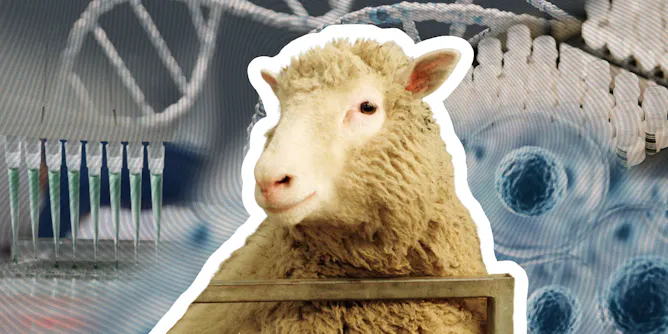
Today, cloning is not a technology that can simply “copy and paste” living things. But it’s brought advances in several fields of science.
Articles on Cloning
Displaying 1 - 20 of 26 articles

Cloning is not only expensive, it also comes with health and welfare risks for the cloned animal.
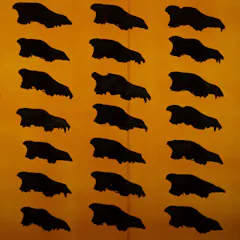
Colossal Biosciences’ claim to have brought back the dire wolf is misleading, and may derail important conservation efforts.
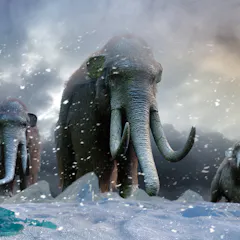
Are new approaches to recreating long-lost animals simply creating imitations?
South Africa’s recently updated research ethics guidelines provide guidance on oversight into heritable human genome editing, and they should not be interpreted as a green light.

A single seagrass plant in Shark Bay is around 4,500 years old, covers 200 square kilometres of seabed, and thrives in harsh conditions.
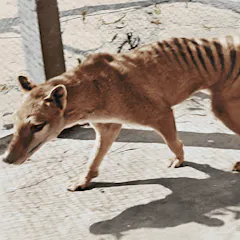
‘De-extinction’ seems like a way to save dying or dead species - but in reality it’s an expensive and impractical waste of time.

Humans, and indeed pet dogs, are more than just products of genes – even before the moment of conception, environments play a vital role in shaping us.

Star Wars: The Last Jedi leaves many questions about the saga in a galaxy far, far away unanswered. Fortunately, biology may offer a insights on the Force, midi-chlorians, clones, and Rey’s lineage.
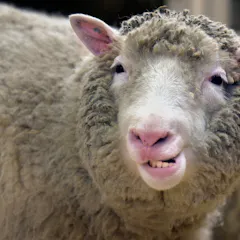
New research suggests Dolly’s cloning process didn’t create health problems.
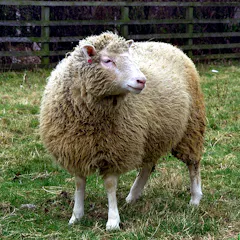
In 1997, scientists announced they’d created a healthy sheep cloned from another ewe’s mammary gland cell. Two decades on, the technique is being refined and applied to new challenges.
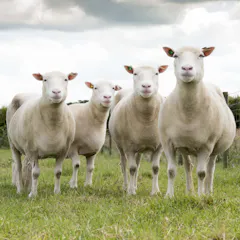
It took years of attempts before scientists were able to clone a mammal from an adult cell. And with that success came plenty more questions.
A report released by the US National Academies of Science and Medicine underscores the potential of gene editing and acknowledges the sensitivities in managing the ethical dimensions.
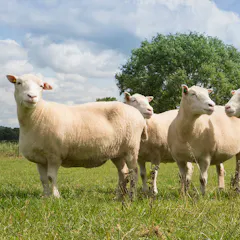
Dolly the sheep died young with osteoarthritis, but new evidence shows early-onset diseases aren’t inevitable for clones.
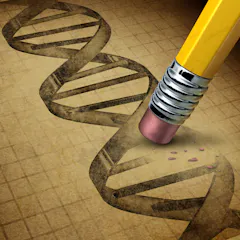
A recent closed meeting about building synthetic genomes raised suspicions about just what scientists were planning, away from the public eye.
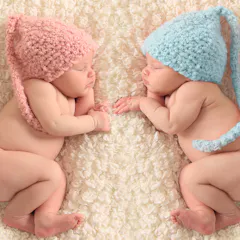
Since science made it possible to research manipulating the cells that are linked to reproduction, the naysayers have carried the day. But how solid are their objections really?
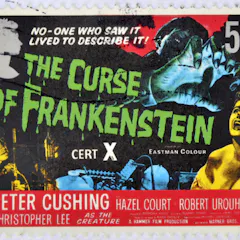
Critics of controversial science like GMOs and cloning often invoke the myth of Frankenstein to highlight the dangers of new technology. But these critics may overlook the moral of Shelley’s story.

Imagine how easy life would be if you could produce offspring without a mate. Sexual reproduction is the most common mating system in the animal kingdom. But in many species, females do not require males…
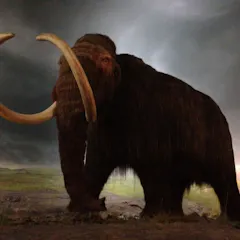
It is unlikely that a mammoth could be cloned in the way we created Dolly the sheep, as has been proposed following the discovery of mammoth bones in northern Siberia. However, the idea prompts us to consider…
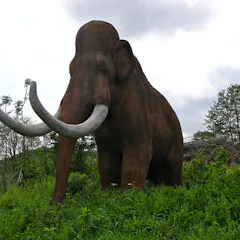
The display of a frozen mammoth in Japan has again raised questions as to the possibility of creating a live born clone of extinct animals. Theoretically, mammoths could be cloned by recovering, reconstructing…
Top contributors
-

Professor of evolutionary biology, UNSW
-
Professor of Developmental Biology, University of Nottingham
-
Matthew Flinders Professor of Global Ecology and Node Leader in the ARC Centre of Excellence for Indigenous and Environmental Histories and Futures, Flinders University
-
Emeritus Professor at the MRC Centre for Regenerative Medicine, University of Edinburgh
-
Professor of Biology, Wilfrid Laurier University
-
Professor of Genetics, Monash University
-
Scientific Director LARCEL-BIONAND, Spain and Professor of Animal Biotechnology, Michigan State University
-
Chen Su Lan Centennial Professor in Medical Ethics, National University of Singapore; Distinguished Visiting Professor in Law, University of Melbourne; Uehiro Chair in Practical Ethics, The University of Melbourne
-
Honorary Associate Professor, UNSW
-
Senior Lecturer in Animal Science, Nottingham Trent University
-
Ph.D. Candidate in Chemical Biology, Harvard University
-
Chair, The Conversation Media Group
-
Assistant Professor of Religion, James Madison University
-
Research fellow, University of Sydney
-
Professor Emeritus of Applied Philosophy, Glasgow Caledonian University