
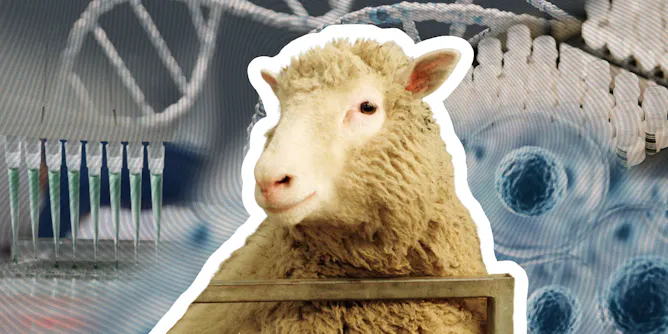
Today, cloning is not a technology that can simply “copy and paste” living things. But it’s brought advances in several fields of science.
Articles on Dolly the sheep
Displaying all articles

Humans, and indeed pet dogs, are more than just products of genes – even before the moment of conception, environments play a vital role in shaping us.
What might first seem unarguable starts to look shaky when you bring twins into the equation.
New research suggests Dolly’s cloning process didn’t create health problems.
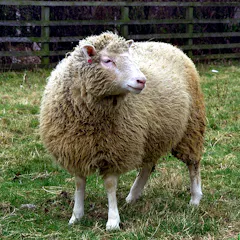
In 1997, scientists announced they’d created a healthy sheep cloned from another ewe’s mammary gland cell. Two decades on, the technique is being refined and applied to new challenges.
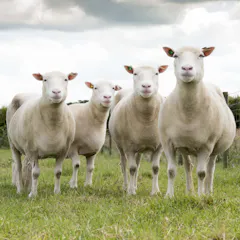
It took years of attempts before scientists were able to clone a mammal from an adult cell. And with that success came plenty more questions.
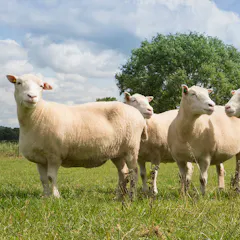
Dolly the sheep died young with osteoarthritis, but new evidence shows early-onset diseases aren’t inevitable for clones.
Top contributors
-

Professor of Developmental Biology, University of Nottingham
-
Scientific Director LARCEL-BIONAND, Spain and Professor of Animal Biotechnology, Michigan State University
-
Professor of Biomedical Sciences, Colorado State University
-
Professor of evolutionary biology, UNSW
-
Professor Emeritus of Applied Philosophy, Glasgow Caledonian University
-
Academic Specialist & Senior Lecturer in Cancer Sciences & Digital Health | Superstar of STEM | Science Communicator, The University of Melbourne