
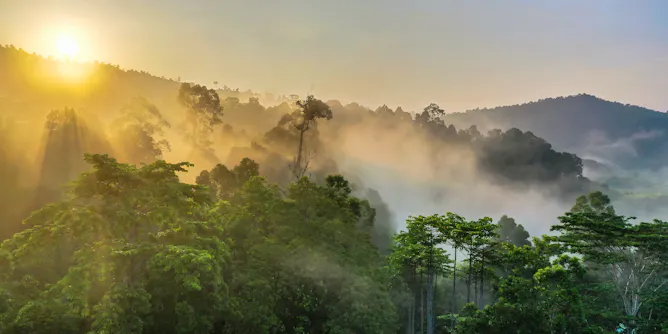
Planting trees can sometimes be a carbon-offset box-ticking exercise, but reforestation is a long-term commitment that supports communities, promotes biodiversity and tackles the climate emergency.
Articles on Climate emergency
Displaying 21 - 40 of 48 articles
The line between what is normal and what is pathological has blurred. We risk our collective sanity and our planet if we stick to business as usual.

Hearing about climate change prompts people to buy more stuff, which increases their environmental footprint. Rituals that inspire gratitude for nature can help reduce the desire to over-consume.
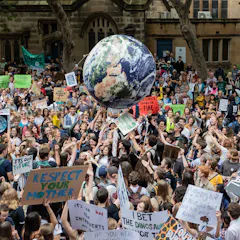
Symbolic gesture or assertion of state power? Declaring a climate ‘emergency’ walks a fine line between hopeful rhetoric and risk to democracy.
As a zoonotic virus, COVID-19 is itself a symptom of human-influenced climate change. It is also indicative of the humanitarian impact of future environmental crises.
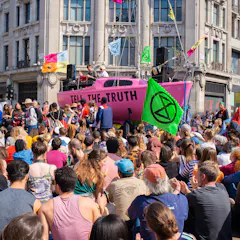
Journalists are better at covering the climate crisis but there’s still room for improvement.
The response to coronavirus shows us that people can still work together to do the right thing.
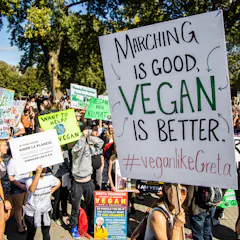
New research shows changing your lifestyle for environmental reasons can lead you into political action.

The UN’s climate change conference is coming to the UK this year, and former industrial powerhouse Glasgow is just the city to demonstrate its environmental commitment.
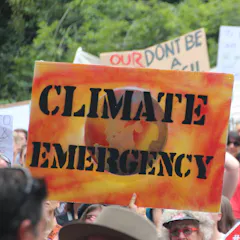
What is the climate emergency, and whose climate crisis is it anyway?
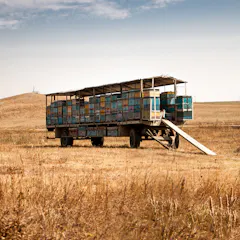
Our food, finance, and logistics systems are worringly vulnerable to climate shocks – we can’t rule out collapses within a decade.
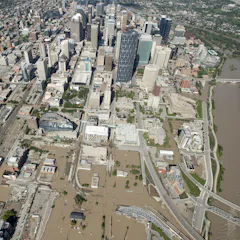
Hundreds of Canadian municipalities have declared climate emergencies but many have yet to take action.
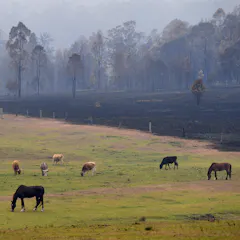
Tales of heroic rescues and bush Christmases in Australian fiction of the 19th century describe a time when the fire season was confined to summer.
There are plenty other good reasons to stabilise the global population.
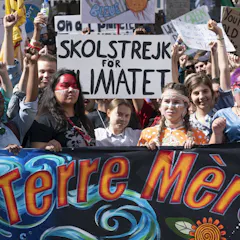
Economic growth and climate change are related. It is time to question the economics and foster discussions about the hard decisions we must make.

The kids are right when it comes to climate change, says an ethicist: adults have a moral and ethical responsibility to take the necessary actions to stop climate change.
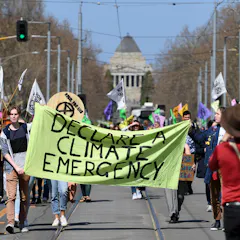
Climate activists are using the ‘extraordinary emergency’ of climate change as a legal defence to justify law breaking.
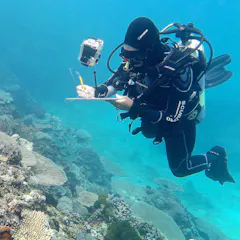
Few feel the pain of the Great Barrier Reef’s decline more acutely than the scientists trying to save it. Ahead of a UN climate summit, two researchers write of their grief, and hope.
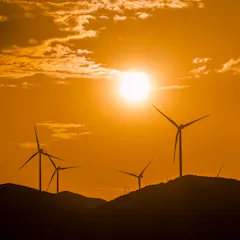
Climate change is a super-wicked problem. With a growing sense of urgency to act on climate change, it is vital we strike a balance between encouraging action and limiting pushback.

When we think about the health impacts of climate change, the effects of rising temperatures on physical health are often front of mind. But climate change affects people’s mental health, too.
Top contributors
-

Senior Lecturer in Social Sciences and Public Policy, Auckland University of Technology
-
Professor of Earth System Science, UCL
-
Lecturer in Politics and International Relations, University of Edinburgh
-
Associate professor, James Cook University
-
Senior Lecturer in Sociology, Australian Catholic University
-
Professor of Economics and Behavioural Science, University of Stirling
-
Profesor de Investigación en el Departamento de Biogeografía y Cambio Global, Museo Nacional de Ciencias Naturales (MNCN-CSIC)
-
Assistant Professor Lewis & Clark Law School (Fall 2019), Lewis & Clark
-
Pro Vice-Chancellor of Research, University of Technology Sydney
-
Director, Energy and Bioproducts Research Institute, and Director, Supergen Bioenergy Hub, Aston University
-
Senior Lecturer in Security Studies, University of Glasgow
-
Professor of Organisms and Environment, Cardiff University
-
Professorial Fellow, ARC Centre of Excellence for Coral Reef Studies, James Cook University
-
Associate Professor of Public Policy, Australian National University
-
Senior Research Fellow, The University Centre for Rural Health, University of Sydney