

Cities are political battlefields, where elites try to retain control, and people challenge this authority.
Articles on Cities
Displaying 141 - 160 of 1692 articles

Tree and bird diversity has been linked to a number of positive mental health outcomes. It is time that urban planners interested in human well-being take biodiversity into account.

A trained social worker helps people without homes obtain the support they need and addresses other residents’ concerns about street safety.

The disruptions caused by technology, the pandemic and climate change are reshaping how people and goods move in cities.

Instead of trying to force unwilling workers back to the office, Canadian cities should instead focus on developing downtowns that people genuinely want to visit and experience.
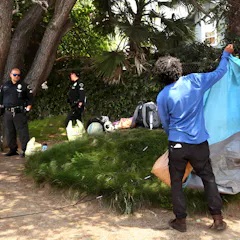
The US Supreme Court’s high-profile Grants Pass ruling allows cities to clear homeless encampments, even if they can’t offer shelter. A scholar explains why a Housing First approach is more effective.
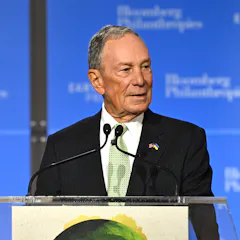
The increasing influence of Bloomberg Philanthropies on cash-strapped city governments raises questions about the reliability of philanthropy over the long term – and its democratic legitimacy.

Ontario’s focus on car-centric development without other investments in community will not improve the quality of life for Ontarians.

A case study of a mainly Latino neighborhood in Houston shows that when residents value a neighborhood as it is, they can forestall large-scale redevelopment.

It’s not enough to have parks in city outskirts or urban green belts. Green spaces must be accessible for residents and placed to provide effective flood protection for cities.

Climate change is contributing to larger rainfalls throughout Canada, and aging urban infrastructure is unable to keep up. Blue-green infrastructure updates can help to flood-proof cities.
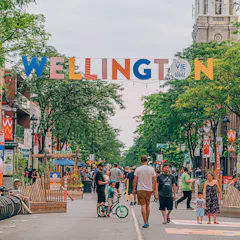
The media outlet ‘Time Out’ made a big splash when it announced that certain Canadian streets were ranked ‘coolest in the world.’ But are they really?

As summer temperatures rise, finding ways to build cities that don’t hold in the heat and can provide some cooling is increasingly important.

Many municipal politicians identify strongly with a political party, but some don’t. In fact, more than a quarter of municipal politicians are genuine non-partisans, with no party affiliation.

Using birth control to manage rat infestations is a temporary and inefficient approach. Any successful rat management programs would require multiple collaborative approaches.

African countries can learn a lot from Hong Kong on how to use the gains from rising urban land prices to fund infrastructure and other public services.

When US cities offered low-cost, high-quality public transit during World War II, buses and trains were full. Some cities are trying to revive that formula, after decades of disinvestment.

They’re not what many of us imagine when we think of schools, but building them vertically could make our cities better for everyone.
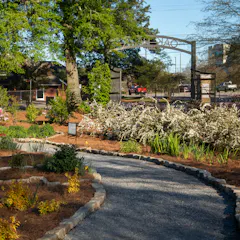
Montgomery once closed all of its parks rather than desegregate them. Today, the city’s long history of racial inequality is still reflected in the state of its parks and green spaces.

While trees are beautiful and benefit the environment, the most practical argument for planting more is that they provide a clear public health benefit, both in the preventive and therapeutic sense.
Top contributors
-
 John Rennie Short is a Friend of The Conversation.
Professor Emeritus of Public Policy, University of Maryland, Baltimore County
-
Head of Urbanism and Associate Professor of Urban Studies, School of Architecture, Design and Planning, University of Sydney
-
Professor of Sustainability, Curtin University
-
Professor of Human Geography and Planning, University of Tasmania
-
Professor of Urban Policy and Director, Urban Futures Enabling Impact Platform, RMIT University
-
Senior Lecturer in Urban and Environmental Planning, Griffith University
-
Transport and Cities Program Director, Grattan Institute
-
Associate Professor in Urban Planning, The University of Queensland
-
Adjunct professor, School of Media and Communications, RMIT University
-
Associate Professor of Urban Planning, The University of Melbourne
-
Professor of Housing Research, Adelaide University
-
Housing Policy Researcher, Expert Advisor, Housing Assessment Resource Tools and Adjunct Professor, L’Université d’Ottawa/University of Ottawa
-
Emeritus Professor, Urban Planning and Policy, University of Sydney
-
Research associate at African Centre for Cities, University of Cape Town
-
Emeritus Professor of Housing, UNSW